

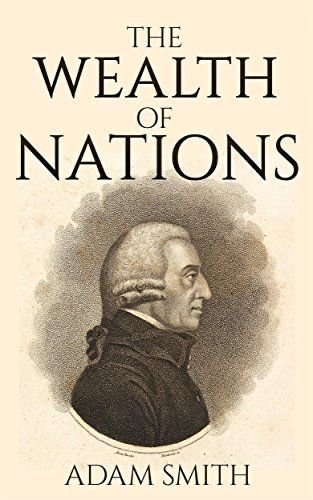
Why Read The Wealth of Nations?
The Wealth of Nations is the most consequential work in the history of economics — the book that effectively founded the discipline, introduced concepts that still structure every introductory economics course (division of labour, the price system, the invisible hand), and made the case for market economies so persuasively that it became the intellectual foundation of modern capitalism. Published in 1776 — the same year as the American Declaration of Independence, and with comparable historical significance — it is the rare foundational text that rewards direct reading, not merely reverence: Adam Smith’s prose is vigorous, his examples are drawn from the world he observed directly, and his arguments frequently anticipate debates that remain unresolved today.
Smith approached his subject as a moral philosopher (he was Professor of Moral Philosophy at Glasgow before writing the book) as well as an economic thinker, and the result is simultaneously an economic treatise, a historical analysis of mercantilism and colonialism, a political argument for commercial liberty, and a sustained meditation on the relationship between self-interest and social welfare.
Reading Smith directly is essential for understanding how far the “free market” ideology that invokes his name diverges from what he actually argued. Smith was a robust critic of merchant power, monopoly, and the exploitation of consumers by producers. His “invisible hand” is a more careful and qualified argument than its popular invocation suggests — and his observations about the conspiracy of merchants against the public interest are as central to his vision as his observations about the self-interest of the butcher and the baker.
Who Should Read This
This is a book for serious students of economics, intellectual history, and political philosophy who want to understand the founding document of the discipline — and who want to encounter Smith’s actual arguments rather than the cartoon version that ideological appropriation has produced. Essential for advanced economics and intellectual history students; political philosophy readers; CAT/GRE aspirants needing advanced classical economic prose; professionals seeking foundational economic understanding; and anyone willing to invest 25 hours in the most consequential economics text ever written.
Key Takeaways from The Wealth of Nations
The division of labour — the specialization of production tasks that allows each worker to develop extreme proficiency in a narrow operation — is the primary source of the productivity increases that make nations wealthy. Smith’s famous pin factory, where ten workers performing specialized operations could produce 48,000 pins per day while ten workers each performing all operations could produce at most 200, is the most famous illustration in the history of economics. The division of labour drives productivity through three mechanisms: increased dexterity, time saved by not switching tasks, and the invention of machinery by workers focused on a single operation.
The invisible hand — the mechanism by which individuals pursuing self-interest unintentionally promote social welfare — is the foundational metaphor of market economics, and one of its most consistently misunderstood. Smith uses the phrase only once in The Wealth of Nations, in a context more qualified than its popular invocation suggests: he argues that merchants who prefer domestic over foreign investment incidentally promote domestic production. His argument is not that all self-interested behavior always produces optimal social outcomes, but that competitive markets tend to channel self-interest toward socially productive ends.
Mercantilism — the doctrine that national wealth consists in accumulating gold and silver through a favourable balance of trade — is systematically wrong. Wealth consists not in precious metals but in the annual produce of land and labour. Smith’s critique of mercantilism is as much a political argument as an economic one: he recognized that mercantilist policy was not merely misguided but self-serving, representing the organized interests of producers at the expense of consumers and the public — an insight that anticipates public choice theory by two centuries.
Smith was not the uncritical apostle of laissez-faire that subsequent ideological appropriation has made him — he was a systematic critic of monopoly, merchant power, and the exploitation of workers and consumers by organized producer interests. His observation that “people of the same trade seldom meet together, even for merriment and diversion, but the conversation ends in a conspiracy against the public, or in some contrivance to raise prices” is as central to his argument as his more frequently quoted observation about the self-interest of the butcher and the baker.
Key Ideas in The Wealth of Nations
The book’s opening argument — on the division of labour — is the most celebrated passage in the history of economics. Smith’s observation that ten workers organized in the specialized operations of the pin factory could produce 48,000 pins per day while ten workers each performing all operations could produce at most 200 is both empirically vivid and theoretically profound. The division of labour is limited by the extent of the market: specialization is only profitable when demand is sufficient to keep the specialized worker fully employed. As markets expand — through population growth, infrastructure improvement, and trade — the division of labour deepens, productivity increases, and wages rise.
The theory of value — one of the most technically demanding sections — distinguishes between value in use (how useful something is) and value in exchange (how much it trades for), and attempts to explain the “diamond-water paradox”: water is more useful than diamonds but far less valuable in exchange. Smith’s labour theory of value — the attempt to ground exchange value in the labour required to produce a commodity — was adopted, extended, and ultimately critiqued by Ricardo, Mill, and Marx, and has been superseded by the marginalist theory of value developed in the 1870s. Understanding it is nonetheless essential for understanding the subsequent development of classical and Marxist economics.
The critique of mercantilism in Book IV is Smith’s most politically ambitious section. Mercantilism justified the use of state power to protect and promote domestic manufacturers at the expense of consumers and trading partners. Smith’s critique operates simultaneously as an economic argument (wealth consists in the annual produce of land and labour, not precious metals; restrictions on trade reduce national welfare) and as a political argument (mercantilist policy is the organized expression of merchant and manufacturer interests using state power against the public interest).
The concluding sections on public finance introduce principles of taxation that remain foundational: taxes should be proportionate to ability to pay, certain rather than arbitrary, convenient to pay, and efficient to collect. Smith also identifies four legitimate functions of government in a market economy: national defence, the administration of justice, public works that benefit all but that no private firm would find profitable to provide, and the support of public education. This list — considerably more expansive than the minimal-state libertarians who invoke Smith’s name typically acknowledge — includes a robust justification for public goods provision that anticipates modern welfare economics.
Core Frameworks in The Wealth of Nations
Smith’s analysis rests on six interlocking frameworks that together constitute the founding architecture of modern economic thought — from the mechanics of production to the principles of public finance.
Dividing a complex production process into simple, repetitive specialized operations produces three productivity gains: increased dexterity through repetition; time saved by not switching between operations; and mechanization — workers focused on a single operation tend to develop tools and machines that reduce the labour required. The division of labour is limited by the extent of the market: specialization is only profitable when demand is sufficient. As markets expand through trade, population growth, and infrastructure, the division of labour deepens and productivity compounds over time.
Smith distinguishes “value in use” (a commodity’s utility) from “value in exchange” (how much it trades for), and attempts to explain the diamond-water paradox through the labour theory of value — the idea that exchange value is grounded in the quantity of labour required to produce a commodity. This theory captures an important truth about production costs but fails to fully resolve the paradox, and was superseded by the marginalist revolution of the 1870s (marginal utility theory). It remains essential for understanding Ricardo, Mill, and Marx, all of whom built upon and critiqued it.
Smith distinguishes the “natural price” of a commodity (its cost of production, including ordinary rates of wages, profit, and rent) from the “market price” (the price at which it is actually sold). When market price exceeds natural price, profit opportunities attract additional production and competition, driving prices back toward natural price. When market price falls below natural price, producers exit until prices rise again. This adjustment mechanism — anticipating modern equilibrium analysis — explains how the price system coordinates economic activity without any central direction.
Individuals who pursue their own economic interest — preferring their own welfare, their own profit, the wellbeing of their own community — unintentionally promote broader social welfare by directing resources toward productive uses. The butcher and baker serve us not from benevolence but from self-interest, and their self-interest aligns with our welfare because competitive markets reward those who serve others effectively. Crucially, Smith’s argument is conditional: the invisible hand requires competitive market structures to function. Where competition is absent (monopoly, collusion) or costs are externalized, self-interest becomes predatory rather than socially beneficial.
Mercantilism held that national wealth is measured by the stock of precious metals, and that government should therefore pursue a positive trade balance to ensure net inflows of gold. Smith’s refutation: wealth is not gold but the ability to purchase goods and services — the annual produce of land and labour. Restricting imports makes domestic production less efficient by preventing the gains from specialization and trade. Mercantilist policy, he argues, is not merely an economic error but a political one — the result of merchant and manufacturer interests successfully using state power to restrict competition at the expense of consumers and the broader public.
Smith identifies four legitimate government functions: national defence (a public good markets cannot provide); the administration of justice (contract enforcement and property rights — the institutional foundation of markets); public works (roads, harbours, canals that benefit all but no private firm could profitably provide); and public education (because private provision would be insufficient, particularly for the poor). His four principles of taxation — proportionality, certainty, convenience, and efficiency — remain foundational criteria for evaluating tax systems. The proportionality principle is the foundation of the argument for progressive taxation.
Core Arguments
Smith advances four interlocking arguments that together constitute a complete political economy — a simultaneous account of how markets generate wealth, when they require government support, and how producer interests systematically corrupt the policies that should serve the public.
Smith’s foundational redefinition of national wealth — from the mercantilist stock of precious metals to the annual produce of land and labour — is both his most important conceptual contribution and his most powerful argument for commercial liberty. If wealth is the ability to purchase goods and services, then anything that increases productive capacity increases wealth — and trade, which allows each nation to specialize in what it produces most efficiently, increases the productive capacity of all trading nations simultaneously. This argument is the foundation of comparative advantage theory (developed more formally by Ricardo in the early 19th century) and remains the primary intellectual basis for free trade advocacy.
The invisible hand argument is frequently read as a claim that self-interest is always socially beneficial — an interpretation that Smith himself would have rejected. His argument is conditional: self-interest promotes social welfare when markets are competitive, when each participant has alternatives, and when the costs of one’s actions are borne by oneself rather than imposed on others. Where these conditions are absent — where merchants collude, where monopolies restrict supply, where costs are externalized — Smith is clear that self-interest becomes predatory rather than socially beneficial. The invisible hand requires the institutional conditions of competition to function, and maintaining those conditions requires active government vigilance against the tendency of producers to conspire against the public interest.
One of the most important and most consistently neglected arguments in the book is Smith’s systematic analysis of the conflict between producer interests and consumer/public interests. Merchants and manufacturers benefit from high prices, restricted competition, and protective legislation; consumers and the broader public benefit from low prices, open competition, and free trade. Smith documents throughout Book IV how mercantilist policy represents the successful capture of government by producer interests — the use of state power to impose costs on consumers and trading partners for the benefit of organized domestic producers. This “public choice” analysis anticipates the capture theory of regulation that would be developed formally by economists like George Stigler two centuries later.
Against both the mercantilist overextension of government (protecting producers, managing trade balances) and the laissez-faire minimalism that would later invoke his name, Smith argues for a specific and substantial role for government in a market economy: maintaining national defence, administering justice (without which contracts and property rights are worthless), providing public goods that markets cannot profitably supply (roads, canals, harbours), and supporting public education. This argument is neither the unlimited government of mercantilism nor the minimal state of libertarianism — it is a principled account of the domains in which government action is necessary to support, rather than replace, market activity.
Critical Analysis
A balanced assessment of a work that has shaped 250 years of economic thought — its foundational achievements and the limitations a modern reader must navigate.
The Wealth of Nations covers, in a single work, the theory of value, the mechanisms of production and growth, the theory of capital accumulation, the history of economic policy, the principles of public finance, and the political economy of commercial society — a breadth that no subsequent economics text has equalled. Its foundational concepts (division of labour, natural price, the invisible hand, the critique of mercantilism) have structured economic thought for 250 years.
Smith never separates economics from politics — he understands that economic policies are made by governments subject to the influence of organized interests, and that the theoretical case for free markets must be accompanied by a political analysis of why mercantilist policies persist despite their costs to the public. This integration anticipates public choice economics of the 20th century and makes the book more realistic and more useful than pure economic theory alone.
Smith’s examples — the pin factory, the butcher and brewer, the conspiracy of merchants, the East India Company — are drawn from the world he observed directly, giving the abstract arguments a vividness and specificity that make them both memorable and testable. Reading Smith, one is constantly surprised by how closely his observations of 18th-century commercial society anticipate the dynamics of contemporary markets.
At 1,264 pages of 18th-century prose, The Wealth of Nations is a serious commitment. Much of the middle (Books III and parts of Book V) consists of detailed historical analysis that is important for intellectual historians but less essential for readers seeking the foundational concepts. Most readers are best served by a selective strategy: Books I and II for the foundational theory, Book IV for the policy argument, and selected sections of Book V for public finance principles.
Smith’s attempt to ground exchange value in labour was the most technically ambitious part of Book I and the most consequential for subsequent thought (Marx built his entire economic analysis on a version of it). But it has been superseded by the marginalist revolution of the 1870s, which grounds value in marginal utility and resolves the diamond-water paradox that Smith’s theory could not. Modern readers should understand the labour theory of value as an important historical contribution, not as the correct account of price determination.
The book’s specific arguments are embedded in the economic and political context of 18th-century Britain — the corn laws, the East India Company, the American colonies, the navigation acts — in ways that require some historical knowledge to fully appreciate. The principles are universal; the examples are specific to a world that no longer exists, and the connections to contemporary debates require active translation by the reader.
Impact & Legacy
Immediate and Lasting Recognition: The Wealth of Nations was published on 9 March 1776 and was immediately recognized as an extraordinary work — it sold out its first edition within six months and was cited by politicians, economists, and intellectuals within years of publication. William Pitt the Younger reportedly used it as the basis for his commercial policies in the 1780s and 1790s. It has been continuously in print for 250 years, translated into every major language, and remains the foundational text of classical economics — the tradition that runs from Smith through Ricardo, John Stuart Mill, and Alfred Marshall, and through that tradition, of the entire discipline of economics as it is taught and practiced today.
Political and Intellectual Consequences: The book’s influence on intellectual and political history is impossible to overstate. It provided the intellectual ammunition for the free trade movement that dismantled British mercantilism in the mid-19th century — the Repeal of the Corn Laws in 1846 was, in important respects, the political triumph of Smith’s economic argument. It established the conceptual vocabulary — division of labour, invisible hand, natural price, productive and unproductive labour — that organized economic debate for a century, and initiated the tradition of political economy that remains one of the most important intellectual traditions in the social sciences.
The Misappropriation Problem: The book’s appropriation by free-market ideology — the invocation of “Adam Smith” as the patron saint of laissez-faire capitalism and minimal government — has significantly distorted the popular understanding of what Smith actually argued. Smith was a critic of monopoly and merchant power, an advocate for workers against employers, a supporter of progressive taxation, and a proponent of public goods provision. The Adam Smith invoked in political rhetoric bears a closer resemblance to a caricature than to the actual author of The Wealth of Nations, and reading the book directly is the most effective corrective to this distortion.
Where It Fits in the Readlite Sequence: The Wealth of Nations is the historical and conceptual foundation that gives all other economics books on the Readlite list their intellectual context. The concepts Smith introduced — division of labour, the price system, market coordination, market failure, the functions of government — are the concepts that Naked Economics (B61) introduces accessibly, that Freakonomics (B59) applies empirically, and that Why Nations Fail develops in the context of institutional economics. Reading The Wealth of Nations after Naked Economics and Freakonomics — when the conceptual vocabulary is already familiar — is more rewarding than reading it first: you encounter the origin of ideas you have already seen applied.
For Exam Preparation: The Wealth of Nations is the most challenging reading comprehension text in the economics section of the Readlite list — advanced 18th-century economic prose that requires sustained attention, careful tracking of extended arguments, and the ability to distinguish foundational principles from historical examples. These are precisely the skills that the most demanding CAT and GRE reading comprehension passages test, and exposure to classical economic prose is directly valuable for students who encounter such passages in competitive examinations.
Love This Book? Master Every Book.
Stop struggling with reading comprehension. Our proven system transforms how you read—whether for CAT, GRE, GMAT, SAT, or personal growth.
Best Quotes from The Wealth of Nations
It is not from the benevolence of the butcher, the brewer, or the baker that we expect our dinner, but from their regard to their own interest.
People of the same trade seldom meet together, even for merriment and diversion, but the conversation ends in a conspiracy against the public, or in some contrivance to raise prices.
The real price of everything, what everything really costs to the man who wants to acquire it, is the toil and trouble of acquiring it.
Every individual necessarily labours to render the annual revenue of the society as great as he can… he intends only his own gain, and he is in this, as in many other cases, led by an invisible hand to promote an end which was no part of his intention.
Consumption is the sole end and purpose of all production; and the interest of the producer ought to be attended to only so far as it may be necessary for promoting that of the consumer.


Test Your Understanding
Think you’ve mastered The Wealth of Nations? Challenge yourself with 15 questions on the division of labour, the invisible hand, mercantilism, the theory of value, and Smith’s principles of taxation and government. Score 80%+ to prove your mastery.
The Wealth of Nations FAQ
Do I need to read all 1,264 pages?
No — and even serious students of economics rarely do. The foundational economic contributions are concentrated in Books I and II (the division of labour, the theory of value, the price system, wages, profit, and rent) and Book IV (the critique of mercantilism and the argument for commercial liberty). These sections — roughly 400 pages — contain everything essential to understanding Smith’s core arguments. Book III is historically important but less conceptually essential; Book V contains the principles of taxation and can be read selectively. The most essential single chapter for the modern reader is Book I, Chapter 1, on the division of labour — the pin factory passage — which remains the most vivid and most influential opening to any economics text ever written.
What is the “invisible hand” and is it as important as it sounds?
The invisible hand appears exactly once in The Wealth of Nations — in Book IV, Chapter 2, in the context of an argument about why merchants prefer domestic to foreign investment. Smith’s argument is that merchants who prefer domestic investment for reasons of familiarity and security unintentionally direct domestic capital toward productive activity — an inadvertent contribution to national welfare. The metaphor is more qualified and more specific than its popular invocation as a universal argument for market self-regulation suggests. His more general argument for the social benefits of self-interest is made throughout the book, but it is always conditional on competitive market structures — the invisible hand requires competition to function.
What did Smith actually think about free markets and government?
Smith was neither the laissez-faire absolutist nor the government-interventionist that different political traditions have made him. He believed that competitive markets are the most effective mechanism for allocating resources — but also that markets require institutional foundations (property rights, contract enforcement, rule of law) that only government can provide; that markets fail in specific identifiable ways (public goods, monopoly, externalities) that justify government intervention; that government has a legitimate role in providing public works and public education; and that merchant and manufacturer interests systematically use political power to restrict competition and exploit consumers. His Adam Smith is neither libertarian nor social democratic — he is a principled analyst of when markets serve the public interest and when they do not.
How does The Wealth of Nations relate to The Theory of Moral Sentiments?
Smith published The Theory of Moral Sentiments in 1759, seventeen years before The Wealth of Nations, and revised it throughout his life. The two books represent complementary halves of a complete social theory: The Theory of Moral Sentiments analyses the moral and emotional foundations of human social life — the role of sympathy, the impartial spectator, and the desire for approval in shaping moral behavior — while The Wealth of Nations analyses the economic foundations of social welfare. The apparent tension — the moral philosopher who emphasizes sympathy versus the economist who emphasizes self-interest — dissolves when both books are read carefully: Smith’s self-interested economic agent is embedded in a moral and social context that shapes and constrains behavior, and the invisible hand works precisely because this social context aligns self-interest with social welfare under competitive conditions.
How should I read The Wealth of Nations in relation to other economics books on the Readlite list?
The Wealth of Nations is the historical and conceptual foundation that gives all other economics books on the Readlite list their intellectual context. The concepts introduced by Smith — division of labour, the price system, market coordination, comparative advantage, market failure, the functions of government — are the concepts that Naked Economics (B61) introduces accessibly, that Freakonomics (B59) applies empirically, and that The Armchair Economist (B60) analyses with logical rigour. Reading The Wealth of Nations after Naked Economics and Freakonomics — when the conceptual vocabulary is already familiar — is more rewarding than reading it first: you encounter the origin of ideas you have already seen applied, which gives both the original and the applications greater illuminating power.








