
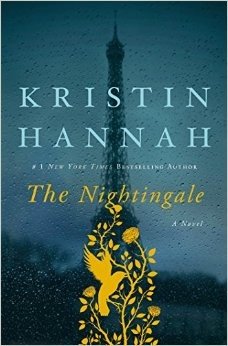
Why Read The Nightingale?
The Nightingale is one of the most widely read and emotionally powerful WWII novels of the 21st century — a story that deliberately centres the women whose experiences of war have been systematically underrepresented in historical fiction. Kristin Hannah draws on the true history of the French Resistance and the extraordinary women who guided Allied airmen to safety across occupied France, weaving it into a narrative of two sisters whose opposing temperaments lead them to entirely different forms of courage. It is a novel that insists, on every page, that survival itself is an act of heroism.
Set in the Loire Valley of France from 1939 through the liberation of 1944–45, the novel follows Vianne and Isabelle Rossignol — two daughters of a WWI veteran who has raised his daughters in distant silence. Vianne is the elder, settled in a farmhouse with her husband and daughter, cautious and pragmatic. Isabelle is the younger, impulsive and idealistic, expelled from every school she has attended. When German soldiers begin billeting in Vianne’s home, both sisters must find their own way to endure, resist, or survive. Isabelle throws herself into the Resistance, becoming the legendary “Nightingale” who guides downed Allied airmen across the Pyrenees into Spain. Vianne’s resistance is quieter — the daily negotiation of survival, the protection of Jewish children, and small moral decisions that accumulate, over years of occupation, into something equally heroic.
Hannah structures the novel with a framing device: an elderly French woman in Oregon in 1995 attending a reunion for French Resistance veterans, whose identity is revealed only in the final pages. This structural choice gives the novel an elegiac quality that elevates it beyond conventional war fiction, asking the reader to look twice at everything they have assumed about who the story belongs to.
Who Should Read This
This is a book for readers who want war fiction that centres female experience without reducing that experience to passivity or victimhood. Essential reading for students of history and women’s studies, general readers drawn to emotionally powerful historical fiction, CAT/GRE aspirants building reading stamina with intermediate-level literary fiction, and anyone who has ever wondered what ordinary courage looks like under extraordinary pressure.
Key Takeaways from The Nightingale
Courage is not a single form. Isabelle’s dramatic acts of Resistance and Vianne’s quiet daily negotiations with survival — hiding Jewish children, enduring humiliation, protecting her family — are equally acts of bravery. Hannah refuses to rank them, insisting that the heroism history records is only one kind, and often not the most common.
Estrangement between people who love each other is often the product of circumstance and silence rather than genuine incompatibility. Vianne and Isabelle spend much of the novel at odds, yet war steadily strips away the distances between them. The novel is ultimately as much a story about sisterhood as it is about war.
Survival under occupation demands constant moral compromise, and Hannah does not flinch from this. Vianne’s path is not clean — she makes accommodations that weigh on her long after the war ends. The novel treats these compromises with honesty, neither condemning nor excusing but simply witnessing.
History erases the women who lived it. The framing device — an elderly survivor attending a Resistance reunion where no one remembers her — is a thematic statement. Hannah wrote the novel explicitly to recover women’s experiences of WWII that have been overlooked by a historical record written primarily about and by men.
The Nightingale Plot Summary
The novel opens in 1995, where an unnamed elderly woman in Oregon is packing up her house and preparing to travel to France for a reunion of French Resistance veterans. Her identity, and her relationship to the story that follows, is withheld until the final pages. From this framing device, the narrative leaps back to 1939 and the Loire Valley, where Vianne Rossignol Mauriac lives in a farmhouse called Le Jardin with her husband Antoine and their daughter Sophie.
When Germany invades France and Antoine is mobilized, Vianne is left alone — and soon finds a German officer, Captain Beck, billeted in her home. Beck is, at first, a model of correct behavior: quiet, respectful, almost apologetic. But as the occupation deepens and German policy toward Jews intensifies, Vianne is forced into increasingly impossible positions. She begins, quietly and at great personal risk, hiding Jewish children by registering them under false names at the local school, eventually placing dozens of children with convent sisters and sympathetic families across the region. The moral cost of her daily decisions — the accommodations she makes, the things she witnesses without intervening — accumulates across years of occupation into a portrait of survival that is neither clean nor comfortable.
Isabelle, expelled again from school in Paris, makes her way back to the Loire Valley against her father’s wishes and soon falls in with the nascent French Resistance. Impulsive, passionate, and indifferent to her own safety, she becomes a courier and then the central figure of an escape network, leading downed Allied airmen on foot across the Pyrenees into Spain — a journey of extraordinary physical danger she undertakes repeatedly. She is known to the Resistance, and eventually to the Germans, only as “le Rossignol” — the Nightingale. Her story is one of action, pursuit, and capture, and it provides the novel’s most conventionally dramatic narrative thread.
The two sisters’ paths cross and diverge across the years of occupation, separated by geography, secrecy, and the different imperatives of their choices. A devastating late-novel development forces Vianne to confront a truth she has been suppressing, and the novel’s final section — liberation, aftermath, reunion — carries the full weight of everything the war has cost. The 1995 framing resolves in the novel’s closing pages with a revelation that reframes the entire narrative and delivers one of the most emotionally charged endings in contemporary historical fiction.
The Nightingale Characters
A cast built around two sisters whose opposing temperaments illuminate different faces of the same historical ordeal — and surrounded by characters who give the occupation its human texture.
A pragmatic, cautious schoolteacher and mother whose entire instinct is to protect her daughter and endure the occupation with minimum exposure. Her arc is the novel’s moral and emotional center: she begins as a woman who wants only to survive and ends as someone whose quiet, sustained acts of resistance constitute a form of heroism she never claims for herself.
A passionate, reckless idealist whose inability to accept injustice passively drives her into the heart of the Resistance. The novel’s most dynamic presence — impulsive, physically brave, romantically intense — her evolution from expelled schoolgirl to legendary Resistance operative is rendered with genuine psychological credibility.
The sisters’ father, a WWI veteran so damaged by the trenches that he has spent decades in emotional withdrawal, failing both daughters through his inability to be present. His late-novel transformation — when the occupation finally forces him back into action — is one of the book’s most quietly earned redemptions.
The German officer billeted in Vianne’s home, whose correct behavior and genuine decency complicate the novel’s moral landscape in deliberately uncomfortable ways. Not a Nazi ideologue but a schoolteacher pressed into uniform — his presence creates the novel’s most ethically charged space.
A committed communist and Resistance operative who becomes Isabelle’s guide into the underground network and, eventually, her great love. Principled, physically capable, and emotionally reserved — in some ways Isabelle’s masculine counterpart. His fate is one of several the novel does not resolve with comfort.
Vianne’s closest friend and neighbor, a Jewish woman whose escalating persecution under the occupation gives the novel’s historical horror its most personal face. Her story and the fate of her son Ari is the moral engine that drives Vianne from passive survival to active resistance.
Major Themes
Hannah’s themes emerge directly from the historical record she is recovering — grounded in specific, documented experience rather than abstract argument.
The novel’s organizing argument is that courage under occupation took radically different forms, and that the visible, celebrated forms — armed resistance, escape networks, dramatic acts of defiance — were only one expression of a broader heroism. Vianne’s years of daily endurance, moral compromise, and quiet protection of children represent a form of courage that history rarely commemorates. Hannah places both sisters’ experiences in full view and refuses to adjudicate between them.
Hannah wrote The Nightingale explicitly to recover women’s experiences of WWII that have been systematically underrepresented. The novel’s women are not passive sufferers waiting for liberation — they are agents, strategists, resistors, and survivors whose contributions were essential to the Resistance and whose stories were subsequently minimized or forgotten. The 1995 framing device, in which a female Resistance veteran goes unrecognized at a reunion, makes this argument concrete and personal.
Vianne and Isabelle begin the novel almost as strangers — separated by years of their father’s emotional unavailability and by temperamental opposites — and the war, paradoxically, becomes the crucible in which their relationship is tested and ultimately forged. The novel argues that love between siblings is not dissolved by conflict or distance but preserved beneath it, waiting to be recovered by the right combination of crisis and honesty.
One of the novel’s most honest achievements is its refusal to present Vianne’s survival as morally clean. Living with a German officer, accepting small protections that others did not have, making accommodations that ease daily life under occupation — these are not presented as heroism but as the texture of survival in impossible conditions. Hannah treats this moral complexity with genuine care, neither condemning Vianne’s choices nor allowing them to be forgotten.
Critical Analysis
A balanced assessment examining both the novel’s considerable craft and the places where its emotional directness creates its own risks.
Hannah is a supremely skilled storyteller — her pacing is excellent, her chapter endings consistently pull the reader forward, and her ability to generate genuine emotional investment across 440 pages is a craft achievement that should not be underestimated.
The novel is grounded in detailed, accurate research into the French Resistance, the experience of occupation in the Loire Valley, and the specific history of women’s resistance networks — giving it a historical authority that earns its emotional claims.
The 1995 frame is elegantly deployed — withholding just enough to sustain curiosity while gradually deepening emotional resonance, and delivering a final revelation that recontextualizes everything without feeling manipulative.
Hannah’s directness, while a strength for accessibility, occasionally tips into melodrama — emotional moments are sometimes over-signalled, and the prose can strain toward sentiment in ways that more restrained writers avoid.
Vianne and Isabelle are sometimes more representative types — the cautious one versus the courageous one — than fully unpredictable human beings, and the novel’s structure occasionally prioritizes thematic clarity over psychological complexity.
Beck’s decency, while historically plausible and thematically important, is handled with slightly more comfort than the moral complexity of the situation warrants. The novel uses his humanity to generate tension but does not fully pursue the most uncomfortable implications of Vianne’s relationship with him.
Literary & Cultural Impact
A Word-of-Mouth Phenomenon: The Nightingale was published to modest initial attention in 2015 before becoming one of the most remarkable word-of-mouth success stories in recent publishing history. It spent over two years on the New York Times bestseller list, sold more than four million copies in the United States alone, and has been translated into over forty languages worldwide. It is regularly cited as one of the most important historical novels of the 2010s and is a consistent bestseller in book club contexts globally.
Cultural Contribution: The novel arrived at a moment of growing critical attention to women’s history and women’s narratives — the same cultural shift that produced the global success of Hidden Figures and renewed scholarly attention to women in WWII resistance movements. The Nightingale contributed significantly to that shift, bringing stories like those of Andrée de Jongh (the real-life inspiration for aspects of Isabelle’s story) to millions of readers who would not otherwise have encountered them.
For Competitive Exam Preparation: The novel is ideal intermediate-level reading comprehension material. Its prose is clear and propulsive enough to sustain reading momentum while its thematic complexity — the dual-protagonist structure, the moral ambiguities, the historical framing — rewards the kind of analytical attention that CAT and GRE passages demand. The novel’s use of narrative perspective, time structure, and the relationship between the 1995 frame and the WWII narrative offer particularly rich material for questions on point of view and authorial purpose.
Love This Book? Master Every Book.
Stop struggling with reading comprehension. Our proven system transforms how you read—whether for CAT, GRE, GMAT, SAT, or personal growth.
Best Quotes from The Nightingale
In love we find out who we want to be; in war we find out who we are.
Men tell the stories of war. Women live them.
It is a quiet thing, the heartbreak of ordinary life. It doesn’t crash over you all at once; it seeps through the cracks.
I have been many things in my life — a girl, a student, a Resistance fighter, a woman in love — but always, always, I have been a survivor.
If I have learned anything in this long life of mine, it is this: in love we find out who we want to be; in war we find out who we are.


Test Your Understanding
Think you’ve mastered The Nightingale? Challenge yourself with 15 questions on themes, characters, and key takeaways. Score 80%+ to prove your mastery.
The Nightingale FAQ
What is The Nightingale about?
The novel follows two French sisters, Vianne and Isabelle, through the Nazi occupation of France from 1939 to liberation in 1944–45. Vianne quietly resists the occupation by protecting Jewish children in her community, while Isabelle joins the French Resistance and becomes a legendary operative who guides downed Allied airmen over the Pyrenees into Spain. The novel is framed by an elderly French woman in 1995 attending a Resistance veterans’ reunion, whose identity is revealed in the final pages.
Is The Nightingale based on a true story?
The novel is historical fiction rather than biography, but it is deeply grounded in historical fact. Isabelle’s escape network across the Pyrenees is based on real operations carried out by women like Andrée de Jongh, who founded the Comet Line and guided hundreds of Allied airmen to safety. The broader history of women in the French Resistance — their roles as couriers, forgers, and network organizers — is accurately rendered, and Hannah conducted extensive research in France before writing the novel.
What are the main themes of The Nightingale?
The novel’s central themes are the many forms of courage, the erasure of women’s war experience from historical memory, survival and moral compromise under occupation, and the enduring power of sisterhood. Running through all of these is a conviction that ordinary people — and particularly ordinary women — are capable of extraordinary heroism under conditions they did not choose and cannot control.
Who is the old woman at the beginning and end of the novel?
This is the novel’s central structural question and its most carefully guarded secret. Revealing her identity here would constitute a significant spoiler. What can be said is that her identity recontextualizes the entire preceding narrative and that Hannah deploys this revelation with considerable skill — it arrives as both a surprise and an inevitability, which is the mark of structural design done well.
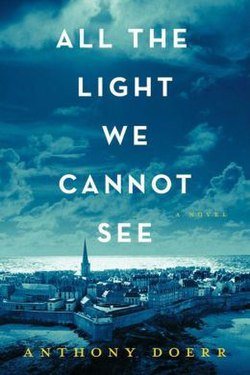
How does The Nightingale compare to other WWII novels like The Book Thief and All the Light We Cannot See?
The Nightingale is more emotionally direct and plot-driven than either of those novels, and considerably more accessible. Where All the Light We Cannot See prioritizes lyrical prose and structural complexity, and The Book Thief uses narrative defamiliarization to create distance, The Nightingale prioritizes emotional immediacy and historical specificity. It is the most purely readable of the three, and arguably the most explicit in its feminist historical argument. Together, the three novels offer complementary approaches to the same historical moment.








