

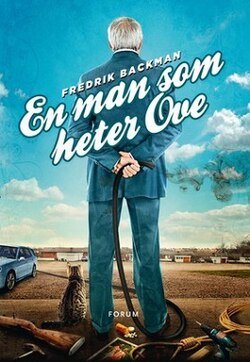
Why Read A Man Called Ove?
A Man Called Ove is a quietly devastating novel about grief, community, and the unexpected ways human connection can pull us back from the edge. Fredrik Backman wraps profound emotional depth inside a comedy of errors, making this one of the most beloved novels of the 21st century. It will make you laugh, cry, and look at the grumpy neighbor on your street very differently.
On the surface, Ove is a 59-year-old curmudgeon obsessed with rules, proper parking, and the correct use of a hammer. But beneath his rigid exterior lies a man shattered by loss — a man who has quietly decided he no longer wants to live. When a boisterous young family crashes (literally) into his driveway and his solitary plans are derailed again and again by people who stubbornly insist on needing him, Ove finds himself pulled back into a life he thought was finished. Backman tells this story with deep warmth, weaving Ove’s present-day frustrations with tender flashbacks to a life full of love, loyalty, and quiet dignity.
What makes this novel endure is its radical empathy. Every person Ove dismisses as an idiot turns out to be carrying their own invisible weight. The book argues, without ever becoming preachy, that community is not built on shared values but on shared need — and that even the most closed-off human heart can be reopened by persistence, a pregnant Iranian woman, and a stray cat.
Who Should Read This
This book is for anyone who has ever felt invisible, or known someone who has. It rewards readers who appreciate character-driven storytelling, emotional honesty, and stories where small domestic moments carry the weight of grand themes. Perfect for general readers, students, CAT/GRE reading comprehension practice, and anyone navigating grief or change.
Key Takeaways from A Man Called Ove
People who appear rigid and difficult are often protecting a profound inner wound. Ove’s obsessive rule-following is the architecture of a man who used structure to survive devastating loss. Understanding this transforms how we see “difficult” people in our own lives.
Community is not built through grand gestures but through small, persistent acts of showing up. The neighbors who save Ove are not heroes — they simply keep knocking on his door. Belonging is created through repetition and presence, not ideology or shared background.
Grief does not follow a schedule, and love does not end with death. Ove’s entire personality — his loyalty to Saab, his meticulous routines — is a monument to his late wife Sonja. The novel reframes grief as a form of devotion rather than dysfunction.
Meaning can be forced upon us by others who need us, even when we’ve decided we’re done. Ove does not choose to re-engage with life — he is dragged back into it by a cat, a clumsy family, and people who inconveniently need his help. Purpose rarely announces itself; it shows up uninvited.
A Man Called Ove Plot Summary
A Man Called Ove opens on a man who has made up his mind. Ove, a 59-year-old widower living in a row of townhouses in Sweden, has just been forced into early retirement — the last thread connecting him to a sense of purpose. With his wife Sonja gone, his job gone, and his rigid daily routines offering diminishing comfort, Ove quietly begins making arrangements to die and join her.
His plans are interrupted — repeatedly and infuriatingly — by new neighbors. Parvaneh, a heavily pregnant Iranian woman, and her hapless husband Patrick crash their trailer into Ove’s mailbox on moving day, triggering an unwanted friendship that Ove refuses but cannot entirely escape. A stray cat colonizes his porch. An old friend needs an unexpected favor. A young gay man, kicked out by his father, needs a place to stay. Each interruption is a small emergency that only Ove — with his particular skills and stubbornness — can resolve.
Woven through Ove’s present-day irritations are flashbacks that reveal his entire life: a lonely childhood shaped by an honest father, a transformative encounter with the luminous Sonja on a train, their marriage, their heartbreak, their battles against bureaucracy, and the quiet heroism of their life together. These chapters slowly dismantle every assumption the reader has made about who Ove is and why he is the way he is.
By the novel’s final act, Ove has become — against every intention — the center of a neighborhood community. He teaches Parvaneh to drive. He advocates for a friend facing eviction. He rescues a man from the tracks. The man who wanted to leave the world quietly becomes its unlikely guardian, and Backman delivers an ending that is both inevitable and devastating in the most beautiful way.
A Man Called Ove Characters
Every character in the novel is rendered with a fully realized inner life — no one is purely comic relief or plot device.
A 59-year-old widower and rigid rule-enforcer secretly planning to end his life. His gruffness masks extraordinary loyalty, technical competence, and a love for his late wife Sonja that defines every aspect of his personality. He must be coaxed back to life by people he is determined to dislike.
Ove’s late wife, who appears extensively in flashbacks and whose memory drives all of Ove’s present-day actions. Warm, bookish, and radically open-hearted — the philosophical opposite of Ove, yet his perfect complement. The novel’s moral compass even in her absence.
The young, heavily pregnant Iranian woman who moves in next door and refuses to respect Ove’s desire to be left alone. Boisterous, perceptive, and fiercely kind — she is the primary force that pulls Ove back into community, combining comic energy with genuine emotional intelligence.
Parvaneh’s well-meaning but thoroughly incompetent husband, who consistently manages to require Ove’s expertise in plumbing, construction, and basic common sense. Played for laughs, but his warmth and good nature make him genuinely endearing.
Ove’s oldest friend and neighbor, with whom he has had a bitter falling out over car brands, politics, and neighborhood associations. Now suffering from dementia, Rune’s story provides a window into both men’s past and the petty tribalism that destroys friendships — the novel’s most poignant subplot.
An overweight, gentle young man from the neighborhood whose fundamental decency Ove cannot deny despite his confusion at Jimmy’s generation. He helps humanize Ove’s evolution and represents the unexpected forms that goodness can take.
Major Themes
Backman’s themes emerge from the granular texture of daily life rather than grand proclamation — which is precisely what makes them land so hard.
The novel’s deepest theme is how grief reshapes personality. Everything about Ove — his routines, his anger, his loyalty to specific brands and values — is a response to losing Sonja. Backman presents grief not as a temporary state to be overcome but as a permanent reorganization of self, one that can become a prison or, with help, a foundation for re-engagement.
A Man Called Ove argues that community is built not through ideology but through need, proximity, and persistence. The neighborhood that forms around Ove is not held together by shared values — it includes an Iranian immigrant, a gay teenager, and a retired bureaucrat — but by the simple fact that these people keep showing up for each other. The novel is a quiet argument against social atomism.
Throughout the novel, Ove and others are repeatedly threatened by “men in white shirts” — faceless bureaucrats who represent systems that prioritize process over people. This thread runs from the housing authority’s treatment of Rune to the hospital’s dismissiveness toward Sonja. Backman uses these moments to suggest that the most radical act is simply to see another person as a full human being.
Ove embodies a particular kind of mid-20th-century masculinity: stoic, practical, emotionally inarticulate. The novel does not mock this but traces its origins — Ove’s emotionally reserved father, his working-class dignity — while gently showing its cost. The book’s arc is about Ove learning, too late in life but not too late, that love can be expressed in ways other than maintenance and loyalty.
Critical Analysis
A balanced assessment examining both the novel’s considerable emotional achievements and its structural limitations.
Backman constructs Ove’s backstory with extraordinary precision — each flashback reframes the present, creating a sustained dramatic irony that deepens rather than dissipates on rereading.
The novel is genuinely funny. Backman uses misunderstanding, physical comedy, and Ove’s exasperated internal monologue to create consistent lightness that makes the emotional gut-punches land harder by contrast.
Every secondary character has a fully realized inner life. No one is purely comic relief or plot device — even the antagonists are humanized, making the book’s moral argument feel earned rather than sentimental.
Several plot turns — including the number of times Ove’s suicide attempts are interrupted at precisely the right moment — stretch credibility and give the novel an occasionally schematic quality.
The “men in white shirts” bureaucrats are effective as symbolic villains but lack the dimensionality Backman brings to his sympathetic characters, leaving the novel’s critique of institutional cruelty somewhat cartoonish.
For readers familiar with the “grumpy-man-redeemed-by-community” genre, the novel’s major emotional moments arrive as anticipated. Its power lies in execution, not surprise, which may frustrate readers seeking structural originality.
Literary & Cultural Impact
A Global Phenomenon: A Man Called Ove was a global phenomenon, spending years on bestseller lists across Europe and North America after its 2012 Swedish publication and 2014 English translation. It won Sweden’s most prestigious literary prize and was adapted into both a Swedish film (nominated for the Academy Award for Best Foreign Language Film) and a 2022 American remake starring Tom Hanks.
Cultural Timing and Staying Power: Published amid growing anxieties about social isolation, aging populations, and the collapse of community infrastructure in modern cities, the novel offered a counter-narrative: that connection is always possible, always proximate, and often inconvenient. It arrived as a corrective to the atomized, screen-mediated social experience of modern life without being reactionary or nostalgic.
For Exam Preparation: For readers preparing for competitive exams, the novel is an excellent RC resource. Backman’s prose is clean and direct but emotionally layered, offering practice in tone detection, inference, and character motivation analysis. Its structure, with interwoven past and present timelines, also provides excellent practice for questions on narrative technique and authorial intent.
Love This Book? Master Every Book.
Stop struggling with reading comprehension. Our proven system transforms how you read—whether for CAT, GRE, GMAT, SAT, or personal growth.
Best Quotes from A Man Called Ove
People said Ove saw the world in black and white. But she was color. All the color he had.
Death is a strange thing. People live their whole lives as if it does not exist, and yet it’s often one of the great motivations for living.
He was a man of black and white. And she was color. All the color he had ever seen.
Loving someone is like moving into a house. At first you fall in love with all the new things, amazed every morning that all this belongs to you, as if fearing that someone will suddenly come rushing in through the front door to explain that a terrible mistake has been made, you weren’t actually supposed to live in a wonderful place like this.
We always think there’s enough time to do things with other people. Time to say things to them. And then something happens and then we stand there holding on to words like ‘if’.

Test Your Understanding
Think you’ve mastered A Man Called Ove? Challenge yourself with 15 questions on themes, characters, and key takeaways. Score 80%+ to prove your mastery.
A Man Called Ove FAQ
What is A Man Called Ove about?
A Man Called Ove is about a 59-year-old Swedish widower who, after losing his job and his wife, quietly plans to end his life — only to have his plans repeatedly derailed by a new family who moves in next door. It is a story about grief, community, and the unexpected ways human connection can restore a person’s will to live.
Is A Man Called Ove difficult to read?
The novel is rated Elementary in reading level, making it accessible to most readers including high school students and non-native English speakers. Backman’s prose is clear, warm, and often funny. The emotional content can be heavy, but the writing style is never demanding — it rewards sustained attention without requiring literary expertise.
What are the main themes of A Man Called Ove?
The novel’s central themes are grief and identity, the importance of community, masculinity and emotional expression, and the dehumanizing effects of bureaucracy. Running through all of these is a belief in the transformative power of human connection and the idea that even the most closed-off person can be reached by persistent kindness.
Who is Sonja and why is she important?
Sonja is Ove’s late wife, who died before the novel begins but whose presence pervades every page through extensive flashbacks. She represents everything Ove loved and lost — warmth, optimism, intellectual curiosity, and radical openness. The novel suggests that Ove’s entire personality, for better and worse, is a monument to his love for her.
Why should I read A Man Called Ove today?
In an era of social fragmentation and epidemic loneliness, A Man Called Ove makes a quietly urgent case for community, presence, and the radical act of seeing your neighbor as a full human being. It is also simply one of the best-executed examples of character-driven storytelling in contemporary fiction — a novel that proves deep emotional truth and genuine comedy are not incompatible.








