
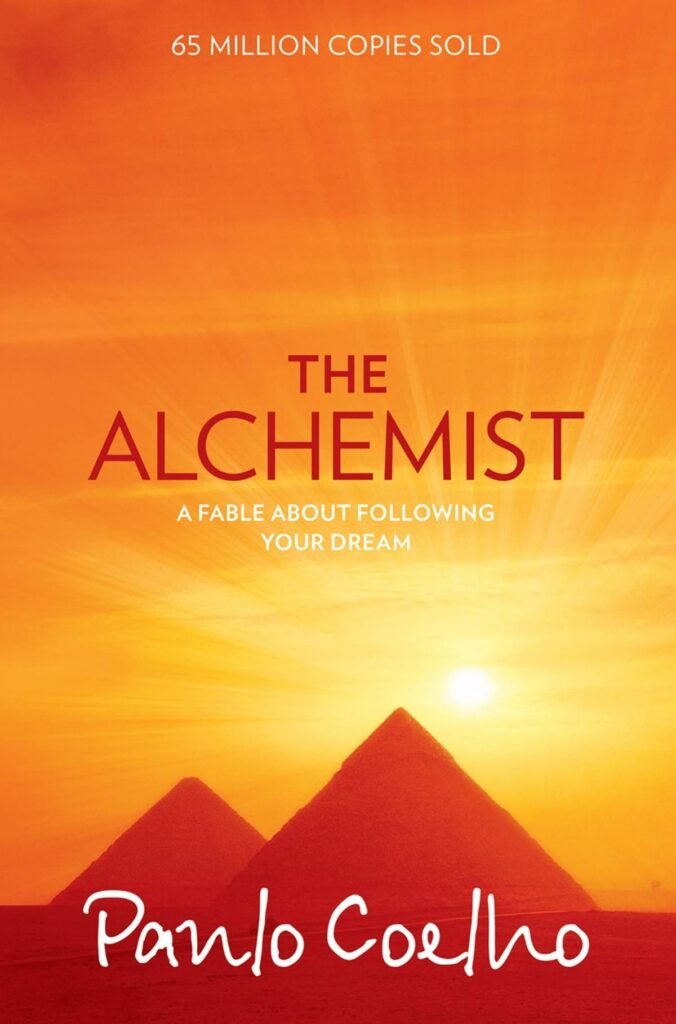
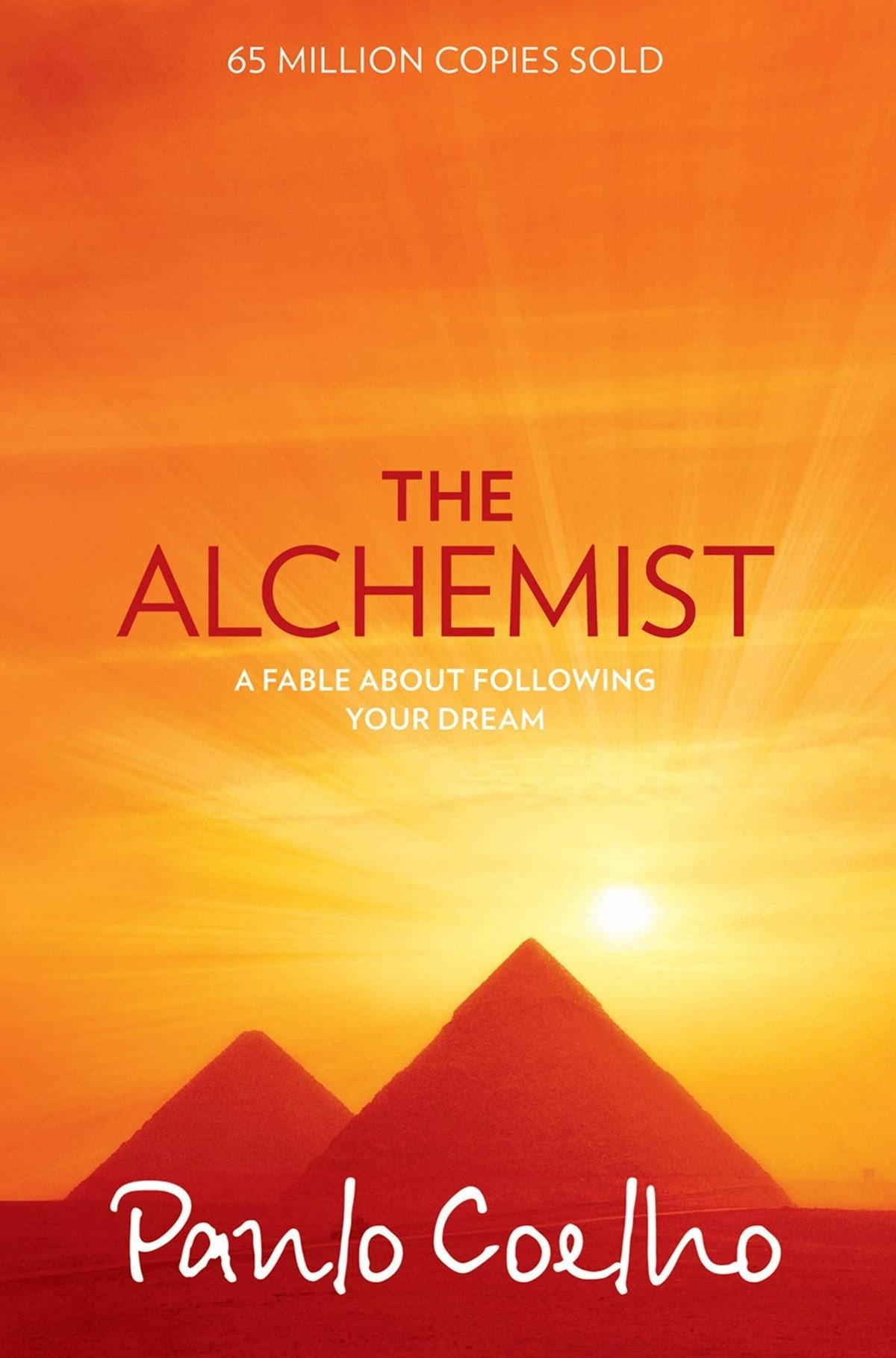
Why Read The Alchemist?
The Alchemist is one of the best-selling novels in history, translated into 80 languages and read by over 65 million people worldwide. Its appeal is both universal and deeply personal: Coelho’s fable about a young shepherd pursuing his destiny speaks to the ancient human tension between security and the call of something greater, and does so with a simplicity that belies its philosophical depth.
The novel follows Santiago, an Andalusian shepherd boy who dreams of finding treasure buried near the Egyptian pyramids. What begins as a straightforward adventure story becomes an allegorical journey through the language of the world, the Soul of the World, and the concept of a Personal Legend — Coelho’s term for the unique calling that each person carries within them. Along the way, Santiago encounters teachers, lovers, enemies, and moments of profound stillness that transform both him and the reader.
Coelho wrote The Alchemist in just two weeks, describing it as already existing in his soul waiting to be written. The novel’s enduring power lies not in plot complexity but in its capacity to crystallize feelings that readers already carry — the guilt of an unlived dream, the fear of the unknown, the recognition that the journey itself is the destination. For reading comprehension preparation, the book offers beautifully constructed allegorical prose, layered symbolism, and thematic density that reward close reading and analysis.
Who Should Read This
The Alchemist is ideal for anyone at a crossroads — choosing a career, questioning a path, or searching for meaning in work or life. Its elementary reading level makes it accessible to younger students while its philosophical depth rewards rereading at any age. Particularly valuable for CAT/GRE/GMAT aspirants who want to build reading fluency with literary fiction, and for anyone preparing to discuss personal goals in MBA interview and GD-PI rounds where questions about purpose and aspiration are common.
Key Takeaways from The Alchemist
Every person has a Personal Legend — a unique purpose or calling that the universe conspires to help them achieve, if they have the courage to pursue it. The tragedy Coelho identifies is not failure to achieve one’s legend but failure to attempt it, choosing comfort and familiarity over the journey toward one’s deepest desire.
The universe communicates through omens — signs, coincidences, and intuitions that point toward or away from one’s path. Learning to read these signs requires presence, attention, and a willingness to trust what cannot be logically proven. Coelho presents this not as superstition but as a form of attunement to the deeper patterns of existence.
The treasure Santiago seeks turns out to be not what he imagined, and exactly what he needed. Coelho’s central structural irony — that the treasure was always near where Santiago started — is not a trick ending but a philosophical statement: the journey transforms the seeker so completely that the destination becomes secondary to who they have become.
The book teaches the value of being present to each moment rather than living in anticipation of a future destination. Santiago’s greatest teacher, the alchemist, teaches him to read the Soul of the World — not through books or formulas, but through direct attention to the world as it is. This is Coelho’s argument for an experiential, intuitive approach to wisdom.
The Alchemist Plot Summary
Santiago is a young Andalusian shepherd who has chosen his life deliberately — he wanted to travel, and tending sheep allowed him to do so. But a recurring dream of treasure buried near the Egyptian pyramids unsettles his contentment. When a fortune teller and then a mysterious old man named Melchizedek — who claims to be the King of Salem — both confirm the dream’s significance, Santiago sells his flock and crosses into North Africa in pursuit of his Personal Legend.
The journey immediately goes wrong. Santiago is robbed in Tangier, losing everything, and is forced to start over working for a crystal merchant. The year he spends at the shop becomes his first great lesson: the merchant knows his own Personal Legend (to make a pilgrimage to Mecca) but has found elaborate reasons never to pursue it, choosing instead to live in anticipation of a dream he is terrified to risk. Santiago sees himself in the merchant’s fear and resolves not to make the same choice.
Joining a caravan crossing the Sahara toward Egypt, Santiago meets an Englishman obsessed with alchemy and, more significantly, Fatima — a desert woman with whom he falls in love. The caravan stops at Al-Fayoum oasis, where Santiago reads an omen that prevents an attack and earns him an audience with the oasis’s chief. Here he also meets the Alchemist — an ancient, mysterious figure who agrees to guide him the final stretch of the journey after recognizing Santiago’s readiness to learn.
The Alchemist leads Santiago through a dangerous traverse of warring tribal territory, teaching him through silence, observation, and paradox rather than explanation. Santiago is captured by a tribal chief and given three days to demonstrate that he can turn himself into the wind — or be killed. Through absolute presence and communion with the elements, he does. He reaches the pyramids, begins to dig, and is beaten by thieves — one of whom unknowingly reveals the true location of the treasure while mocking Santiago’s journey. Santiago returns home, and finds what he was seeking where he began.
The Alchemist Characters
Each character in the novel serves as a teacher, mirror, or test for Santiago on his journey toward his Personal Legend.
An Andalusian shepherd boy who embodies the universal human impulse toward self-discovery. Curious, adaptable, and ultimately courageous — willing to risk comfort, love, and safety in pursuit of his Personal Legend.
A mysterious old king who appears just as Santiago is about to abandon his dream. He introduces the concepts of Personal Legend and the Soul of the World, gives Santiago two magical stones, and sets the journey in motion.
An ancient, enigmatic figure living at Al-Fayoum who teaches not through instruction but through experience and paradox, guiding Santiago to trust the Soul of the World. He is the novel’s symbol of achieved wisdom.
A woman of the desert whom Santiago meets at Al-Fayoum and loves deeply. She encourages Santiago to continue his journey, embodying Coelho’s belief that true love does not imprison.
A Tangier merchant who knows his Personal Legend (pilgrimage to Mecca) but deliberately avoids pursuing it. He is Coelho’s portrait of how fear masquerades as wisdom and contentment.
A learned scholar of alchemy who has read every book on the subject but struggles to grasp its essence intuitively. His contrast with Santiago illustrates that the Language of the World is felt, not studied.
Major Themes
Coelho weaves several interconnected philosophical themes throughout The Alchemist, each building on the novel’s central spiritual vision.
The novel’s central theme is the idea that every person has a unique destiny — a Personal Legend — that represents their highest aspiration and truest self. Coelho argues that children know their Personal Legends instinctively, but that adult life systematically teaches people to suppress this knowledge in favor of security, approval, and conformity.
Coelho presents a benevolent, responsive universe that actively supports those who pursue their Personal Legend, expressed through the concept of the Soul of the World — a spiritual force that connects all things and speaks through omens, coincidences, and intuitions. The theme invites readers to reframe setbacks not as obstacles but as redirections.
One of the novel’s most sophisticated themes is its deconstruction of goal-oriented thinking. Santiago’s treasure turns out to have been near his starting point all along — but the journey to Egypt was necessary to acquire the wisdom to recognize it. Coelho argues that the Personal Legend is primarily about the internal transformation that pursuit produces, not the external outcome.
Throughout the novel, fear appears as the primary force preventing characters from living fully. The crystal merchant’s fear of a fulfilled dream, Santiago’s fear of losing Fatima, the tribal chief’s fear of an unknown boy — all represent the same tendency to prefer a known cage over an unknown freedom. The alchemist’s core teaching: the fear of suffering is worse than suffering itself.
Critical Analysis
A balanced assessment examining both the novel’s extraordinary strengths and its genuine literary limitations.
Coelho taps into the hero’s journey and executes it with enough simplicity and warmth that it reaches readers across cultures, ages, and belief systems in a way few contemporary novels achieve.
The novel’s allegorical layers — alchemy as personal transformation, the desert as inner emptiness, gold as authentic selfhood — reward rereading and close analysis, making it far denser than its simple prose surface suggests.
Whatever the book’s philosophical limitations, it speaks honestly to something real in human experience — the gap between the life we’re living and the life we sense we could be living — and does so without sentimentality.
Coelho’s worldview — that the universe conspires to help those who follow their dreams — is comforting but difficult to reconcile with the experiences of billions for whom circumstances, injustice, or misfortune foreclose even the attempt at a Personal Legend.
Santiago and most supporting characters are allegorical rather than psychologically complex; readers seeking realistic, nuanced human portraiture will find the novel too schematic.
The book’s themes are stated, restated, and stated again through different mouths and situations, which reinforces them for some readers but feels didactic and overexplicit for others who prefer to draw their own conclusions.
Literary & Cultural Impact
A Publishing Phenomenon: The Alchemist holds a record that no other novel in history has matched: it remained on the New York Times bestseller list for over 315 weeks. Originally published in Portuguese in 1988 by a small Brazilian press that initially printed just 900 copies, the book found its audience through word of mouth before exploding globally. By 2023 it had sold over 65 million copies in more than 80 languages, making it one of the five best-selling novels ever written.
A Cultural Paradox: The book’s cultural influence has been extraordinary and somewhat paradoxical. It is simultaneously beloved by spiritual seekers, self-help readers, and literary romantics, and dismissed by literary critics who find its philosophy simplistic and its prose thin. This tension has made it a recurring subject of debate about what literature is for — whether emotional and philosophical resonance matter as much as stylistic sophistication.
Relevance for Indian Exam Aspirants: In the CAT and MBA preparation context, The Alchemist occupies a specific cultural position. It is one of the most frequently cited books by aspirants when asked about personal influences, making it useful for personal statement writing, GD topics (the tension between security and ambition is a classic GD theme), and PI discussions about purpose and motivation. Its clear, metaphorical prose is also excellent practice for developing reading fluency that CAT and GMAT verbal sections demand.
Love This Book? Master Every Book.
Stop struggling with reading comprehension. Our proven system transforms how you read—whether for CAT, GRE, GMAT, SAT, or personal growth.
Best Quotes from The Alchemist
And, when you want something, all the universe conspires in helping you to achieve it.
It’s the possibility of having a dream come true that makes life interesting.
There is only one thing that makes a dream impossible to achieve: the fear of failure.
Tell your heart that the fear of suffering is worse than the suffering itself.
The secret of life, though, is to fall seven times and to get up eight times.



Test Your Understanding
Think you’ve mastered The Alchemist? Challenge yourself with 15 questions on themes, characters, and key takeaways. Score 80%+ to prove your mastery.
The Alchemist FAQ
What is The Alchemist about?
The Alchemist is an allegorical novel about Santiago, an Andalusian shepherd boy who follows a recurring dream of treasure near the Egyptian pyramids. The journey becomes a philosophical quest about pursuing one’s Personal Legend — one’s unique purpose in life — with the help of omens, teachers, and the Soul of the World. At its heart, the book is about the courage required to live the life you are meant to live rather than the life that feels safe.
Is The Alchemist difficult to read?
It is rated Elementary — the prose is simple, clear, and flowing, making it accessible to readers from early secondary school onward. The book can be read in a single sitting of around four hours. While the reading is easy, the philosophical themes reward reflection and rereading, making it a book that grows with the reader.
What are the main themes in The Alchemist?
The book’s central themes are the Personal Legend (individual destiny and purpose), the Soul of the World (universal spiritual connection), the importance of reading omens, the journey versus the destination, love versus destiny, and fear as the primary obstacle to a fully lived life.
Who is the Alchemist in the novel?
The Alchemist is an ancient, mysterious figure living at an Egyptian oasis who has achieved mastery — not just of turning lead into gold, but of transforming himself into his purest nature. He serves as Santiago’s final and most demanding teacher, guiding him not through explanation but through experience, silence, and paradox. He represents achieved wisdom and the possibility that full human potential can be realized.
Why has The Alchemist sold 65 million copies?
The book’s extraordinary reach comes from its ability to arrive at the right moment in a reader’s life — moments of choice, transition, or doubt — and feel personally addressed. Its message (follow your dream, the universe will help) is simple, universal, and emotionally compelling. It also occupies a rare literary space: it is simultaneously a fast, pleasurable read and a philosophically layered text that rewards reflection, giving it appeal across reading levels and cultures.








