

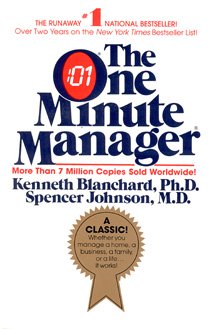
The One Minute Manager
Watch Prashant Sir break down the three secrets, the performance management cycle, and why this 112-page parable has stayed in print for four decades.
Why Read The One Minute Manager?
The One Minute Manager is the founding document of the business parable genre — a format that Spencer Johnson would later perfect with Who Moved My Cheese? Published in 1982 by Ken Blanchard and Spencer Johnson, it has since sold over 13 million copies, been translated into over 37 languages, and remained continuously in print for more than four decades. Its longevity reflects not stylistic sophistication but conceptual precision: the three “secrets” it describes — One Minute Goals, One Minute Praisings, and One Minute Reprimands — are compressed articulations of management principles that decades of subsequent research have broadly validated.
The book follows a young man searching for an effective manager — someone who achieves results while also ensuring the wellbeing of the people they manage. He eventually encounters the “One Minute Manager,” who shares three management secrets through a series of conversations. The parable format is intentional: Blanchard and Johnson are making the point that the most important management principles do not require dense academic treatment — they require clear articulation, memorable structure, and the discipline to apply them consistently.
The three secrets together constitute a complete cycle of performance management: set clear expectations before the work begins (One Minute Goals), catch people doing things right and say so specifically and immediately (One Minute Praisings), and address performance problems directly, specifically, and quickly — then reaffirm the person’s value (One Minute Reprimands). Clear goals create the standard against which performance is measured; frequent praise builds the relationship and the motivation; direct reprimands correct course without destroying trust.
Who Should Read This
This is among the most accessible books in any management library and the most directly applicable to anyone who manages people — or aspires to. MBA and CAT candidates preparing for personal interviews and group discussions about management philosophy will find its three-part framework both immediately memorable and sufficiently substantive to anchor analytical responses. Beyond preparation, it belongs on the reading list of every first-time manager, every team leader, and any professional who has ever wondered why smart people who understand management principles still manage badly in practice.
Key Takeaways from The One Minute Manager
Most performance problems are management problems in disguise — specifically, problems of unclear expectations. One Minute Goals solve this by making the standard explicit, written, and agreed upon before the work begins. Most managers frustrated by their team’s performance have never clearly defined what “good” looks like.
Catching people doing things right is more powerful than catching them doing things wrong — and vastly underused. One Minute Praisings work not because they are kind but because they are informationally precise: they tell people exactly what they did, why it mattered, and how it made you feel — producing both motivation and durable trust.
A One Minute Reprimand is a calibrated correction that addresses the behaviour without attacking the person. The reprimand is over in a minute because nothing more is needed once the behaviour, its consequence, and the standard have been stated — prolonging it turns correction into punishment, which destroys the relationship the praise has built.
The most valuable thing a manager can do is make their own expertise unnecessary. The One Minute Manager’s ultimate goal is a team of people who manage themselves — who know their goals, monitor their own performance, and self-correct because the manager has built those habits into the team’s culture.
Key Ideas in The One Minute Manager
The book begins with its central observation: most managers fall into one of two failure modes. The “tough” manager is results-focused but people-blind — they achieve short-term output at the cost of long-term commitment, loyalty, and the discretionary effort that distinguishes high-performing teams from merely adequate ones. The “nice” manager is people-focused but results-blind — they prioritise harmony at the cost of honest feedback and clear expectations. The One Minute Manager’s thesis is that this is a false dichotomy: the three secrets, practised consistently, produce both results and people who enjoy producing them.
The One Minute Goal is the book’s first and most foundational secret — and the one most consistently neglected in practice. Each employee’s key responsibilities are written down on a single page, with specific performance standards that define what “done well” looks like. Both manager and employee keep a copy. The act of writing down what is expected — specifically enough that both parties would know whether it had been achieved — eliminates the ambiguity that produces most performance conflicts. The “one minute” refers not to the time the goal takes to set, but to the time required to re-read it when priorities compete.
The One Minute Praising has four specific components: immediacy (as close to the behaviour as possible), specificity (exactly what they did, not a generic “good job”), impact (why it mattered, what difference it made), and personal expression (how it made you feel as a manager). The precision of the praising is not incidental — it is the mechanism. A generic “great work” provides no information about what was done well and cannot guide future behaviour. A specific, immediate, impact-oriented praising tells the person exactly what to repeat — and does so in a relational register that builds trust.
The One Minute Reprimand is the book’s most counterintuitive secret — not because reprimands are surprising but because of the specific sequence prescribed. Address the behaviour immediately and specifically: “You did X, and the result was Y.” Allow a moment of silence — let the discomfort register without filling it. Then, critically: reaffirm the person’s value before ending the interaction — “I think you’re good at your job, which is why this matters to me.” The reprimand is thus separated from the person. The behaviour was wrong; the person is valued.
Core Frameworks in The One Minute Manager
The three secrets form an interdependent performance management cycle — each element depends on the others for its full effectiveness.
Core Arguments
Blanchard and Johnson build a case that effective management is not a talent but a practice — specific, learnable, and consistently underused.
Blanchard and Johnson’s foundational argument is that the apparent choice between managing for results and managing for people is false. Research on psychological safety, servant leadership, and high-performing teams consistently shows that the managers who produce the best results over the long term are not the most demanding or the most accommodating but the most consistent — those who set clear expectations, give specific feedback in both directions, and treat people as capable of meeting high standards when properly supported. The tough/nice dichotomy is not a trade-off; it is a false choice between two failure modes.
Most managers give criticism more readily than praise — partly because criticism feels more “serious,” partly because problems are more visible than successes, and partly because the culture of management often equates critical rigour with professional competence. Blanchard and Johnson argue that this asymmetry is not merely unkind; it is informationally wrong: people need specific feedback on what they did right at least as much as on what they did wrong, because the reinforcement of good behaviour is as important for performance as the correction of bad behaviour. A manager who only catches people doing things wrong is not managing — they are auditing for failure.
The book’s most practically demanding argument concerns specificity — the requirement that goals, praisings, and reprimands all be precise enough to be unambiguous. Vague goals cannot be managed against; vague praise provides no guidance; vague reprimands produce defensiveness rather than correction. The discipline of specificity is what distinguishes the three secrets from the generic management advice they superficially resemble. “You’re doing great” is not a One Minute Praising. “Set clear expectations” is not a One Minute Goal. “That was unacceptable” is not a One Minute Reprimand. The precision is the practice.
If goals are clear, praise is frequent and specific, and reprimands are immediate and behaviour-specific, people eventually internalise the manager’s standards — they know what good performance looks like, notice when they are achieving it, and correct themselves when they are not. The One Minute Manager’s ultimate success is to make their own intervention progressively less necessary — not because the team requires no management but because the management has been absorbed into the team’s own operating habits. A manager whose departure would cause the team to collapse has failed at the deepest level of their job.
Critical Analysis
A balanced assessment of a book whose influence has far exceeded its length — and whose simplicity is both its greatest strength and its most significant limitation.
The book achieves in 112 pages what most management textbooks cannot achieve in 400 — not because its argument is shallow but because the parable format eliminates every element except the essential one. This compression is a genuine intellectual achievement, not merely a stylistic one.
The specific sequence of the One Minute Reprimand — behaviour, impact, pause, reaffirmation — is one of the most practically precise management prescriptions in the literature. It separates the essential components of effective corrective feedback in a way that is immediately applicable and reflects genuine psychological sophistication.
The book’s central claim — that clear goals, specific praise, and direct reprimands together constitute effective management — has been substantially validated by four decades of research. The psychological safety literature, servant leadership research, and studies of high-performing teams have all confirmed that this combination produces conditions for sustained high performance. The framework was empirically ahead of its time.
The One Minute Reprimand reflects an Anglo-American management culture in which directness is valued and hierarchical deference is relatively low. In cultural contexts where face-saving is important or where power distance between manager and employee is high, the reprimand sequence requires significant adaptation. The book does not acknowledge these constraints.
Goals are often genuinely ambiguous, not merely unstated; performance is often multi-factorial; relationships are complicated by history, power dynamics, and organisational politics. The book is an excellent introduction to what good management aspires to; it is a simplified map of a more complex territory than any 112-page parable can fully chart.
The One Minute Manager’s model of human motivation is primarily behaviourist — behaviours that are reinforced will be repeated. This model is broadly accurate but incomplete: it does not fully engage with intrinsic motivation — the desire to do meaningful work and develop expertise — that research consistently shows is the more powerful and durable driver of sustained high performance.
Legacy & Cultural Impact
Commercial and Industry Impact: The One Minute Manager was published in 1982 and became one of the most commercially successful business books in history — spending three years on the New York Times bestseller list, selling over 13 million copies worldwide, and being translated into over 37 languages. It established the business parable as a viable commercial genre, directly enabling the subsequent success of Who Moved My Cheese? by co-author Spencer Johnson. Its influence on management training has been pervasive: the three secrets became standard elements of supervisory training programmes in corporations, the military, healthcare, and education across multiple countries and decades.
The Blanchard Franchise: The book spawned a substantial franchise — Blanchard went on to write over 65 books extending or applying the original framework, including Leadership and the One Minute Manager (1985) and Raving Fans (1993). The Situational Leadership II model — Blanchard’s development of the original framework — became one of the most widely taught leadership frameworks in corporate training globally, introducing the concept of developmental level as an extension of the One Minute Manager’s core insight.
The Specificity Legacy: The book’s most enduring contribution may be the discipline of specificity it introduced into popular management discourse — the insistence that goals must be measurable, praise must be specific, and correction must address behaviour rather than person. These principles, which now appear in virtually every management training programme, were not common practice in 1982. The One Minute Manager did not discover them, but it made them accessible to millions of managers who would never have read the academic literature — and in doing so produced a measurable improvement in the quality of everyday management practice.
Relevance for MBA Candidates: The three secrets map directly onto the key elements of any contemporary performance management system: goal-setting (OKRs, KPIs, and SMART goals are all elaborations of One Minute Goals), feedback culture (the praise component), and developmental conversations (the reprimand component reframed as coaching). Understanding the original framework makes every subsequent elaboration easier to understand and apply — the specificity, the sequencing, and the underlying rationale are clearest in the original.
Love This Book? Master Every Book.
Stop struggling with reading comprehension. Our proven system transforms how you read—whether for CAT, GRE, GMAT, SAT, or personal growth.
Best Quotes from The One Minute Manager
The best minute I spend is the one I invest in people.
Help people reach their full potential. Catch them doing something right.
Goals begin behaviours. Consequences maintain them.
The number one motivator of people is feedback on results.
People who feel good about themselves produce good results.

Test Your Understanding
Think you’ve mastered The One Minute Manager? Challenge yourself with 15 questions on the three secrets, core frameworks, and key arguments. Score 80%+ to prove your mastery.
The One Minute Manager FAQ
What is The One Minute Manager about?
It presents three management “secrets” through a parable: One Minute Goals (clear, written, jointly agreed expectations that can be re-read in sixty seconds), One Minute Praisings (immediate, specific, impact-focused recognition of good performance), and One Minute Reprimands (direct, specific, immediately delivered correction of performance problems that ends with reaffirmation of the person’s value). Together, the three secrets constitute a complete performance management cycle that produces both results and people who enjoy producing them.
Is it useful for MBA and CAT preparation?
Yes — particularly for personal interview questions about management philosophy, leadership style, and how you develop and motivate people. The three secrets provide a specific, memorable framework that is both intellectually substantive and immediately applicable — and its connection to contemporary management systems (OKRs, feedback culture, performance coaching) makes it relevant to any discussion of how organisations manage performance. Understanding the original framework before encountering its contemporary elaborations also demonstrates the kind of intellectual depth that distinguishes strong MBA candidates.
What is the most important of the three secrets?
The One Minute Goal is the most foundational — without clear goals, neither praise nor reprimands have a standard against which to operate. You cannot catch someone doing something right if you have never defined what “right” looks like; you cannot deliver a meaningful reprimand if the expected performance was never specified. Most management failures begin here: not with inadequate feedback or insufficient motivation but with the absence of shared clarity about what is actually expected.
How does the One Minute Reprimand differ from ordinary criticism?
In four specific ways: it is immediate (delivered as close to the behaviour as possible, not stored and delivered at a performance review); it is specific (about the precise behaviour and its concrete impact, not a general evaluation of the person); it is bounded (the reprimand is over when the sequence is complete — it is not repeated or carried forward); and it is separated from the person (the behaviour was wrong; the person is valued). Ordinary criticism typically fails on all four dimensions — it is delayed, general, prolonged, and experienced as an attack on the person.
Why has a 112-page book from 1982 remained relevant for four decades?
Because the three secrets describe something true about what effective management requires — and what it requires has not fundamentally changed. The technology of work has changed; the nature of organisations has changed; the expectations of employees have changed. But the need for clear goals, specific recognition of good performance, and direct correction of performance problems is as present in a 2024 tech company as in a 1982 manufacturing firm. The book’s longevity is the longevity of the underlying principles, which Blanchard and Johnson did not invent but stated more clearly, more memorably, and more accessibly than anyone before them had managed to do.








