

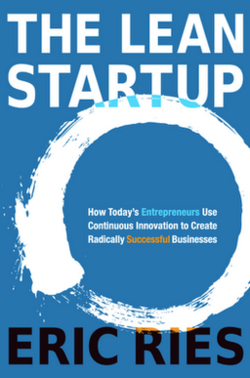
Why Read The Lean Startup?
The Lean Startup: How Today’s Entrepreneurs Use Continuous Innovation to Create Radically Successful Businesses is the most practically influential entrepreneurship methodology of the 21st century — a systematic approach to building new businesses whose core ideas (the minimum viable product, the pivot, validated learning, the build-measure-learn loop) have become the standard vocabulary of the global startup ecosystem. Published in 2011 and having sold over one million copies in over thirty languages, it has reshaped innovation practice in companies ranging from three-person startups to the US federal government.
Ries developed the Lean Startup methodology from his own experience — his first startup, Catalyst Recruiting, failed because it built an elaborate product that customers did not want — and from his collaboration with Steve Blank’s Customer Development methodology and the Toyota Production System’s lean manufacturing principles. The result treats a startup not as a scaled-down version of an existing company but as a temporary organisation searching for a repeatable and scalable business model, and prescribes a specific scientific process for conducting that search.
The book’s central insight is that most startup failures are not technical failures — the product didn’t work as designed — but assumption failures: the startup built exactly what it planned to build, but the underlying assumptions about what customers wanted turned out to be wrong. The solution is not to plan better but to test assumptions faster and cheaper, through the build-measure-learn loop, before those assumptions drive major resource commitments.
Who Should Read This
This is a book for anyone who is building something new — a startup, a new product line within an established company, an innovation initiative in a non-profit or government agency — and who wants a systematic methodology for testing assumptions and learning from real customer behaviour rather than from projections and opinions. Essential for entrepreneurs and startup founders, product managers and innovation leads at established companies, MBA students entering startup and innovation roles, and CAT/GRE aspirants building intermediate business reading comprehension.
Key Takeaways from The Lean Startup
The Build-Measure-Learn feedback loop is the fundamental unit of startup progress — not features shipped, not lines of code written, not funding raised, but learning about what customers actually want validated by real-world data. Every startup activity should be organised around accelerating this loop: build the minimum viable product needed to test a specific assumption, measure what actually happens, and learn whether the assumption was correct. The goal is to complete as many loops as possible before resources are exhausted.
Validated learning — learning confirmed by real customer behaviour and measurable data — is fundamentally different from the learning that comes from customer interviews, focus groups, and surveys. Customers reliably overestimate how much they will pay for a product they haven’t used and describe preferences that diverge from their actual behaviour. The only reliable test of a product assumption is to put a version of the product in front of real customers and measure what they actually do.
The pivot — a structured course correction that changes one fundamental element of the business model while preserving everything learned to date — is the most important and most misunderstood tool in the Lean Startup methodology. Pivoting is not failure and not abandoning the vision; it is the rational response to learning that a specific assumption underlying the current strategy is wrong. Instagram (from a location-based game), Twitter (from a podcast directory), and Slack (from a game development studio) were all built on pivots from entirely different original products.
Innovation accounting — a system for measuring startup progress meaningful before traditional financial metrics have had time to develop — is the alternative to vanity metrics (total registered users, total page views, press mentions) that make startups look like they are making progress when they may not be. The relevant metrics are actionable (they change in response to specific actions), accessible (understood by the whole team), and auditable (verifiable from the underlying data).
Key Ideas in The Lean Startup
The book opens with Ries’s account of his first startup failure — a company that built an elaborate product over eighteen months without testing whether customers wanted it, only to discover at launch that they didn’t. This personal opening grounds the methodology in the specific experience it is designed to prevent: the waste of time, money, and human effort that occurs when a startup spends months or years building the wrong product.
The minimum viable product (MVP) chapters are the most practically important. The MVP is not the smallest possible product — it is the smallest product that tests the most important assumption underlying the business model. Its purpose is not to launch a product but to generate learning. Ries gives the example of Zappos founder Nick Swinmurn, who wanted to test whether customers would buy shoes online. Rather than building a warehouse, a logistics system, and an e-commerce platform, Swinmurn took photos of shoes in local stores, posted them on a basic website, and waited to see if anyone would order. When they did, he bought the shoes at retail price and mailed them. The entire test cost almost nothing and answered the most important question before the company spent a dollar on infrastructure.
The pivot taxonomy is among the book’s most practically useful contributions. Ries identifies ten types of pivots — zoom-in (a feature becomes the whole product), zoom-out (the product becomes a feature of a larger product), customer segment (same product, different customer), customer need (same customer, different problem), platform, business architecture, value capture (monetisation model change), engine of growth, channel, and technology pivots. This taxonomy gives entrepreneurs a specific vocabulary for describing course corrections, making pivots more structured and less emotionally traumatic.
The growth engine chapters address how startups sustain and accelerate growth once product-market fit has been established. Ries identifies three engines — sticky (retaining existing customers, where the critical metric is churn rate), viral (customers bringing in other customers, where the critical metric is the viral coefficient), and paid (spending money to acquire customers whose lifetime value exceeds the acquisition cost). Each engine requires a different set of metrics and optimisation strategies, and correctly identifying which engine the startup uses is one of the most important management tasks.
Core Frameworks in The Lean Startup
Ries organises the Lean Startup methodology around six interlocking frameworks — each grounded in the scientific principle of testing assumptions before committing resources, and each giving entrepreneurs specific operational tools rather than vague principles.
Core Arguments
Ries advances four interconnected arguments — about the nature of startups, the waste of traditional planning, the competitive value of speed of learning, and the learnability of innovation — each of which challenges a piece of conventional business school wisdom.
The book’s foundational argument is that a startup is not a small version of an existing company but a fundamentally different kind of organisation, operating in conditions of extreme uncertainty about what customers want, what technology will enable, and what business model will generate sustainable revenue. This distinction matters because the management practices appropriate for executing a known business model — planning, hiring specialists, building complete products, measuring against plans — are precisely wrong for a startup, which needs to discover a business model rather than execute one. The Lean Startup methodology is designed specifically for the discovery phase and should be replaced by conventional management practices once the business model has been validated.
Ries’s most provocative argument — addressed most directly to the traditional business planning approach — is that the elaborate business plans, detailed financial projections, and complete product specifications that traditional business schools and investors have historically required of startups are a form of organised waste: they consume enormous amounts of time and resources producing documents whose underlying assumptions will almost certainly prove wrong, without generating any validated learning about whether those assumptions are correct. The alternative — building the smallest possible test of the most important assumption — generates the learning that business plans only pretend to contain.
The argument for the MVP and the build-measure-learn loop is ultimately an argument about competitive advantage: in conditions of extreme uncertainty, the company that learns fastest wins. If two startups are addressing the same market opportunity, the one that can test more assumptions, collect more data, and complete more learning cycles in the same time will arrive at product-market fit first, with fewer resources wasted on wrong assumptions. This means that the goal of startup management is not to execute a plan (which assumes the assumptions underlying the plan are correct) but to maximise the speed of learning. Every decision should be evaluated by asking: does this accelerate our learning, or does it slow it down?
The book’s most practically hopeful argument — and the one most directly opposed to the romantic narrative of the lone genius entrepreneur — is that innovation is a learnable, systematic process that can be applied by ordinary people in ordinary organisations, not just by extraordinary founders in exceptional circumstances. The Lean Startup methodology has been applied by large corporations, government agencies, healthcare organisations, and educational institutions, not just by Silicon Valley startups. The argument is not that genius is irrelevant but that the specific practices of the methodology — systematically testing assumptions, measuring against actionable metrics, pivoting when the data demands it — improve the probability of innovation success regardless of the talent level of the people involved.
Critical Analysis
A balanced assessment examining the methodology’s practical concreteness and institutional reach alongside its limitations in non-software contexts and the risks of MVP misapplication.
The book’s greatest strength is its combination of conceptual clarity and practical specificity. The MVP, the pivot, the build-measure-learn loop, innovation accounting, and the engines of growth are all defined precisely enough to be operationalised — not as vague principles but as specific practices that entrepreneurs and product managers can apply directly. The case studies (Zappos, Dropbox, IMVU, Groupon) ground the abstractions in specific, well-documented examples.
The connection to lean manufacturing — specifically the Toyota Production System’s concepts of waste elimination, kaizen (continuous improvement), and just-in-time production — gives the methodology a theoretical foundation in one of the most successful management systems in history, and establishes that the principles are not invented for startups but adapted from a domain where they have been proven at scale.
The methodology has been adopted not just by startups but by large corporations (GE, Intuit, Toyota, Dropbox), government agencies (the US Digital Service, the UK Government Digital Service), and non-profits — demonstrating that its principles are generalisable beyond the specific context of Silicon Valley technology startups in which they were developed.
The minimum viable product concept has been widely misapplied as a justification for shipping products that are incomplete, buggy, or user-hostile, under the rationalisation of “we’re just learning.” Ries is clear that the MVP should be the minimum needed to test the specific assumption — not the minimum that can be shipped without embarrassment — but this distinction is frequently lost in practice. A poorly executed MVP can damage brand reputation, alienate early customers, and generate misleading data.
The build-measure-learn loop is fastest and cheapest when the product is digital — software can be shipped in days or weeks and updated continuously. For hardware products, pharmaceutical products, and physical goods, the loop is much slower and more expensive, and the MVP options are more limited. The examples are overwhelmingly from software startups, and practitioners in other sectors should adapt the methodology with care.
The book implies that once product-market fit has been achieved, the startup should transition to scale and conventional management practices. In practice, product-market fit is not a permanent state: markets change, competition evolves, and customer needs shift. Even highly successful companies need to continue learning. The methodology is less helpful for the sustained innovation challenges that successful companies face after achieving initial fit.
Literary & Cultural Impact
Dominant in the Startup Ecosystem: The Lean Startup was published in September 2011 and became immediately dominant in the startup and technology ecosystem — selling over one million copies, being translated into over thirty languages, and generating a global movement of practitioners that has shaped startup culture, venture capital investment criteria, and corporate innovation practice worldwide. The Lean Startup movement includes thousands of meetup groups in cities around the world, dedicated conferences, academic research programs, and institutional adoption programs at companies including GE, Toyota, Intuit, and Dropbox.
Structural Influence on How Startups Are Built: The MVP concept became a standard element of investor pitch evaluations — investors now routinely ask startups what their MVP is, what they learned from it, and what pivot (if any) it generated. The concept of pivot entered the mainstream business vocabulary and legitimised course corrections that previously carried the stigma of failure. The emphasis on validated learning changed the standard of evidence for startup progress from “we built what we planned to build” to “we learned what customers actually want.”
Institutional Influence Beyond Business: The US Digital Service — created in 2014 to apply Silicon Valley practices to US government technology — explicitly cites Lean Startup methodology as a foundational influence. The UK Government Digital Service (GDS), which transformed British government digital services from 2010 onwards, applies Lean Startup and agile principles as its standard methodology. Ries’s follow-up book, The Startup Way (2017), extended the methodology explicitly to large organisations and government agencies, documenting its application at GE, Toyota, and the US Department of Defense.
For Exam Preparation: The Lean Startup is excellent intermediate-level reading comprehension in business management prose. Its consistent movement between methodology (the build-measure-learn loop), specific terminology (MVP, pivot, vanity metrics), concrete case studies (Zappos, Dropbox, IMVU), and broader arguments about how innovation works provides direct practice for the analytical reading skills — tracking argument structure, identifying definitions and distinctions, evaluating the scope of a claim — that CAT and GRE business passages most consistently require.
Love This Book? Master Every Book.
Stop struggling with reading comprehension. Our proven system transforms how you read—whether for CAT, GRE, GMAT, SAT, or personal growth.
Best Quotes from The Lean Startup
The only way to win is to learn faster than anyone else.
A startup is a human institution designed to create a new product or service under conditions of extreme uncertainty.
Success is not delivering a feature; success is learning how to solve the customer’s problem.
We must learn what customers really want, not what they say they want or what we think they should want.
If we do not know who the customer is, we do not know what quality is.

Test Your Understanding
Think you’ve mastered The Lean Startup? Challenge yourself with 15 questions on the build-measure-learn loop, the MVP, the pivot, validated learning, innovation accounting, and the three engines of growth. Score 80%+ to prove your mastery.
The Lean Startup FAQ
What is a minimum viable product (MVP) and what is it not?
The minimum viable product is the smallest version of a product that will test the most important assumption underlying the business model, with the minimum investment of time and money. It is not a beta version, not a prototype, and not a “minimum acceptable product” — it is a learning tool designed to generate specific validated data about a specific assumption. The most important clarification is that the “minimum” in MVP refers to the minimum needed to test the assumption, not the minimum that can be shipped without embarrassing the company. A video demo (Dropbox’s original MVP) can be a legitimate MVP if what you need to test is whether people want the product; a one-page landing page can be a legitimate MVP if what you need to test is whether people will express interest; a fully functional but feature-sparse product can be a legitimate MVP if the assumptions you need to test require a working product. What distinguishes the MVP from a full product is not its quality but its purpose: it is a vehicle for learning, not a vehicle for revenue or growth.
What is the difference between a pivot and simply giving up?
A pivot is a structured course correction based on validated learning — it changes one fundamental element of the business model while preserving everything learned to date. Giving up (shutting down or abandoning the vision entirely) is a different decision. The key distinctions are: a pivot is based on specific validated learning (the data shows that assumption X is wrong, so we are changing X); it preserves the team, the infrastructure, and the learning (we are not starting over from scratch); and it maintains a revised version of the original vision (we still believe we can solve the problem, but through a different mechanism). The decision between pivoting and persevering is the most important recurring management decision in the Lean Startup framework, and it should be made on the basis of whether the metrics are improving in the direction the business model requires, not on the basis of optimism about whether they eventually will.
Can the Lean Startup methodology be applied outside Silicon Valley tech startups?
Yes — and this is one of the methodology’s most important practical developments since the book’s publication. The Lean Startup methodology has been successfully applied in hardware startups, pharmaceutical companies, healthcare organisations, government agencies, educational institutions, and large corporations in multiple sectors. The specific implementation differs by context — the build-measure-learn loop is much faster in software than in hardware or pharmaceutical development — but the core principles (test the most important assumptions before committing resources, measure learning rather than activity, pivot when the data demands it) are generalisable. The US Digital Service, the UK Government Digital Service, and GE’s FastWorks program are the most prominent institutional applications outside the Silicon Valley tech startup context. Eric Ries’s The Startup Way (2017) documents these applications in detail.
What are “vanity metrics” and how do I avoid them?
Vanity metrics are statistics that consistently increase over time regardless of whether the business model is working — total registered users, total page views, cumulative downloads, and press mentions. They look impressive in pitch decks but do not distinguish between a business that is working and a business that is dying. The alternative is actionable metrics — metrics that change in response to specific actions and measure the specific behaviours that indicate whether the business model is working. The key discipline is asking: if this metric doubled tomorrow, would it mean the business is working better? If the answer is “not necessarily,” it is probably a vanity metric. Cohort retention rates, conversion rates, and the specific metrics relevant to the startup’s engine of growth are the most reliable indicators of genuine progress.
How does The Lean Startup relate to Zero to One and Good to Great on the Readlite list?
The three books address different phases and different questions of building successful organisations. The Lean Startup addresses the startup phase — the period of extreme uncertainty in which the business model is being discovered — and provides a methodology for navigating that uncertainty systematically. Zero to One (Thiel) addresses the question of what kind of business is worth building — the argument that true innovation creates something genuinely new rather than copying and improving existing models — and the strategic thinking about monopoly, distribution, and the future that distinguishes transformative companies from incremental ones. Good to Great (Collins) addresses the scaling phase — how companies that have established their business model sustain and deepen their excellence over the long term. The three books are best read in the order that mirrors the lifecycle: The Lean Startup for the discovery phase, Zero to One for strategic vision, and Good to Great for the scaling and sustaining phase.








