

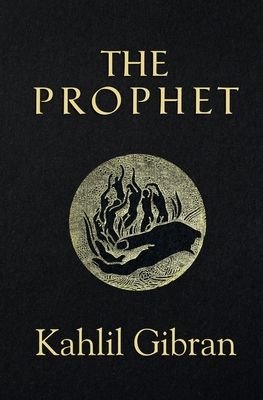
Why Read The Prophet?
The Prophet is one of the most widely read books of the 20th century — a slim volume of poetic prose that has never gone out of print since its 1923 publication, has been translated into over one hundred languages, and is quoted at weddings, funerals, and graduation ceremonies across the world with a frequency that rivals the great religious texts. Kahlil Gibran was a Lebanese-American poet writing at the intersection of Eastern mysticism and Western Romanticism, and The Prophet distills this synthesis into 107 pages of extraordinary lyrical beauty — a work that speaks to the deepest common denominator of human experience across every cultural and religious tradition.
The book’s framing is simple and elegant: Almustafa, a prophet who has lived for twelve years in the city of Orphalese, is about to board the ship that will carry him home. As he prepares to leave, the people of the city gather around him, and a seeress named Almitra asks him to speak before he goes. Almustafa then addresses twenty-six aspects of human life — love, marriage, children, work, joy and sorrow, freedom, death, and more — each response delivered in flowing, biblical prose that is simultaneously poetic and conversational, elevated and immediate.
Each teaching carries a paradoxical quality that is the text’s signature: the deepest truths contain their own opposites. Love includes pain; joy is inseparable from sorrow; work is love made visible; the children you raise are not yours to possess. These paradoxes are not logical puzzles to be resolved but living tensions to be inhabited — felt and recognized rather than argued and concluded.
Who Should Read This
This is a book for every reader at every stage of life — one of the few texts that changes entirely depending on when you encounter it. The teenager reads it as revelation; the young adult reads it as aspiration; the person in midlife reads it as recognition; the elder reads it as confirmation. Essential for all students beginning their philosophical reading journey, spiritual seekers seeking cross-cultural wisdom, CAT/GRE aspirants building comprehension in poetic-philosophical prose, and anyone who wants the great questions addressed with the simplicity and beauty they deserve.
Key Takeaways from The Prophet
Love is not possession but liberation — it has its own will, its own direction, and the lover’s task is not to direct but to follow. Gibran’s most famous passage reframes love as a dynamic, living force that cannot be owned or controlled, only opened to and honored: “Let it rather be a moving sea between the shores of your souls.” This understanding of love as essentially free rather than essentially binding is the text’s most radical and most frequently quoted teaching.
Work is love made visible — and the person who works without love is hollow, whatever they produce. Gibran’s vision of work as a form of devotion rather than a means of survival is among the most dignity-restoring ideas in the text. The baker who kneads his dough with love, the weaver who weaves with threads drawn from his heart — these are not metaphors for exceptional people but descriptions of what ordinary work becomes when it is done with genuine care.
Children are not possessions but arrows shot from the bow of their parents — the archer aims, but the arrow must fly free. Gibran’s teaching on children is the text’s most practically challenging: it asks parents to recognize that their children come through them but do not belong to them, that their task is to give love and stability without imposing their own dreams, and that genuine parental love requires the willingness to let go completely.
Joy and sorrow are inseparable — they inhabit the same space within us, and the capacity for one is precisely the capacity for the other. Gibran’s paradox — “The deeper that sorrow carves into your being, the more joy you can contain” — is the text’s most consoling philosophical claim and its most psychologically honest: the person who has felt deeply has not been diminished by their suffering but enlarged by it.
The Prophet — Plot Summary
The Prophet has the slenderest of narrative frames — barely enough to hold the philosophical content together, but perfectly proportioned to its purpose. Almustafa, “the chosen and the beloved,” has lived for twelve years in the city of Orphalese, awaiting the ship that will return him to his birthplace. The story opens on the morning of his departure: the ship has appeared on the horizon, and the people of the city gather at the harbor to see him go.
Before he reaches the ship, a seeress named Almitra — the first to have recognized his wisdom when he arrived twelve years before — steps forward to ask him to speak. “Give us of your wisdom before you leave,” she says, and Almustafa turns from the sea to face the crowd. What follows is the body of the book: a series of addresses, each prompted by a question from a different member of the community, covering the full range of human experience from love and marriage to work and rest, from joy and sorrow to death and the life beyond it.
The sequence of topics moves with a loose logic — from intimate personal relationships (love, marriage, children) through social and economic life (giving, work, buying and selling, laws) to the inner life (joy and sorrow, self-knowledge, reason and passion) and finally to the great universal questions (good and evil, prayer, beauty, religion, death). Each address is complete in itself — a prose poem that begins with the question and develops through image, paradox, and accumulated wisdom to a conclusion that opens outward rather than closes.
In the final movement, Almustafa reaches the ship and delivers his farewell — a meditation on departure, on the relationship between the prophet and his people, on the nature of giving and receiving wisdom across the space between teacher and student. He boards the ship, the people watch him sail away, and Almitra — silent throughout the addresses — turns back toward the city with something she will carry for the rest of her life. The narrative ends without drama or resolution: a departure, a turning back, and the sustained resonance of what was said.
Characters & Symbols
The figures in The Prophet are less characters in the realist sense than philosophical and symbolic presences — each one representing a dimension of the relationship between wisdom, community, and human experience.
The central figure of the book — a prophet who has lived twelve years in a foreign city, loving its people while longing for his home, and who gives everything he has learned before departing. Almustafa belongs to no named religion, claims no divine mandate, and offers no commandments. He is a sage in the oldest sense: a person whose life of reflection has given them access to truths that are available to everyone but recognized by few. His wisdom reads not as instruction from above but as recognition from within — as if the reader were remembering something they had always known.
The woman who first recognized Almustafa’s wisdom when he arrived in Orphalese twelve years before, who now steps forward as the ship appears to ask him to speak before he goes. Almitra is the book’s framing consciousness — she asks the first question, falls silent through the addresses, and turns back toward the city in the final lines carrying everything she has received. She represents the ideal receiver of wisdom: someone who recognized truth before it was articulated, who asked the question that allowed it to be spoken, and who will carry it forward without possessing it.
The townspeople who gather at the harbor constitute the text’s collective interlocutor — each person who steps forward to ask a question represents a dimension of universal human experience. An elder asks about laws; a woman asks about children; a ploughman asks about eating and drinking; a rich man asks about giving. Their diversity — of occupation, of concern, of life circumstance — is the book’s way of ensuring that Almustafa’s wisdom touches every dimension of existence, and their collective gathering mirrors the reader’s own position as a member of the community that receives this teaching.
The ship that appears on the horizon at the book’s opening and carries Almustafa away at its close is the central symbol — the instrument of departure and return, the vessel that separates the prophet from the people who have come to love him. It functions as a reminder throughout the addresses that everything being given is being given in the context of parting: the wisdom has urgency because the teacher is leaving. The ship is also, implicitly, death — the final departure from which no return is possible, the threshold that Almustafa himself acknowledges he may be approaching.
Throughout the addresses, Almustafa speaks not as a teacher drawing on accumulated information but as a voice giving expression to what his own soul — and, he implies, every soul — already contains. He speaks of his “other self” — the deeper self that knows without having been taught, that understands before understanding — and this implied presence gives the text its characteristic quality: it reads as recognition from within rather than instruction from above, as if the reader were remembering something they had always known.
The city in which Almustafa has lived his twelve years is deliberately unnamed in the realistic sense — Orphalese is a city of the imagination, a composite of every city in which a person can live temporarily without belonging, loving without owning, contributing without claiming. Its people are universal types — ploughman, elder, weaver, seeress, priest — rather than individuated characters, which allows the city to function as a symbol of the human community in general, the world in which wisdom must be enacted and from which the prophet must eventually depart.
Major Themes
Gibran weaves four interconnected themes throughout The Prophet — each returning in different registers across the twenty-six addresses, building a unified vision of human life in which the deepest truths are held in paradox rather than resolved in argument.
The text’s most developed and most beloved theme is love — romantic love, parental love, the love between friends, and the love that underlies all genuine giving. In every register, Gibran’s teaching is the same: love is not a bond that ties but a space that liberates, not a demand that constrains but an offering that honors. The great failures of love — possessiveness, control, the attempt to make the beloved conform to one’s own image — are not failures of feeling but failures of understanding: the misidentification of love with the desire to possess what one loves.
Gibran’s vision of work stands in radical opposition to the utilitarian understanding of labor as a means to an end. For Gibran, work done with love is a form of devotion — it is the most direct expression of what a person is, the most tangible form in which inner life takes outer shape. This vision does not romanticize all work or deny its difficulty but asks what it would mean to bring genuine care to whatever one does: to make every act of making an act of love. It is one of the most consistently life-changing teachings in the book for readers who encounter it at the right moment.
The text’s most characteristic philosophical move is the paradox — the statement that holds two apparently opposing truths in a single formulation. Joy and sorrow share the same vessel; pain is the instrument that breaks the shell of understanding; the giver receives more than the receiver; the tree bends to the storm and stands straighter for having bent. These are not merely rhetorical flourishes but a philosophical position: that reality is structured by polarities that cannot be separated, and that genuine wisdom consists in holding both poles simultaneously rather than choosing between them.
The entire text is framed by departure — Almustafa is leaving, and the addresses are given in the shadow of this parting. This framing gives everything that is said an urgency and a preciousness that it might not otherwise have: we listen more carefully to someone who is about to go. Gibran uses this frame to make a broader point about impermanence — that all human relationships, all wisdom, all beauty exists within the context of its own ending, and that this impermanence is not a reason for grief but for the quality of attention we bring to what is present while it lasts.
Critical Analysis
A balanced assessment of a text whose lyrical beauty and universal accessibility are inseparable from the genuine questions they raise about the nature of wisdom.
Gibran’s prose — modeled on the King James Bible and on the Arabic poetic tradition he inherited — achieves a sustained level of lyrical beauty across 107 pages that no other philosophical prose text of the 20th century matches. The language is both elevated and accessible, simultaneously formal and warm, and it carries its philosophical content not through argument but through the music of accumulated image and paradox.
The deliberate absence of specific religious or cultural markers allows the text to be received across an extraordinary range of traditions. It has been embraced by Christians, Muslims, Jews, Hindus, Buddhists, and secular readers with equal intensity, because its wisdom is expressed in terms that belong to no single tradition while being consonant with all of them.
Gibran’s use of paradox — the statement that holds two truths simultaneously — is not merely a rhetorical device but a philosophical method perfectly suited to the kind of wisdom the book contains: truths that resist binary formulation, that can only be stated in the form of a tension held open rather than a problem resolved.
The text’s deliberate universality — its avoidance of cultural specificity, its preference for the general over the particular — can make it feel vague or insubstantial to readers who want their wisdom grounded in the concrete texture of specific lives and circumstances. The beauty of the language can substitute for the precision of thought in ways that more analytically demanding readers will notice.
Gibran’s characteristic rhetorical move — the paradox that holds two apparent opposites in a single formulation — is extraordinarily effective in individual instances but can become somewhat predictable across an entire book. Readers who are sensitive to prose rhythm may notice that the template repeats more than the content always warrants.
Unlike the great philosophical texts, The Prophet never argues, never considers objections, never entertains the possibility that its wisdom might be limited or conditional. This uncritical confidence gives it an oracular quality that many readers find exactly right, but it also means that the book does not model the kind of honest philosophical inquiry that genuine wisdom requires.
Literary & Cultural Impact
A Century of Unbroken Print: The Prophet was published in 1923 by Alfred A. Knopf and has never gone out of print — one of the longest unbroken publishing records in modern literature. In its first decades it found a steady, devoted readership in the United States and Europe; from the 1960s onward, it became one of the central texts of the counter-culture and the human potential movement, read alongside Jonathan Livingston Seagull, Hermann Hesse, and the Bhagavad Gita as part of the eclectic spiritual library of a generation questioning conventional values. By the end of the 20th century it had sold over nine million copies in the United States alone and over one hundred million worldwide — making it one of the bestselling books in human history.
Weddings, Funerals, and Everyday Life: The Prophet has achieved a unique status as the text most commonly read at weddings and funerals — a distinction that reflects its range across the spectrum of human experience and its ability to speak to both the beginning and the ending of things. Passages from the chapter on love and the chapter on death are among the most frequently quoted texts in the English language outside of the Bible and Shakespeare. A 2014 animated film adaptation — with different animation styles for each chapter, produced with involvement from Salma Hayek — brought the text to a new generation of readers.
Influence on Wisdom Literature: Gibran’s influence on subsequent wisdom literature has been enormous, though often unacknowledged. The tradition of the short philosophical fable for adults — The Alchemist, Illusions, The Little Soul and the Sun — all draw on the form that The Prophet crystallized: the allegorical frame, the poetic prose register, the paradoxical wisdom structure, and the aspiration to universal applicability across cultural and religious traditions. Coelho has acknowledged Gibran’s influence explicitly; Bach’s work shows it implicitly.
For Competitive Exam Preparation: The Prophet is elementary-level reading comprehension practice with unusual density in poetic and allegorical prose. Its characteristic rhetorical structure — paradox, image, accumulated elaboration, resolution into openness — provides direct practice for the kind of reading that identifies tone, implied meaning, and the relationship between form and content that CAT and GRE passages on philosophical and literary prose consistently require.
Love This Book? Master Every Book.
Stop struggling with reading comprehension. Our proven system transforms how you read—whether for CAT, GRE, GMAT, SAT, or personal growth.
Best Quotes from The Prophet
Love one another but make not a bond of love: Let it rather be a moving sea between the shores of your souls.
Work is love made visible. And if you cannot work with love but only with distaste, it is better that you should leave your work and sit at the gate of the temple and take alms of those who work with joy.
Your children are not your children. They are the sons and daughters of Life’s longing for itself.
The deeper that sorrow carves into your being, the more joy you can contain.
You give but little when you give of your possessions. It is when you give of yourself that you truly give.

Test Your Understanding
Think you’ve mastered The Prophet? Challenge yourself with 15 questions on Gibran’s teachings on love, work, children, and the great themes of human life. Score 80%+ to prove your mastery.
The Prophet FAQ
What is The Prophet about?
The Prophet is a short work of poetic prose in which a sage named Almustafa, about to board the ship that will carry him home after twelve years in the city of Orphalese, responds to questions from the townspeople on twenty-six aspects of human life — love, marriage, children, work, joy and sorrow, freedom, death, and more. Each response is a prose poem that approaches its subject through paradox, image, and accumulated wisdom rather than argument. The book has no conventional narrative arc; it is a series of meditations held together by the framing of a departure and by the consistent philosophical register of its language.
Is The Prophet a religious text?
It is spiritual but not religious in any institutional sense. Gibran draws on multiple traditions — Christianity, Islam, Sufism, Neoplatonism, and the Hindu and Buddhist mystical traditions he encountered through Theosophy — without belonging to any of them exclusively. The Prophet Almustafa belongs to no named religion, offers no commandments, and refers to the divine in terms (“the All,” “Life’s longing for itself”) that are simultaneously available to every tradition and exclusive to none. This deliberate universality is why the book has been embraced across the full spectrum of religious and secular communities — it speaks the language of felt spiritual experience rather than the language of doctrinal commitment.
What is Gibran’s philosophy of love?
Gibran’s philosophy of love is essentially a philosophy of love as liberation rather than possession. He argues that genuine love honors the beloved’s freedom rather than constraining it, that love is a living force with its own direction that neither lover can control, and that the attempt to possess or direct love is its negation. His image of love as “a moving sea between the shores of your souls” — rather than a bond that ties — is the clearest expression of this philosophy: love as the dynamic space between two free beings rather than the rope that connects them. This vision is simultaneously the most beautiful and the most demanding teaching in the book, because it asks lovers to love without grasping — which is, as every lover knows, the hardest thing.
Why is The Prophet so often read at weddings and funerals?
The Prophet is read at both because it speaks with equal authority and equal beauty to beginnings and endings — and because it holds the two together in a single vision rather than separating them. Its teaching on love and marriage speaks directly to the hope and commitment of a wedding; its teaching on joy and sorrow, on pain as the instrument of understanding, on death as the river of life, speaks directly to the grief and mystery of a funeral. More fundamentally, it says things that people recognize as true at the moments when truth is most needed — when what is required is not information but wisdom expressed in a form that bypasses intellectual resistance and speaks directly to the soul.
How does The Prophet relate to other books on the philosophical fiction list?
The Prophet belongs to the tradition of the short philosophical fable — alongside Jonathan Livingston Seagull, The Alchemist, The Little Prince, and Siddhartha — that pursues the largest questions about human existence in the most accessible and most lyrical forms. Where Siddhartha uses a narrative journey to trace a spiritual development, The Prophet uses the format of wisdom address — the sage who speaks before departing. Where the Tao Te Ching works through poetic compression and paradox in a Chinese philosophical register, The Prophet works through the same paradoxical method in a Middle Eastern mystical register. Together these texts constitute the Readlite list’s most accessible philosophical tradition — wisdom literature that addresses the deepest questions in the most beautiful and most widely available forms.








