

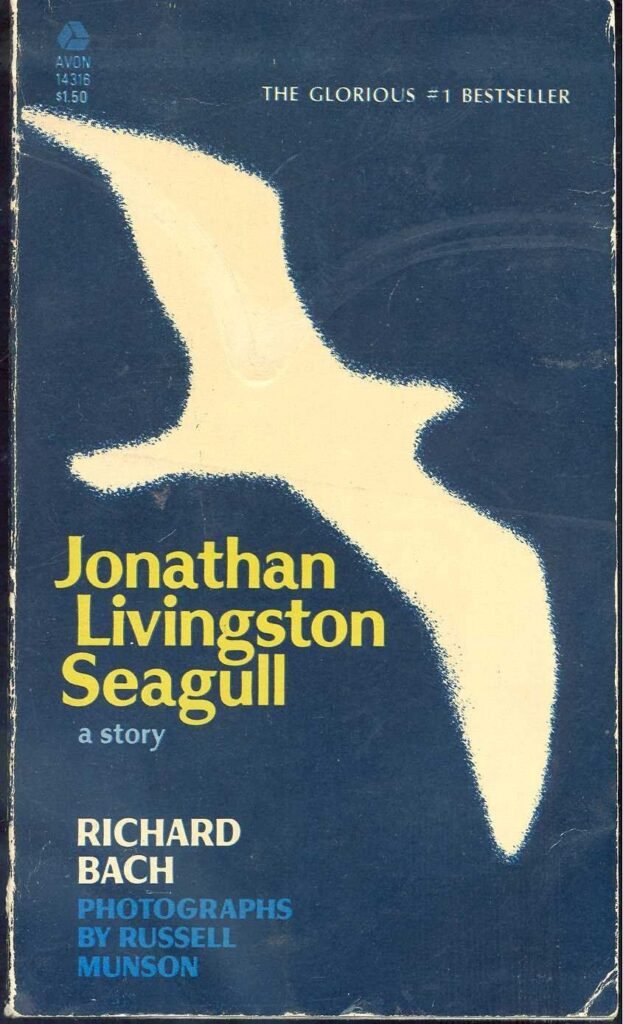
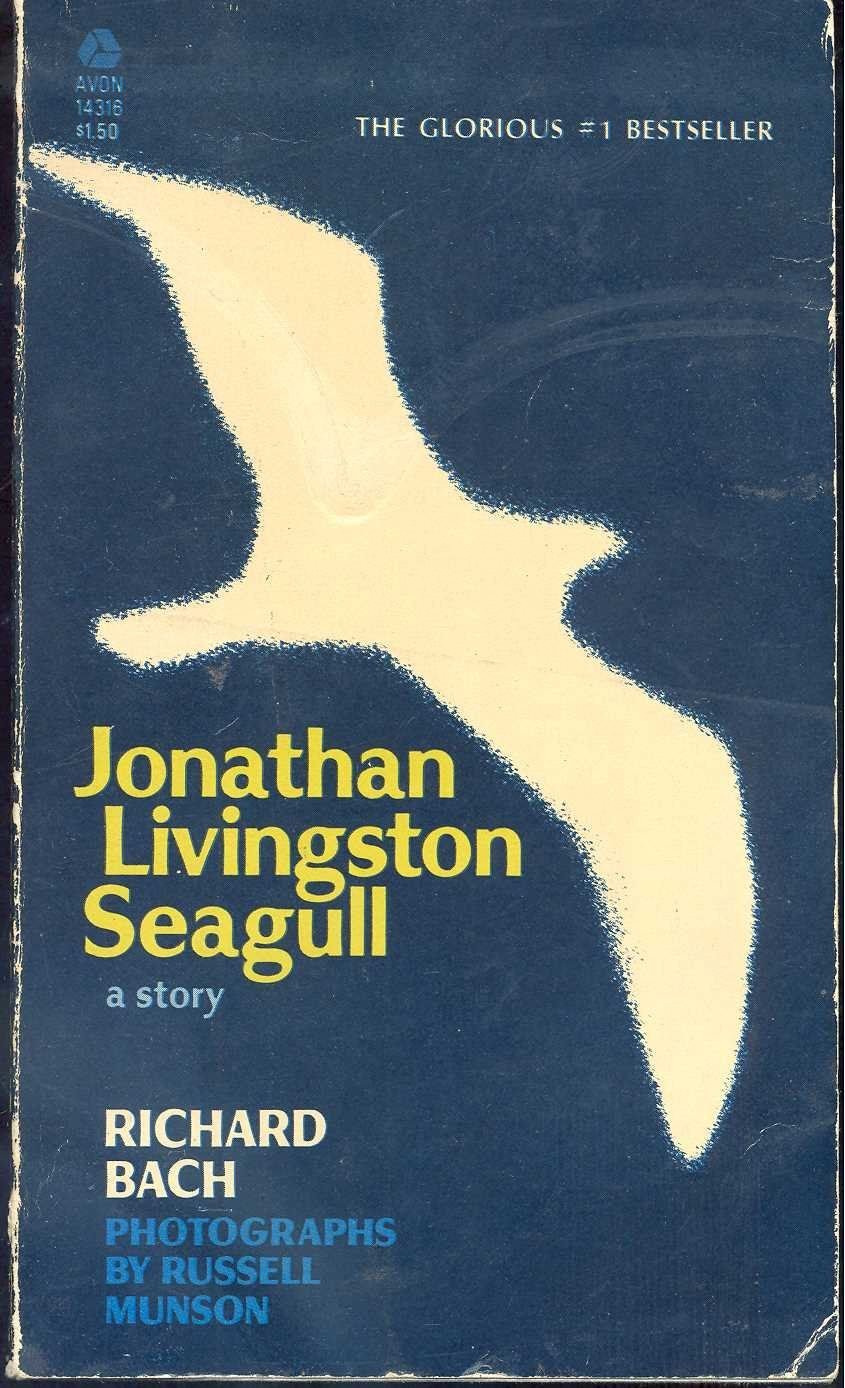
Why Read Jonathan Livingston Seagull?
Jonathan Livingston Seagull is the most commercially improbable philosophical fable ever published — a 127-page story about a seagull learning to fly, rejected by every major publisher for years before its 1970 release, that went on to sell over forty million copies worldwide and become one of the defining inspirational texts of the 20th century. What it is — and what has made it endure across generations and cultures — is a distilled, pellucid parable about the cost of following one’s highest purpose against every social pressure to conform, and about the discovery that perfection in any discipline opens onto something far larger than the discipline itself.
Jonathan Livingston Seagull is a seagull who is different from the rest of his flock in one fundamental respect: where other gulls fly only to eat, Jonathan flies because flying itself is his obsession. He is interested not in survival but in excellence — in the perfection of technique, the extension of possibility, the discovery of what flight can actually be. This obsession brings him into conflict with his flock, who cannot understand why anyone would practice diving and rolling and speed maneuvers when the only point of flying is to reach the fishing boats. Eventually, Jonathan is banished.
The story follows Jonathan through his exile, his continued solitary practice, his death and arrival in a higher realm where other like-minded gulls have gathered, his education by the elder Sullivan and the near-perfect Chiang, his gradual realization that the true subject of his obsession is not physical flight at all but the expansion of consciousness itself, and his eventual return to the flock — not to seek acceptance but to teach. What Bach creates is a parable that works simultaneously as a story about artistic vocation, as a spiritual allegory about the soul’s journey beyond ordinary existence, and as a practical argument about the relationship between mastery and transcendence.
Who Should Read This
This is a book for anyone at any stage of life who has felt the pull of a higher purpose and the social pressure to abandon it. At the elementary level, it is accessible to young readers from early adolescence onward — but its ideas deepen rather than simplify with maturity. Essential for students beginning their reading journey in philosophical fiction, CAT/GRE aspirants building reading comprehension with allegorical prose, readers exploring themes of purpose, mastery, and transcendence, and anyone who wants a fable that asks the largest questions in the fewest possible words.
Key Takeaways from Jonathan Livingston Seagull
Excellence in any discipline — pursued with genuine passion rather than for practical reward — becomes a path to self-transcendence. Jonathan does not want to fly fast in order to reach more fish; he wants to fly fast because the perfection of flight is itself the point. This distinction — between excellence as a means and excellence as an end — is the difference between living at the flock’s level and living at the level of one’s highest possibility.
The social pressure to conform — to limit one’s ambitions to what the group considers useful and appropriate — is the primary obstacle between any individual and their highest purpose. Jonathan’s banishment is both a loss and a liberation: exile from the comfortable mediocrity of the flock is the precondition for genuine development.
The limits we believe are physical are actually mental — and every genuine advance in mastery is simultaneously an advance in the understanding of what we are. Chiang’s teaching to Jonathan — that he is not a body learning to fly but a perfect idea of freedom with a body — is the parable’s most explicitly spiritual claim. The body follows what consciousness allows.
Having achieved mastery, the natural obligation is to return and teach. Jonathan’s return to the ordinary flock — not to seek acceptance but to find and encourage the few who are ready to follow — is the parable’s final and most practically demanding argument. The person who has discovered their higher purpose has acquired the responsibility of passing on what they have learned.
Jonathan Livingston Seagull — Plot Summary
The story opens on an ordinary morning at the fishing boats, where the gull colony is gathered in the frantic, competitive scramble for bread and fish scraps that constitutes their daily existence. Jonathan Livingston Seagull is practicing — diving from altitude, measuring his speed, refining his technique — while the rest of the flock eats. His parents are worried. The flock is indifferent. Jonathan is absorbed.
His initial experiments are exhilarating and then dangerous — a high-speed dive goes wrong and he crashes into the ocean at full force. Lying in the water, concussed and humiliated, he makes the conventional decision: he will be like the other gulls. For a day, he is a normal seagull — and then he notices the angle of a hawk’s wings in a dive and is immediately, helplessly back in his experiments. He cannot stop. His mastery deepens rapidly, until the Council summons him to stand at the Center for Shame: Jonathan is banished from the flock, declared a renegade, condemned to fly alone at the Far Cliffs for the remainder of his life.
The story’s second movement begins with Jonathan’s death and his arrival in a higher realm where other gulls of his kind have gathered — gulls for whom flight is everything. Here he meets Sullivan, who becomes his first teacher, and eventually Chiang — an elder of extraordinary presence who teaches Jonathan that the true subject of his mastery is not flight but consciousness itself: that the limits he has been pushing through are not physical but mental, and that the moment he understands this fully, he will be able to fly anywhere by simply choosing to be there.
Jonathan’s mastery eventually exceeds even this elevated realm, and he chooses to return to the ordinary flock — not to seek rehabilitation, but to find the few who are ready. He finds Fletcher Lynd Seagull, takes him as a student, and begins the work of teaching. The story ends with Fletcher on the verge of the same discovery Jonathan made — and Jonathan, having passed on what he knows, moving on to whatever comes next.
Jonathan Livingston Seagull — Characters
Each character in the parable represents a distinct relationship to vocation, mastery, and the social world — together forming a complete allegorical map of the journey from ordinary existence to transcendence and back.
A seagull defined entirely by his relationship to his vocation — the perfection of flight — and by his inability to limit that relationship to what is socially acceptable. Jonathan is not a rebel by temperament; he simply cannot stop pursuing his highest purpose, regardless of the cost. His obsession is authentic rather than performed, and his suffering when banished is real rather than martyred.
The elder gull who greets Jonathan in the higher realm and becomes his first teacher. Sullivan is warm, patient, and genuinely delighted by Jonathan’s rapid development — the ideal mentor who recognises the student’s gift before the student fully understands it themselves. His role is to provide the initial framework and encouragement; the deeper teaching comes from Chiang.
The most advanced gull in the higher realm, whose mastery of flight has become mastery of consciousness itself — who can appear and disappear at will, who has moved beyond the physical limitations that still constrain even Jonathan’s advanced practice. His teaching — that Jonathan is not a body learning to fly but a perfect idea of freedom with a body — is the parable’s most explicitly spiritual and most philosophically demanding claim.
The young gull whom Jonathan finds when he returns to the ordinary flock — practicing at the cliff edges, already beginning to discover what Jonathan discovered before him, already marked for banishment. Fletcher is Jonathan at the beginning of the story, and his relationship with Jonathan mirrors Jonathan’s relationship with Sullivan and Chiang. His eventual near-mastery closes the parable’s circular structure.
Jonathan’s parents appear only briefly, in the opening section, expressing the worried incomprehension of those who love someone whose vocation they cannot understand. They are not antagonists — they are genuinely caring — but their concern is expressed entirely in the terms of the flock. They represent the loving constraint of those whose horizons define the outer limit of what they can imagine for the people they care about.
The voice of collective social authority at Jonathan’s banishment — neither cruel nor corrupt but genuinely convinced that the flock’s survival depends on conformity to its values. He is the most sympathetic version of the antagonist: a reasonable person doing what reasonable people do when confronted with someone whose excellence exposes the limits of the collective’s imagination.
Major Themes
Four interlocking themes give Jonathan Livingston Seagull its depth and universality, connecting a simple seagull fable to the longest-running conversations in human wisdom literature.
The parable’s central theme is the relationship between genuine vocation — a calling that comes from within rather than from social expectation — and the social cost of following it. Jonathan’s banishment is not a failure but the price of authenticity: the flock cannot accommodate someone whose values are genuinely different from its own. Bach presents this cost not as tragedy but as necessary clarification: exile from comfortable mediocrity is the beginning of genuine development.
The parable’s structure — from beginner to practitioner to master to teacher — mirrors the structure of spiritual development in virtually every contemplative tradition: the Hindu guru-student relationship, the Buddhist path from ignorance through practice to enlightenment and bodhisattva-return, the Sufi tradition of the spiritual journey through the stages of the soul. The pattern of Jonathan’s development — through technical mastery into the recognition that mastery opens onto something beyond itself — is one of the most widespread structures in human spiritual thought.
Chiang’s teaching — that the limits Jonathan has been pushing against are not physical but mental, that the body follows what consciousness allows — is the parable’s most explicitly philosophical and most contested claim. It is a form of philosophical idealism: the position that consciousness is more fundamental than matter, that what we believe possible determines what is possible. Whether taken literally or metaphorically, this is the parable’s most radical and most generative idea.
Jonathan’s return to the ordinary flock raises a question the simpler reading can overlook: why return? Having achieved mastery and moved beyond the flock’s limited world, what obligation does Jonathan have to go back? Bach’s answer — implicit in the structure of Jonathan’s choice — is that mastery without transmission is incomplete: that the person who has genuinely discovered something has incurred a responsibility to those who are ready to receive it, and that the teaching relationship is itself a further dimension of development.
Critical Analysis
A balanced assessment examining the genuine achievements of Bach’s parable alongside its real limitations as philosophy and as fiction.
In 127 pages, Bach accomplishes something that far longer and more ambitious philosophical novels often fail to do: he makes a coherent, emotionally resonant argument about purpose, mastery, and transcendence that the reader carries out of the book and applies to their own life. The economy is itself an achievement — every word earns its place.
By setting the parable in the life of a seagull rather than a human being, Bach achieves a defamiliarization that allows readers of radically different backgrounds, cultures, and life circumstances to project their own vocations and struggles onto Jonathan’s story. The seagull is a clean allegorical vessel precisely because it is not human.
The three-part structure — exile and practice, higher education and mastery, return and teaching — mirrors the deep structure of spiritual and philosophical initiation in multiple traditions, giving the parable a resonance that exceeds its explicit content and connects it to the longest-running conversations in human wisdom literature.
The parable’s ideas, while clearly articulated, are not developed with the rigor or complexity that the best philosophical fiction achieves. Chiang’s teachings about consciousness and limitation are stated rather than argued, and readers who want their philosophical ideas genuinely interrogated will find the book’s brevity a limitation rather than a virtue.
The narrative is deliberately simple — characters have no psychological complexity beyond their relationship to their vocation — and this simplicity can shade into sentimentality, particularly in the higher-realm sequences. Readers accustomed to the moral complexity of literary fiction may find the parable’s clean oppositions too schematic.
The flock’s banishment of Jonathan raises questions about conformity, community, and the relationship between individual excellence and collective welfare that the parable does not engage with seriously. Bach’s flock is a simple stand-in for social pressure without any examination of the legitimate reasons communities have for maintaining norms.
Literary & Cultural Impact
A Remarkable Publishing History: Jonathan Livingston Seagull has one of the most remarkable publication histories in 20th-century literature. Richard Bach began writing it in 1959, when the story appeared to him in a vision while he was walking along a canal. It was rejected by eighteen publishers over eight years before Macmillan accepted it in 1970. Within two years it had sold over a million copies; within five years over seven million in the United States alone; within a decade it had become one of the bestselling books in American publishing history, eventually selling over forty million copies worldwide in sixty languages. A 1973 film adaptation with a Neil Diamond soundtrack brought it to an even wider audience.
A Cultural Moment and Its Legacy: The book’s cultural moment was precise and significant: it arrived in 1970, at the intersection of the counter-cultural questioning of conventional values, the human potential movement’s interest in self-actualization, and the growing popular appetite for spiritual literature that was neither conventionally religious nor purely secular. Jonathan’s rejection of the flock’s materialist values spoke directly to a generation questioning the consumer culture into which they had been born.
Influence on the Philosophical Fable: Its influence on subsequent inspirational literature — and on the broader genre of the “philosophical fable for adults” — has been significant. Richard Bach’s own Illusions: The Adventures of a Reluctant Messiah (1977) extended the same framework. Paulo Coelho’s The Alchemist (1988) — which shares the Readlite list with Jonathan Livingston Seagull — is the most commercially successful work in the tradition that Bach helped establish: the short philosophical fable in which a simple allegorical journey carries the weight of a spiritual argument about purpose and transcendence.
Love This Book? Master Every Book.
Stop struggling with reading comprehension. Our proven system transforms how you read—whether for CAT, GRE, GMAT, SAT, or personal growth.
Best Quotes from Jonathan Livingston Seagull
You have the freedom to be yourself, your true self, here and now, and nothing can stand in your way.
Don’t believe what your eyes are telling you. All they show is limitation. Look with your understanding, find out what you already know, and you’ll see the way to fly.
The gull sees farthest who flies highest.
We choose our next world through what we learn in this one. Learn nothing, and the next world is the same as this one, all the same limitations and lead weights to overcome.
Your whole body, from wingtip to wingtip, is nothing more than your thought itself, in a form you can see. Break the chains of your thought, and you break the chains of your body, too.
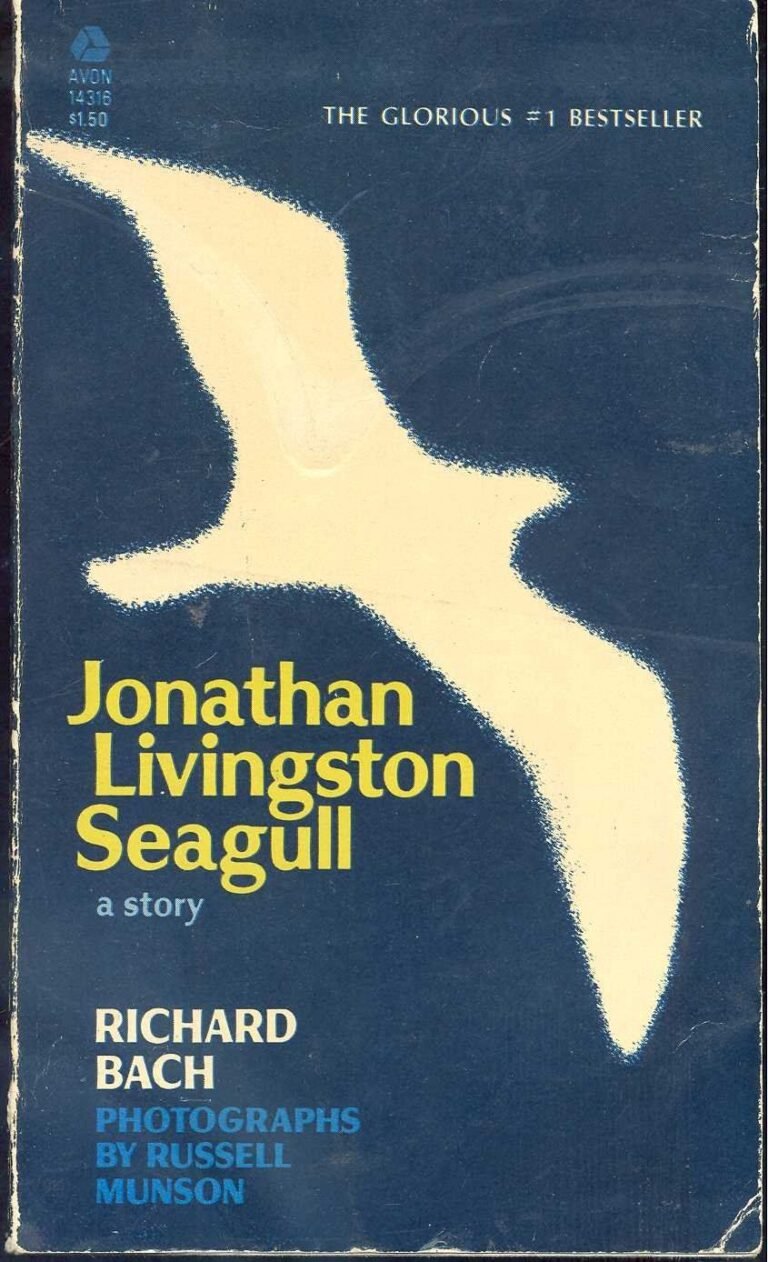

Test Your Understanding
Think you’ve mastered Jonathan Livingston Seagull? Challenge yourself with 15 questions on themes, characters, and the allegorical meaning of Jonathan’s journey. Score 80%+ to prove your mastery.
Jonathan Livingston Seagull FAQ
What is Jonathan Livingston Seagull about?
Jonathan Livingston Seagull is a short philosophical fable about a seagull who is obsessed with perfecting flight rather than using it merely to eat — who practices speed maneuvers and diving techniques while the rest of his flock scrambles for fish. Banished from his flock for refusing to conform, Jonathan continues his solitary practice, dies, arrives in a higher realm where like-minded gulls have gathered, is educated by the elder Chiang in the understanding that flight’s limits are mental rather than physical, achieves near-perfect mastery, and returns to the ordinary flock to teach those who are ready to follow. It is an allegory of vocation, mastery, and the spiritual dimension of genuine excellence.
Is Jonathan Livingston Seagull a children’s book?
It is written with the simplicity and clarity that children’s literature aspires to, but its subject matter — the cost of following one’s highest purpose, the social pressure to conform, the spiritual dimension of mastery, the obligation to teach — is addressed to adult readers. The elementary reading level indicates its linguistic accessibility rather than its philosophical ambition, which is genuinely serious even if not technically complex. It belongs in the tradition of philosophical fables — The Little Prince, The Alchemist, The Prophet — that are simultaneously available to young readers and fully meaningful to adults.
What does the seagull represent?
Jonathan is an allegorical figure representing any person who is drawn to excellence in their chosen discipline beyond what is practically or socially necessary, and who is therefore marked as a renegade or an eccentric by the community they belong to. The flock represents social conformity and the pressure to limit one’s ambitions to what the group can accommodate. Flight represents vocation — any discipline that becomes a path to self-transcendence when pursued with genuine passion. The allegory is deliberately general enough to accommodate almost any reader’s own specific vocation and social situation.
What is the spiritual philosophy behind the book?
The book’s spiritual framework is deliberately non-denominational — Bach draws on elements of philosophical idealism, Eastern concepts of reincarnation and spiritual development across lives, and the universal tradition of the master-student relationship. Chiang’s teaching — that Jonathan is not a body learning to fly but a perfect idea of freedom with a body — is closest to the Vedantic concept of the self as consciousness rather than matter. The three-part structure of exile, higher education, and return mirrors the structure of spiritual initiation in traditions from Sufism to Zen. Bach has never identified his work with any specific tradition, and the book’s broad spiritual appeal across cultures reflects this deliberate universality.
How does Jonathan Livingston Seagull compare to The Alchemist?
Both books are short philosophical fables about a protagonist who follows an inner calling against social pressure, travels through transformative experiences, and discovers that the true subject of the journey is inner development rather than external achievement. The Alchemist is richer in narrative incident, warmer in emotional tone, and more explicitly rooted in a specific spiritual tradition. Jonathan Livingston Seagull is sparer, more abstract, and more directly concerned with the specific experience of excellence in a discipline as a spiritual path. Together they represent the two most widely read works in the tradition of the philosophical fable for adults — complementary approaches to essentially the same fundamental question about the relationship between vocation and transcendence.








