

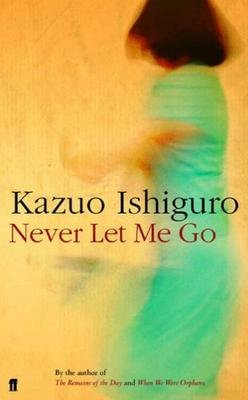
Why Read Never Let Me Go?
Never Let Me Go is one of the most formally controlled and emotionally suffocating novels of the 21st century. Kazuo Ishiguro — winner of the Nobel Prize for Literature — tells a story of clones raised for organ donation with such deliberate restraint that readers experience the horror not as a sudden revelation but as a slow, unavoidable tide. It is a masterclass in what literary fiction can do that no other art form can: make the reader complicit in a character’s self-deception.
The novel is narrated by Kathy H., a thirty-one-year-old “carer” who looks back on her childhood at Hailsham, a seemingly idyllic English boarding school set in an alternate version of late-twentieth-century Britain. As Kathy reminisces about her friendship with Tommy and Ruth, the reader gradually understands — long before Kathy explicitly acknowledges it — that these children are clones, bred and raised to donate their vital organs in adulthood until they “complete.” The school, the art lessons, the careful emotional education: all of it is preparation for a life that will be systematically harvested.
What makes the novel extraordinary is what Ishiguro does not do. There is no rebellion, no escape attempt, no dystopian uprising. The children — now adults — simply accept their fate with a passivity that is the most disturbing thing in the book. Ishiguro uses this acceptance to force a question back onto the reader: in what ways are we all conditioned to accept a fate we have been told is inevitable? The science fiction premise recedes almost entirely, functioning not as genre machinery but as a philosophical instrument for examining memory, denial, mortality, and what we choose to see versus what we allow ourselves to know.
Who Should Read This
This is a book for readers who are comfortable sitting with discomfort — who want fiction that withholds as much as it reveals and trusts the reader to do significant interpretive work. Essential reading for advanced students of literature, competitive exam aspirants tackling narrator reliability and implicit meaning, and anyone who has thought seriously about mortality, free will, and the ethics of personhood.
Key Takeaways from Never Let Me Go
The novel’s most disturbing achievement is its unreliable narrator who is not lying — she is simply not looking. Kathy withholds and deflects with habitual precision, and Ishiguro shows that the most devastating self-deception is not conscious dishonesty but trained not-seeing.
Mortality becomes most visible when we try hardest not to see it. The clones’ acceptance of their fate mirrors the way all humans manage awareness of death — through routine, distraction, and the deferral of reckoning. The extreme case illuminates ordinary human psychology.
The question of whether art can prove the existence of a soul sits at the moral center of the novel. Hailsham’s students create art so a guardian can examine it for evidence of their inner lives. The novel asks: if we can demonstrate creativity, empathy, and love — does that make us fully human? And who gets to decide?
Love that cannot change its circumstances is not therefore wasted. Tommy and Kathy’s relationship — delayed, partial, ultimately brief — is treated with complete seriousness. The tragedy is not that their love was insufficient but that the world had already decided their lives were insufficient. The love is real; only its context is monstrous.
Never Let Me Go Plot Summary
Never Let Me Go is narrated entirely in retrospect by Kathy H., who opens the novel as a thirty-one-year-old carer — someone who tends to organ donors in the final stages of their donations. She speaks of her work with professional calm, dropping casual references to “donors” and “completing” without initially explaining what these terms mean. This is the novel’s first and most important formal choice: Ishiguro forces the reader to experience the horror of the premise the same way Kathy experiences it — as something always already known, never fully confronted.
The novel’s first section returns to Hailsham, the beautiful English country school where Kathy grew up with her two closest companions: Tommy, a sweet-natured boy prone to explosive tantrums, and Ruth, a sharp, manipulative girl whose need for status governs the trio’s dynamic for years. Life at Hailsham is structured, creative, and protective — the children make art, play sports, attend “Sales” where they trade tokens for donated items — but it is also subtly wrong. The guardians are strange in their care. The outside world is never discussed. A visiting guardian called Miss Lucy appears to be on the verge of telling the children something important, something the others work to suppress.
The second section follows the three friends into early adulthood at the Cottages — a transitional residence where former Hailsham students live in loose community, reading, watching television, and waiting. Here the novel’s central love triangle consolidates: Ruth pursues and secures Tommy, while Kathy watches from a careful distance. A rumor circulates among the students: that couples who can prove they are truly in love can apply for a “deferral” — extra years of life before their donations begin. This hope, fragile and possibly invented, becomes the emotional engine of the final section.
The novel’s last movement brings the three back together in adulthood — Ruth now completing her donations, Tommy beginning his, Kathy still caring. Ruth, in a final act of conscience, tells Kathy and Tommy where to find Madame so they can apply for a deferral together. Their visit to Madame, and the conversation that follows, is the novel’s devastating climax: the truth about what the art was for, what Hailsham was for, and whether any deferral was ever possible. The novel ends on an image of quiet, unresisting grief that ranks among the most powerful final scenes in contemporary fiction.
Never Let Me Go Characters
A small, precisely observed cast — each character rendered through Kathy’s evasive, circling narration, which reveals as much through omission as through statement.
A thirty-one-year-old clone and carer who narrates entirely from memory. Ishiguro’s most technically demanding creation: her narration is simultaneously intimate and evasive, full of qualifications and deflections that reveal more than she intends. She sees everything — but has been exquisitely trained not to fully know what she sees.
A gentle, emotionally transparent boy whose explosive childhood tantrums gradually give way to a quiet, searching decency. Tommy wants to understand and make sense of what has happened to them, and his attempts to do so through art form one of the novel’s most quietly heartbreaking threads.
Kathy’s best friend and, for much of the novel, her obstacle — a controlling, status-driven girl who claims Tommy as her partner. Ruth is not a villain; she is a person who uses the tools available in a world that has given all of them so few. Her final act of confession and redirection is the novel’s moral pivot.
A guardian at Hailsham who cannot sustain the institution’s careful evasions. She appears briefly but centrally — telling the children more directly than any other adult what they are and what awaits them — before being removed for this breach. She represents the suppressed truth the institution’s emotional economy depends on keeping buried.
The formidable headmistress of Hailsham, whose moral rationalizations are revealed in the novel’s climactic confrontation. Neither cruel nor indifferent, her defense of the institution she ran is the most devastating indictment of liberal complicity in the novel: the belief that making something slightly more humane excuses participation in something fundamentally monstrous.
The enigmatic woman who visited Hailsham to collect the students’ best artwork for her “Gallery.” Her apparent revulsion toward the children is one of the novel’s earliest unsettling signals. In the climactic scene, her explanation of what the Gallery was truly for strips away the novel’s final layer of protective evasion.
Major Themes
Ishiguro’s themes operate simultaneously and reinforce each other — giving the novel a density that rewards multiple readings and resists simple summary.
The novel’s entire structure is built on the gap between what Kathy knows and what she allows herself to fully acknowledge. Her narration circles the central truths of her story with habitual evasion that mirrors the broader human relationship to unbearable knowledge. Ishiguro suggests that memory is not a record but a coping mechanism: we remember in the shapes that are least damaging to our ability to continue.
The clones’ passive acceptance of their fate is the novel’s most philosophically charged element. Ishiguro refuses to let this acceptance be merely a failure of imagination or courage — the novel takes seriously the possibility that acceptance, too, can be a form of dignity. At the same time, it refuses to endorse that acceptance, holding the reader in an uncomfortable position: admiring the characters’ composure while wanting to scream at them to resist.
The central ethical question the novel poses — whether the clones are fully human — is never resolved, and deliberately so. The art collection at Hailsham was designed to demonstrate the students’ souls to the outside world, but even this proof was insufficient to change the system. Ishiguro asks: what constitutes personhood? Is it consciousness? Creativity? Love? And why, if we agree the clones possess all of these, do we continue to treat them as expendable?
Hailsham was a humanitarian experiment within a monstrous system — a school that gave the clones a better life than they might otherwise have had, while still preparing them for systematic harvest. Miss Emily’s defense of this project is the novel’s most chilling speech: a perfectly articulated liberal argument for why participating in injustice is preferable to abandoning the small improvements one can make from within.
Critical Analysis
A balanced assessment examining both the novel’s technical brilliance and the deliberate frustrations its restraint imposes on the reader.
Ishiguro’s control of Kathy’s evasive, circling narration is a technical achievement of the highest order — every deflection, every qualification, every premature reassurance is calibrated to reveal character while withholding information, creating sustained dramatic irony across the entire novel.
The novel raises genuinely difficult questions about mortality, personhood, and institutional complicity without ever becoming a philosophical tract — its arguments emerge entirely through character and situation, making them feel discovered rather than argued.
By refusing all genre conventions — there is no escape, no rebellion, no dramatic confrontation with power — Ishiguro creates a more unsettling effect than any thriller could. The passivity is the horror, and the horror is the point.
Ishiguro’s strategy of withholding information — including information Kathy demonstrably has — can feel manipulative to readers who experience the evasions as authorial trick rather than character truth, and the novel demands significant tolerance for ambiguity.
The deliberately muted emotional register that makes the novel so formally distinctive also prevents it from delivering the cathartic emotional release that comparable novels provide, leaving some readers feeling distanced rather than devastated.
Ishiguro is entirely uninterested in the mechanics of the alternate-history Britain his premise requires, and readers who need internal consistency in speculative fiction will find significant gaps — though this is clearly a deliberate choice in service of the novel’s priorities.
Literary & Cultural Impact
A Defining Novel of the 21st Century: Never Let Me Go was shortlisted for the Man Booker Prize and the Arthur C. Clarke Award in 2005 — a striking double nomination that reflected the novel’s unusual position between literary fiction and speculative fiction. It has since been recognized as one of the defining novels of the early 21st century, appearing on numerous “best novels” lists including Time magazine’s All-Time 100 Novels. It was adapted into a 2010 film directed by Mark Romanek, starring Carey Mulligan, Keira Knightley, and Andrew Garfield, and into a Japanese television series in 2016.
Influence on Subsequent Literary Fiction: The novel’s model of speculative premise deployed in the service of psychological and philosophical exploration — rather than plot or world-building — helped establish a mode of “quiet dystopia” that has become increasingly prominent in literary fiction, visible in Ishiguro’s own Klara and the Sun and in writers like Emily St. John Mandel and Colson Whitehead. It demonstrated that science fiction premises could carry the full freight of literary ambition without compromise.
For Competitive Exam Preparation: Never Let Me Go is among the most pedagogically valuable books on the advanced reading list. Its central technical device — an unreliable narrator who withholds through evasion rather than deception — is precisely the kind of narrative complexity that GRE and CAT reading comprehension passages test for. Questions on tone, implicit meaning, the gap between what is stated and what is meant, and the relationship between narrator and author all find extraordinarily rich practice material here.
Love This Book? Master Every Book.
Stop struggling with reading comprehension. Our proven system transforms how you read—whether for CAT, GRE, GMAT, SAT, or personal growth.
Best Quotes from Never Let Me Go
We took away your art because we thought it would reveal your souls. Or to put it more finely, we did it to prove you had souls at all.
Memories, even your most precious ones, fade surprisingly quickly. But I don’t go along with that. The memories I value most, I don’t ever see them fading.
What I’m not sure about is if our lives have been so different from the lives of the people we save. We all complete. Maybe none of us really understand what we’ve lived through, or feel we’ve had enough time.
It had never occurred to me that our lives, which had been so closely interwoven, could unravel with such speed.
I keep thinking about this river somewhere, with the water moving really fast. And these two people in the water, trying to hold onto each other, holding on as hard as they can, but in the end it’s just too much. The current’s too strong.


Test Your Understanding
Think you’ve mastered Never Let Me Go? Challenge yourself with 15 questions on themes, characters, and key takeaways. Score 80%+ to prove your mastery.
Never Let Me Go FAQ
What is Never Let Me Go about?
The novel follows Kathy, Tommy, and Ruth — three friends raised at an idyllic English boarding school called Hailsham — as they gradually come to understand that they are clones, bred to donate their vital organs in adulthood. Told entirely from Kathy’s retrospective narration, it is less a story about dystopia than about memory, denial, love, and what we choose to accept when we cannot change our circumstances.
Is Never Let Me Go science fiction?
Technically yes — the novel is set in an alternate version of late-twentieth-century Britain where human cloning for organ donation is an accepted practice. But Ishiguro is entirely uninterested in the mechanics of this premise. The science fiction setting functions as a philosophical instrument, not a genre framework, and the novel reads far more like Chekhov or Henry James than like Orwell or Huxley. It is best approached as literary fiction that uses a speculative premise.
What are the main themes of Never Let Me Go?
The novel’s central themes are memory and self-deception, mortality and acceptance, the ethics of personhood (what makes someone fully human), and institutional complicity — the way liberal, well-meaning systems can participate in injustice while believing themselves to be ameliorating it. All of these themes operate simultaneously, giving the novel a density that rewards multiple readings.
Why don’t the clones try to escape or rebel?
This is the question the novel most deliberately refuses to answer simply. The clones have been conditioned from birth to accept their fate, and Ishiguro also implies something more uncomfortable: that the acceptance mirrors the way all humans accept mortality — through routine, distraction, and the deferral of full acknowledgment. The lack of rebellion is a mirror, not an explanation.
Why does Never Let Me Go remain so relevant today?
The novel’s questions about personhood, the ethics of creating life for instrumental purposes, and the complicity of institutions that make monstrous systems marginally more humane have only become more urgent with advances in genetic technology, AI, and bioethics. Its portrait of liberal institutions that defend their limited reforms while participating in fundamental injustice speaks to ongoing debates across politics, technology, and medicine.








