

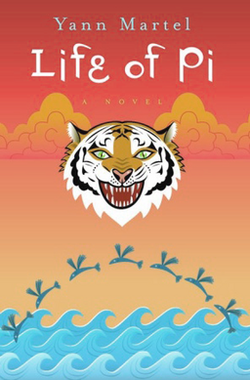
Why Read Life of Pi?
Life of Pi is one of those rare novels that operates simultaneously as a gripping adventure story and a sustained philosophical argument — and the argument does not announce itself until the final thirty pages, at which point it reframes everything that came before it. Yann Martel wrote a book about a boy stranded on a lifeboat with a Bengal tiger and somehow made it an inquiry into the nature of faith, the function of storytelling, and the question of whether we choose our reality or simply discover it. The fact that it works as both things at once is the novel’s central achievement.
The novel follows Piscine Molitor Patel — Pi — the son of a zookeeper in Pondicherry, India, who grows up simultaneously practising Hinduism, Christianity, and Islam, finding in each a different facet of his experience of the divine. When his family decides to emigrate to Canada and ships their zoo animals across the Pacific, the Japanese cargo vessel sinks in a storm. Pi survives on a lifeboat with a hyena, a zebra, an orang-utan, and a 450-pound Bengal tiger named Richard Parker, alone on the Pacific, for 227 days.
What Martel does with this premise is structurally audacious. He renders the survival story with extraordinary physical specificity — the fishing, the solar stills, the storm management, the psychological strain of sharing forty feet of fibreglass with an apex predator — and then, in the novel’s final chapter, offers a second version of events in which the animals are replaced by humans, the allegory is dissolved, and the reader is asked to choose. Which story do you prefer? And does your preference tell you something about the relationship between truth and meaning that you had not previously examined?
Who Should Read This
This novel is essential reading for anyone interested in the intersection of storytelling, faith, and philosophy — and for anyone who has ever asked whether the stories we tell about our experience are less true for being stories. CAT and GRE candidates will find it exceptionally rich for author-purpose, narrative structure, and inference questions. Beyond exam preparation, it rewards writers, philosophers, students of comparative religion, and anyone who has survived something by choosing how to narrate it to themselves.
Key Takeaways from Life of Pi
Survival sometimes requires the construction of a story that makes survival possible. The tiger is not just a danger — he is the reason Pi cannot afford to give up. Meaning is not found but constructed, and the construction is a survival act.
Faith is not the enemy of reason — it is a different relationship with the unknown. The specific doctrinal container matters less than the orientation of the self toward something larger than itself. Faith is a chosen stance toward the unknowable.
The story we choose to tell about an event shapes what that event means. The novel’s final revelation asks whether the version with the tiger is truer in the ways that matter, even if not verifiable — a philosophical detonation about narrative and meaning.
The relationship between the wild and the civilised is not opposition but negotiation. Pi survives by learning the language of coexistence with Richard Parker — establishing dominance rituals, maintaining boundaries, understanding what the tiger needs.
Life of Pi Plot Summary
The novel opens with a framing device: the adult Pi, now living in Toronto, tells his story to an unnamed writer who has heard it described as “a story that will make you believe in God.” This promise — held over the reader for the entirety of the narrative — is part of the novel’s structural game. Martel is not promising religious conversion; he is promising an argument about the relationship between story and belief.
Pi’s childhood in Pondicherry is rendered with warmth and specificity. His father runs the Pondicherry Zoo — an upbringing that gives Pi both an unusually intimate knowledge of animal behaviour and an early lesson in the dangers of anthropomorphism. Pi’s religious life begins when he encounters Christianity and Islam in addition to his inherited Hinduism and finds, in each, something true. He adopts all three without apology, to the consternation of the religious authorities of each.
When Pi is sixteen, his family decides to emigrate to Canada. The crossing goes catastrophically wrong. The ship sinks in a Pacific storm. Pi finds himself on a lifeboat with a wounded zebra, a spotted hyena, an orang-utan named Orange Juice, and — emerging from beneath a tarpaulin — a 450-pound Bengal tiger named Richard Parker. Over the following days, the hyena kills the zebra and the orang-utan, Richard Parker kills the hyena, and Pi must decide whether to survive with the tiger or without him. He chooses with.
The survival section — the novel’s long, extraordinary middle — is one of the most physically detailed accounts of oceanic survival in fiction. Pi constructs a raft of life preservers, learns to fish, rigs solar stills for fresh water, and conducts an intensive study of Richard Parker’s behaviour. The psychological texture of these 227 days is rendered with equal care: hallucinations, the companionship Pi finds in the very danger of the tiger’s presence, his religious practices, and the grief for his family that surfaces in unpredictable moments.
After 227 days, the lifeboat beaches on a Mexican coast. Richard Parker disappears into the jungle without looking back — a moment Pi grieves specifically. Pi is rescued and interviewed by Japanese maritime officials. He tells them the story with the tiger. They do not believe him. He tells them a second story — shorter, without animals — in which the hyena is a French cook, the orang-utan is Pi’s mother, the zebra is a Taiwanese sailor, and Richard Parker is Pi himself. The officials are silent. Then one asks: “The tiger — which story do you prefer?” The question is not answered. The novel ends.
Life of Pi Characters
Each major character serves both the adventure narrative and the novel’s deeper philosophical architecture.
Deeply curious, philosophically serious, and practically resourceful. His multi-faith religiosity is not naivety — it is a developed, examined stance toward the unknown.
Perhaps the most original supporting character in contemporary fiction — never anthropomorphised, yet the emotional core of the novel. Pi’s grief at his departure is the most nakedly affecting moment in the book.
A man of practical intelligence and warm scepticism who runs the zoo with competence and care. His pragmatism is the counterpoint to Pi’s mysticism.
A woman of warmth and quiet dignity. In the allegory reading, Orange Juice — the fierce, maternal orang-utan — is Pi’s rendering of his mother’s final moments into a form he can bear.
The reader’s stand-ins — rational and sceptical, ultimately unable to insist on the grimmer story when asked which they prefer. Their final question is the novel’s philosophical pivot point.
Appears only in the second version of Pi’s story. Whether he is “real” or a narrative displacement of Richard Parker is the novel’s central unanswerable question.
Major Themes
Martel weaves several interconnected themes throughout Life of Pi, emerging not from direct statement but from the structure of the narrative itself.
The novel’s central argument is that stories are not merely decorations on reality — they are the means by which reality becomes liveable. The novel refuses to confirm which version is “true” and instead asks which is truer: which more fully honours what the experience meant and what it cost.
Pi’s simultaneous practice of three religions is the novel’s theological experiment. Faith is presented not as a set of propositions to be selected from a menu but as a posture of the self toward the unknown — a way of being in relation to what cannot be verified.
Pi survives 227 days not through physical strength alone but through the construction of meaningful structure. Meaning is not given by survival situations — it is imposed on them, and that imposition is what allows the self to remain coherent under extreme duress.
Richard Parker externalises something Pi carries internally — the capacity for violence and pure animal survival instinct that civilised life suppresses but does not eliminate. The boundary between the wild and the civilised is not a wall but a negotiated border.
Critical Analysis
A balanced assessment examining both the novel’s literary achievements and its genuine limitations.
The two-story architecture is one of contemporary fiction’s most genuinely original structural inventions — Martel builds his philosophical argument into the plot itself, making the reader perform the act rather than merely observe it.
The survival sections are rendered with extraordinary practical detail — fishing techniques, water distillation, tiger management — that grounds the improbable premise in physical reality.
When the second version is offered, the reader recognises that the allegory was embedded in the realistic narrative all along — Orange Juice always moved like a grieving mother. This is a remarkable technical achievement.
The carnivorous algae island episode strains even the novel’s generous relationship with the improbable, and some readers find it breaks the survival narrative’s carefully established credibility.
The faith argument is moving but not fully rigorous — the religious authorities who challenge Pi are made gently comic, and the harder questions about doctrinal incompatibility are not genuinely engaged.
The alternative human version is told in a handful of pages — not enough to fully inhabit it. The two stories are not quite equal in imaginative weight, making the reader’s choice slightly easier than Martel may have intended.
Literary & Cultural Impact
From Rejection to the Booker Prize: Life of Pi was rejected by five London publishers before being accepted and then went on to win the Man Booker Prize in 2002 — one of the more dramatic reversals of fortune in recent literary history. It became an international bestseller, translated into more than forty languages and selling over fifteen million copies.
Ang Lee’s Film Adaptation: The novel’s most significant cultural moment came with Ang Lee’s 2012 film adaptation, which won four Academy Awards including Best Director. Lee’s use of digital visual effects and 3D cinematography produced one of the most visually extraordinary films of the decade and introduced the novel to a second generation of readers.
Academic and Scholarly Reach: The novel has been widely adopted in courses on postcolonial literature, philosophy of religion, narrative theory, and comparative religion. Its central question — whether a story that makes life bearable is in some meaningful sense true — has generated substantial scholarly literature.
Significance for Indian Readers: The novel’s Pondicherry setting, its rendering of Tamil Hindu culture, and its protagonist’s navigation of multiple religious identities speak to aspects of South Asian experience that literary fiction rarely addresses with this combination of warmth and philosophical seriousness. Pi Patel has become one of the few Indian protagonists in English-language literary fiction to achieve genuine global cultural recognition.
Love This Book? Master Every Book.
Stop struggling with reading comprehension. Our proven system transforms how you read—whether for CAT, GRE, GMAT, SAT, or personal growth.
Best Quotes from Life of Pi
I must say a word about fear. It is life’s only true opponent. Only fear can defeat life.
The reason death sticks so closely to life isn’t biological necessity — it’s envy. Life is so beautiful that death has fallen in love with it, a jealous, possessive love that grabs at what it can.
To choose doubt as a philosophy of life is akin to choosing immobility as a means of transportation.
Animals are territorial. That is the key to everything.
If you stumble about believability, what are you living for? Love is hard to believe, ask any lover. Life is hard to believe, ask any scientist. God is hard to believe, ask any believer. What is your problem with hard to believe?

Test Your Understanding
Think you’ve mastered Life of Pi? Challenge yourself with 15 questions on themes, characters, and key takeaways. Score 80%+ to prove your mastery.
Life of Pi FAQ
What is Life of Pi actually about?
On its surface, it is a survival story — a sixteen-year-old Indian boy stranded on a lifeboat in the Pacific Ocean for 227 days with a Bengal tiger. On a deeper level, it is a philosophical argument about the relationship between storytelling and truth, the nature of faith, and whether the stories we choose to tell about our experiences can be more true than the verifiable facts they may or may not represent.
Is Life of Pi useful for competitive exam preparation like CAT or GRE?
Highly so. The novel’s two-story architecture — in which the same events are narrated twice in different registers and the reader is asked to choose between them — is a sophisticated narrative technique that RC questions frequently test. Questions about author purpose, narrative reliability, the relationship between surface argument and underlying argument, and the function of ambiguous endings are all richly available in this text.
What are the main themes in Life of Pi?
The central themes are the function of storytelling in making experience bearable, faith as orientation rather than certainty, the construction of meaning as a survival act, and the negotiated boundary between the wild and the civilised. These themes emerge from the structure of the narrative itself and from the philosophical question the novel poses in its final chapter.
Is the tiger story “real” or is the second story the true account?
The novel deliberately refuses to answer this question — and the refusal is the answer. Martel’s argument is that asking which story is “real” in the conventional sense misses the more important question: which story is truer, in the sense of more fully honouring what the experience meant and what it cost? The Japanese officials’ final question — “Which story do you prefer?” — places the epistemological burden on the reader, where Martel intends it to remain.
Why does Life of Pi matter beyond its story?
Because the question it poses — whether the stories we tell about our experiences can be more meaningful, more humanly true, than the bare verifiable facts — is not just a philosophical puzzle. It is a question every person navigates in constructing their own life narrative, in choosing how to remember difficult events, in deciding what their suffering means. Martel takes a question usually confined to philosophy seminars and makes it the emotional core of an adventure story.








