

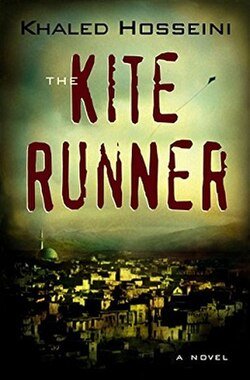
Why Read The Kite Runner?
The Kite Runner is the kind of novel that refuses to let you stay comfortable. Khaled Hosseini opens with a betrayal so specific and so shameful that the reader carries it alongside the narrator for the next three hundred pages — waiting, as Amir waits, for something that might begin to resemble redemption. It is a novel about guilt as a form of imprisonment, and about whether the prison can ever be unlocked from the inside. That question drives every page.
Set across three decades and two continents — from the affluent neighbourhoods of 1970s Kabul, through the Soviet invasion, the civil war, and the Taliban’s rise to power, to the Afghan immigrant communities of California — the novel follows Amir, the privileged Pashtun son of a wealthy Kabul merchant, and Hassan, the Hazara servant boy who is his closest companion and secret half-brother. When twelve-year-old Amir witnesses Hassan being assaulted by a neighbourhood bully and does nothing, he sets in motion a guilt that will define the next twenty-six years of his life. Hosseini’s subject is not simply one boy’s cowardice; it is the way a single moral failure can colonise an entire self.
The novel works on multiple registers simultaneously. It is a personal story of friendship, betrayal, and attempted redemption. It is also an intimate history of Afghanistan — a country most Western readers knew only through news coverage of destruction — rendered through the specific textures of daily life: the smell of lamb korma, the layout of a Kabul neighbourhood, the ceremony of kite fighting. By grounding political catastrophe in personal memory, Hosseini achieves something that journalism cannot: he makes Afghanistan’s tragedy not a geopolitical abstraction but a human loss of specific, irreplaceable things.
Who Should Read This
This is one of the most emotionally immediate works of contemporary fiction, accessible to virtually any adult reader willing to engage with difficult moral territory. CAT and GRE candidates will find it rich territory for tone, character motivation, and thematic inference — Hosseini’s narrative structure, which builds dramatic irony over decades, is precisely the kind of layered plotting that RC questions reward close reading to decode. Beyond exam prep, it is essential for anyone interested in Afghanistan, the psychology of guilt and redemption, or the experience of the immigrant caught between two worlds.
Key Takeaways from The Kite Runner
Guilt unconfessed does not dissolve — it compounds. Amir’s failure to act is bad enough, but his subsequent engineering of Hassan’s expulsion to avoid the mirror of his own guilt is worse. The original sin multiplies with every act of self-protection. Hosseini’s argument is that guilt avoided becomes guilt structural — it does not remain in the past but actively shapes the present.
The sins of one generation are inherited by the next in forms neither generation intended. Baba’s secret means that Amir’s betrayal of Hassan is also a betrayal of his own brother. The novel’s tragedy is not merely personal but generational: failures of honesty and courage in parents become the moral burdens their children must either repeat or break.
Redemption is possible but it costs exactly what the original failure cost — and more. Amir’s return to Taliban-controlled Kabul to rescue Hassan’s son is dangerous, painful, and arrives too late to undo anything. Hosseini is careful not to offer redemption as absolution: the past is not rewritten; it is carried differently.
A country is not its government — it is its people, its food, its streets, its memories. Hosseini’s Afghanistan is as much a subject of mourning as any individual character. What was destroyed was not merely a political order but a specific, irreplaceable way of life, and the novel insists that this loss deserves to be named and grieved as precisely as any personal one.
The Kite Runner Plot Summary
The novel opens in San Francisco in 2001. Amir, now a published novelist in his late thirties, receives a call from Rahim Khan, his father’s old friend, summoning him to Pakistan. “Come,” Rahim Khan says. “There is a way to be good again.” That phrase is the novel’s thesis, and Amir will spend the next 350 pages finding out whether it is true.
The narrative moves to Kabul in the 1970s, where Amir and Hassan grow up together in Baba’s large house. Baba is a powerful, charismatic man whose demanding standard of courage and honesty Amir worships and never quite feels worthy of. Hassan, the son of Ali the servant, is everything Amir is not: physically brave, morally uncomplicated, unshakeably loyal. He is also Hazara — a persecuted ethnic minority — and endures casual racism from Pashtun boys in the neighbourhood, particularly Assef, a sociopathic teenager who will recur throughout the novel as the embodiment of ideological cruelty.
The kite tournament is the novel’s first great set piece. When Amir wins, Hassan runs the last kite — but is trapped in an alley by Assef and two other boys, who assault him while Amir, who has found them, watches from around a corner and does nothing. He tells himself he is too scared, but also calculates, in the shameful arithmetic he will carry for decades, that the kite — the proof of his victory, the thing that might finally make Baba proud — was worth Hassan’s suffering.
Unable to bear Hassan’s unchanging loyalty in the aftermath, Amir plants his own watch under Hassan’s mattress and accuses him of theft. Baba gives Hassan and Ali the option of staying despite it. They leave. Months later, the Soviet invasion begins, and Baba and Amir flee to Pakistan and eventually to California. Baba — this great man who could face down a Soviet soldier at a checkpoint — is reduced to working at a gas station in Fremont. He dies of lung cancer shortly after Amir’s marriage to Soraya, a fellow Afghan-American. Amir becomes a novelist. Years pass. The phone call comes.
In Pakistan, Rahim Khan reveals the secret that restructures everything: Hassan was Baba’s son. Amir’s lifelong rival for Baba’s love was his own brother. Hassan and his wife have been killed by the Taliban in Kabul. Their son Sohrab is in an orphanage — or worse. Amir must go back. What he finds in Kabul — public executions in the soccer stadium, the beggary of streets he knew as beautiful, Assef now a Taliban official — is the novel’s most viscerally difficult section. He finds Sohrab in Assef’s possession, badly abused. He fights Assef — is beaten nearly to death — and Sohrab saves him by shooting Assef in the eye with a slingshot, exactly as Hassan once threatened. The echo is deliberate and devastating.
Getting Sohrab out of Afghanistan and through the American immigration system is its own ordeal — nearly undone when Amir suggests Sohrab may need to return temporarily to an orphanage. Sohrab attempts suicide. He survives but becomes withdrawn, silent, unreachable. Amir and Soraya bring him to San Francisco. Months later, at a picnic, there is a kite tournament. Amir buys a kite. He and Sohrab fly it together. When Amir offers to run a fallen kite for Sohrab — using Hassan’s words, “For you, a thousand times over” — Sohrab’s lip twitches. It is not much. But the novel closes on that twitch, that barely-there beginning, and leaves us with it.
The Kite Runner Characters
Hosseini’s cast spans three generations and two continents — each figure a node in the novel’s web of guilt, loyalty, and inheritance.
One of contemporary fiction’s most honestly rendered protagonists — not because he is admirable but because he is not, and knows it. His cowardice as a child is not a mystery; Hosseini gives us all the reasons. What distinguishes the novel is that Amir never stops knowing exactly how and why he failed. His self-knowledge is perfect and entirely insufficient for decades.
One of fiction’s great figures of uncomplicated loyalty — a boy who lied to protect Amir even when the lie cost him everything. His goodness is not naive: he sees Amir’s flaws clearly and loves him anyway. This makes Amir’s betrayal not merely cowardly but an act against someone who deserved infinitely better.
The novel’s most complex figure — a man of genuine greatness and genuine dishonesty, whose public courage coexisted with a private deception that corrupted everyone around him. He is the kind of father who makes a son feel permanently insufficient while also being the standard the son most wants to meet. His secret is the novel’s structural revelation, reframing everything that precedes it.
Baba’s closest friend serves as the novel’s moral compass — the man who knew everything, who loved both Baba and Hassan without prejudice, and who finally engineers Amir’s return because he understands that the redemption Amir needs is also the redemption Sohrab requires. His phone call opens the novel and drives its second half.
The novel’s portrait of pure, systematised cruelty — a child sociopath who grows into a Taliban official, whose violence is ideological rather than random. He recurs at every stage of Amir’s story as the embodiment of the force that destroyed both Hassan and Afghanistan itself, finding in the Taliban a structure that gives his cruelty institutional sanction.
The novel’s most heartbreaking figure — a child who has survived things no child should survive and who has learned, reasonably, that trust and hope lead only to deeper wounds. His gradual, barely visible thaw at the novel’s end is Hosseini’s refusal of easy resolution: Sohrab is not healed. He is slightly, tentatively, beginning to allow the possibility of something other than closed-off survival.
Major Themes
Hosseini’s themes operate simultaneously on the personal and the political — each registers through the other, and neither can be read in isolation.
Amir’s original failure to act would be bad enough in isolation. What makes the novel’s moral architecture so relentless is that each subsequent act of self-protection makes it worse. Guilt not confronted does not remain static; it demands further deception to sustain itself, and each deception adds to the debt. Hosseini traces this compounding with clinical precision across twenty-six years.
The novel resists the narrative convenience of a single redemptive act. Amir’s return to Kabul, his rescue of Sohrab, his absorption of Assef’s beating — none of these constitute redemption in themselves. Redemption in Hosseini’s world is not a moment but a commitment: to show up differently, consistently, over time, for someone who has every reason not to trust you. The closing image of Sohrab’s lip twitching is offered as a beginning, not a conclusion.
Afghanistan’s twentieth-century history — Soviet invasion, civil war, Taliban rule — is rendered not through political analysis but through its destruction of specific lives and specific ways of being. The novel insists that political violence is not abstract: it destroys the pomegranate tree where two boys carved their names, the streets where kite tournaments made winter beautiful. Hosseini makes the geopolitical personal with a precision that journalism cannot match.
The Pashtun-Hazara divide that structures Amir and Hassan’s relationship is not incidental background — it is the novel’s social foundation. Hassan’s vulnerability, his father’s position as servant despite his dignity, all rest on an ethnic hierarchy that the novel neither sentimentalises nor resolves. Amir’s guilt is personal, but the conditions that made Hassan exploitable were structural, and the novel is honest about both registers.
Critical Analysis
A balanced assessment of the novel’s emotional and structural achievement alongside its honestly acknowledged limitations.
Hosseini achieves an emotional directness rare in literary fiction — trusting his story to be devastating without authorial ornamentation. The result is a novel that operates on the reader’s nervous system rather than merely their intellect. The pacing of guilt’s revelation and Amir’s self-awareness is controlled with considerable craft.
By grounding Afghanistan’s political history in specific textures of personal memory — food, neighbourhood geography, cultural ritual — Hosseini achieves a portrait of a country that most Western readers can now see as a real place with real losses, rather than a backdrop for geopolitical abstraction.
The novel’s recurring motifs — the kite, Hassan’s slingshot, “For you, a thousand times over,” the hare-lip — create a formal architecture reinforcing its thematic argument about the cyclical transmission of moral failure and the possibility of breaking that cycle. The symmetry never feels mechanical; it feels earned.
The novel’s coincidences — particularly Assef reappearing as a Taliban official at the precise orphanage where Sohrab is held — strain credibility. Hosseini’s plotting prioritises symbolic resonance over realistic probability, which some readers find manipulative rather than meaningful.
Hassan is rendered so purely loyal and consistently good that he functions more as a moral standard than a complex character. His goodness, while moving, leaves him without the interiority that Amir receives in abundance — a disparity that reinforces rather than questions the power imbalance the novel ostensibly critiques.
The novel’s ending has been criticised as too gentle a resolution for the severity of trauma accumulated. Hosseini earns the ambiguity, but the image’s prettiness sits uneasily against Sohrab’s suicide attempt and the full weight of what the Taliban did to him.
Literary & Cultural Impact
An Unexpected Phenomenon: The Kite Runner was Khaled Hosseini’s debut novel, largely ignored by publishers before Riverhead Books acquired it. It became one of the most unexpected literary phenomena of the decade — spending more than two years on the New York Times bestseller list, selling over 38 million copies worldwide, and being translated into more than seventy languages. A film adaptation directed by Marc Forster was released in 2007.
Right Book, Right Moment: Published two years after the September 11 attacks, at a moment when Afghanistan was in the news daily and almost entirely opaque to Western audiences, it arrived as the first major literary work to render Afghan life with interior warmth and specificity. It did not explain Afghanistan’s politics — it explained what it felt like to grow up there, to love it, and to watch it destroyed. That humanising function was culturally significant in a moment when Afghanistan risked being understood only as a military theatre.
Criticism and Response: The novel has been critiqued by Afghan readers and scholars for presenting a version of Afghan culture filtered through a diasporic perspective — one that sometimes simplifies the complexity of Pashtun-Hazara relations and romanticises pre-Soviet Kabul. These are legitimate critiques that contextualise the novel’s achievement rather than diminish it. Hosseini’s subsequent novels — particularly A Thousand Splendid Suns (2007) — represent a deliberate effort to foreground the Afghan women his debut largely backgrounded, and his willingness to recognise and respond to criticism is itself part of the novel’s ongoing cultural conversation.
Love This Book? Master Every Book.
Stop struggling with reading comprehension. Our proven system transforms how you read—whether for CAT, GRE, GMAT, SAT, or personal growth.
Best Quotes from The Kite Runner
For you, a thousand times over.
There is a way to be good again.
I had been looking into the window of a moment that shaped everything.
A man who lies about himself will lie about everything else, and you can’t trust a man who lies about himself.
It may be unfair, but what happens in a few days, sometimes even a single day, can change the course of a whole lifetime.



Test Your Understanding
Think you’ve mastered The Kite Runner? Challenge yourself with 15 questions on themes, characters, and key takeaways. Score 80%+ to prove your mastery.
The Kite Runner FAQ
What is The Kite Runner about?
It follows Amir, a privileged Afghan boy who betrays his loyal Hazara friend and servant Hassan in an act of cowardice during their Kabul childhood. The novel traces Amir’s subsequent guilt across twenty-six years — through the Soviet invasion, his immigration to America, and his eventual return to Taliban-controlled Afghanistan to rescue Hassan’s son — in a story about whether genuine redemption is possible after genuine moral failure.
Is it useful for competitive exam preparation like CAT or GRE?
Very much so. The novel’s layered narrative structure — which builds dramatic irony across decades and then reframes earlier events through late revelations — is precisely the kind of construction that RC questions test. Tone, character motivation, thematic inference, and the relationship between political context and personal narrative are all richly available for analysis. The prose is accessible without being simplistic.
What are the main themes?
The central themes are guilt and the compounding of moral failure, redemption as ongoing commitment rather than single event, the personal cost of political catastrophe, and the ethnic and class structures that determine whose suffering counts. These themes are delivered through a narrative that operates simultaneously as personal memoir and historical record.
What is the significance of kite running in the novel?
Kite running — chasing and claiming the last fallen kite in a tournament — is the novel’s central symbol of loyalty, service, and ultimately betrayal. Hassan’s greatness as a kite runner is an expression of his devotion to Amir; the kite tournament of 1975 is the occasion of his assault and Amir’s abandonment of him; and the novel’s final scene returns to kite running as the medium through which Amir begins, tentatively, to reach Sohrab. The kite threads the entire narrative.
Is the novel’s portrayal of Afghanistan accurate?
It is a diasporic Afghan’s personal and literary rendering of a country he left as a child, and it has been critiqued by Afghan scholars for romanticising pre-Soviet Kabul and simplifying ethnic dynamics. It is not a documentary account. What it offers — and what no documentary can offer — is the emotional texture of what it meant to grow up there, to love it, and to grieve its destruction. For Western readers, it was the first major literary humanisation of a country known only through warfare.








