
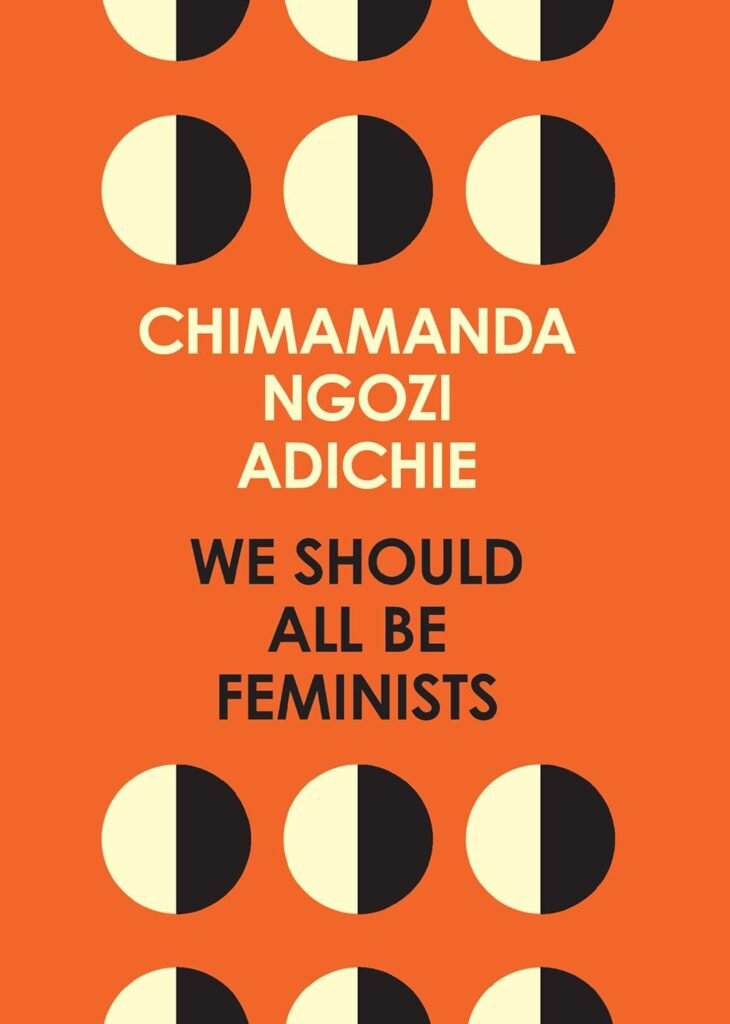
We Should All Be Feminists
Watch Prashant Sir break down Adichie’s key arguments, her rhetorical method, and why this slim essay is one of the most efficiently argued books in contemporary non-fiction.
Why Read We Should All Be Feminists?
We Should All Be Feminists began as a TEDx talk in Lagos in 2012 and was later adapted into this slim but powerful essay. Chimamanda Ngozi Adichie — one of the most celebrated African writers of her generation — uses personal stories, sharp observations, and a warmly conversational tone to make the case for feminism in the twenty-first century. She takes a topic that has generated enormous heat and very little light and brings to it clarity, warmth, and intellectual rigour.
The essay opens with a childhood incident where a class teacher gave a prize to the highest-scoring student — but when Adichie topped the class, the teacher hesitated to hand it to a girl. That single moment becomes the lens through which the entire essay is read. Adichie is not angry. She is clear-eyed.
The essay moves through the landscape of everyday gender inequality: how women are taught to shrink themselves, how men are socialised to suppress emotion, how language encodes assumptions, and how the roles we assign by gender hurt both men and women. The title is not a demand — it is a suggestion, extended with both hands. At 52 pages, it is one of the most efficiently argued books in contemporary non-fiction.
Who Should Read This
This essay is for anyone who has ever felt confused about what feminism actually is. It is for students who want a clear, non-academic introduction to gender equality. It is for men who are curious but unsure where to begin. CAT, GMAT, and GRE candidates preparing for verbal reasoning and essay sections will find Adichie’s essay a model of clear argumentation — and its content directly relevant to RC passages and GD/PI topics on gender, society, and social justice.
Key Takeaways from We Should All Be Feminists
Feminism is the belief in the social, political, and economic equality of the sexes — nothing more, nothing less. Stripping the concept of its accumulated baggage makes it possible for readers who had rejected the label to see themselves in it.
Gender roles damage men too. Boys are taught that expressing vulnerability is weakness. Dismantling rigid gender roles is in everyone’s interest — feminism is not a zero-sum game where women’s advancement comes at men’s expense. It frees both.
Culture is not an excuse for inequality. “Culture does not make people. People make culture.” This challenges the argument — heard everywhere — that gender inequality is simply how things have always been done and therefore beyond critique.
Language encodes assumptions. Why do we say “a female writer” but not “a male writer”? Small linguistic asymmetries accumulate into a picture of the world in which male is normal and female is exception. Paying attention to language is a form of critical thinking.
Key Ideas in We Should All Be Feminists
The central project of this essay is to reclaim the word “feminist” from the distortions it has accumulated. Adichie addresses the common objections head-on — that feminists hate men, that feminism is a Western import, that it is no longer necessary — and counters each with lived experience and logic rather than ideology. Her definition is deliberately simple: a feminist is a person who believes in the social, political, and economic equality of the sexes. By stripping the concept of its accumulated baggage, she makes it possible for readers who had rejected the label to see themselves in it.
One of Adichie’s most important and often overlooked arguments concerns men. Gender roles damage men too — boys are taught that expressing vulnerability is weakness, men are expected to always be strong and always provide. This socialisation creates pressure that many men silently carry their whole lives. Adichie is not making this point to centre men in a feminist conversation; she is making it to show that dismantling rigid gender roles is in everyone’s interest. Feminism is not a zero-sum game where women’s advancement comes at men’s expense — it is a project that frees both.
The essay is also alert to how language shapes perception. When a woman who runs a company is introduced as a “lady CEO,” the qualifier signals that the default CEO is male and that her presence requires explanation. These small asymmetries accumulate into a picture of the world in which male is normal and female is exception. Adichie examines these linguistic patterns to show how they embed assumptions that most people have stopped noticing.
Throughout the essay, Adichie grounds abstract arguments in specific personal memories — a Lagos dinner where a waiter addresses only her male companion; being called “too angry” when she spoke about gender; a Nigerian friend warning that calling herself a feminist would make men afraid of her. These anecdotes do what statistics and theory cannot: they make the reader feel the texture of the problem, not just understand it intellectually.
Key Themes in We Should All Be Feminists
Five interlocking themes run through the essay, each examining a different dimension of how gender shapes experience, language, and possibility.
Core Arguments
Four arguments structure the essay — each one building the case for gender equality from a different angle.
Adichie’s most fundamental argument is that gender equality is not a women’s issue — it is a human one. Restricting women’s participation in any domain reduces the talent pool available to that domain. Boys who are taught to suppress emotion grow into men who struggle to form meaningful relationships. The systems that limit women limit men differently but just as surely. The World Economic Forum’s Global Gender Gap Report consistently shows that countries with higher gender equality also show stronger economic performance — a reminder that equality is not charity but pragmatism.
The most common counter-argument to feminist positions is cultural: “This is how things have always been done.” Adichie dismantles this by pointing out that culture is not fixed — it is continuously made and remade by the people who live within it. Traditions that cause harm are not sacred by virtue of their age; they are simply older forms of harm. The question is not whether culture should change but whether it will change consciously, with care for those who bear its costs, or unconsciously, too slowly to prevent damage.
One of the essay’s implicit arguments — demonstrated through its method rather than stated in its content — is that concrete, specific examples are more persuasive than abstract claims. When Adichie describes a waiter who ignores her to address her male companion, the reader understands something about how gender operates in social space that no statistics could convey. The essay is therefore simultaneously an argument about feminism and a demonstration of how to argue: ground your claims in lived experience; trust the particular over the general; make the reader feel the thing you are arguing before you ask them to think about it.
The essay ends with its most practical argument: that the most powerful intervention available is the one that happens earliest. How we raise children — what we tell boys they can feel, what we tell girls they can aspire to, what kinds of human beings we hold up as models for each — shapes the gender landscape of the next generation more completely than any law or policy can. Adichie’s invitation is not to politics but to parenting — to the everyday decisions about what we reward, what we punish, and what we make possible.
Critical Analysis
A balanced assessment of an essay that achieves something rare — it is a work of political argument that reads like a personal conversation.
Adichie writes the way a gifted teacher talks — clear without being simplistic, structured without feeling schematic. She uses the first person throughout, which creates the unusual sensation of reading a political essay that also feels like a conversation. She anticipates objections and addresses them before the reader has time to raise them, making the text feel dialogic rather than declarative.
At 52 pages, there is no padding, no digression, no wasted word. This discipline forces precision and makes the essay re-readable. The compression also means every sentence carries weight — and the essay’s best sentences — short, declarative, perfectly placed — stop the reader the way good poetry does. “Culture does not make people. People make culture.” Two sentences. Eight words. They stop you.
Adichie is alive to complexity. She does not demonise men. She does not pretend that all societies are the same. She holds her argument and its complications simultaneously — acknowledging Nigerian cultural context, Western feminist discourse, and the specific experiences of individual women and men. This balance makes the essay more persuasive, not less.
This is a personal essay, not a study. Readers looking for data, historical analysis, or a survey of feminist theory will need to go elsewhere. We Should All Be Feminists is a personal argument, not a comprehensive one — its strength is its clarity and its humanity, and its limitation is the same. It convinces rather than exhausts the subject.
The essay focuses primarily on gender without deeply engaging the intersections of gender with class, caste, disability, or sexuality. Later critics — and Adichie herself in subsequent work — have acknowledged that a more complete account of gender inequality needs to hold these additional dimensions in view simultaneously.
The essay’s greatest strength — its accessibility — may also limit its reach within academic feminist discourse. Scholars who need sustained theoretical engagement with Butler, hooks, or Crenshaw will find Adichie’s essay an entry point rather than a destination. It is best understood as an invitation to a longer conversation it does not itself complete.
Impact & Influence
From TEDx to Global Phenomenon: We Should All Be Feminists began as a TEDx talk in Lagos in 2012, was sampled by Beyoncé in her 2013 song “Flawless,” and was published as a standalone essay in 2014. The Beyoncé sample introduced Adichie’s argument to tens of millions of listeners who had never read a feminist essay — making it one of the most widely disseminated feminist arguments of the decade. The essay has since been translated into dozens of languages and distributed to every sixteen-year-old in Sweden as part of a national gender equality initiative.
Influence on the Public Conversation: The essay’s most lasting contribution is its redefinition of feminism for a general audience. By replacing the contested, baggage-laden associations of the word with a simple, human definition — belief in the social, political, and economic equality of the sexes — Adichie made feminism legible to readers who had previously found it inaccessible or threatening. This is the specific political achievement of the essay: it expanded the tent without diluting the argument.
Adichie’s Broader Work: The essay is best read alongside Adichie’s novels — particularly Americanah (2013), which explores race, gender, and identity across Nigeria and the United States with the same specificity and warmth — and her later essay “Dear Ijeawele, or a Feminist Manifesto in Fifteen Suggestions” (2017), which extends the argument of We Should All Be Feminists into practical advice about raising a daughter.
Value for Competitive Exam Preparation: Reading comprehension passages on gender and society are common in CAT, GMAT, GRE, and UPSC exams. Essay and writing sections frequently feature prompts on social issues, equality, and change. GD/PI preparation for MBA admissions often includes topics on women in leadership, workplace equality, and social change. This essay gives candidates a precise vocabulary, a set of strong arguments, and — perhaps most importantly — a model of how to argue a position with clarity, empathy, and specificity rather than with abstraction and assertion.
Love This Book? Master Every Book.
Stop struggling with reading comprehension. Our proven system transforms how you read—whether for CAT, GRE, GMAT, SAT, or personal growth.
Best Quotes from We Should All Be Feminists
Culture does not make people. People make culture.
We do a great disservice to boys in how we raise them. We stifle the humanity of boys.
The problem with gender is that it prescribes how we should be rather than recognising how we are.
I am angry. We should all be angry. Anger has a long history of bringing about positive change.
A feminist is a man or a woman who says, yes, there’s a problem with gender as it is today, and we must fix it, we must do better.

Test Your Understanding
Think you’ve mastered We Should All Be Feminists? Challenge yourself with 15 questions on Adichie’s key arguments, themes, and rhetorical method. Score 80%+ to prove your mastery.
We Should All Be Feminists FAQ
What is We Should All Be Feminists about?
It is Chimamanda Ngozi Adichie’s 52-page personal essay — adapted from her 2012 TEDx talk — making the case for feminism in the twenty-first century. The essay uses personal stories and sharp observations to define what feminism actually means (the belief in the social, political, and economic equality of the sexes), address common objections, explore how gender roles damage both men and women, and argue that culture can and should change when it causes harm.
Is it useful for CAT, GMAT, or GRE preparation?
Yes — in several specific ways. RC passages on gender, society, and social justice are common in all three exams, and this essay builds both vocabulary and conceptual fluency in these areas. For GMAT AWA and XAT essay sections, it models how to argue a position with clarity, empathy, and evidence — grounding abstract claims in specific examples. For MBA GD/PI, it provides a precise vocabulary and set of strong arguments on women in leadership, workplace equality, and social change in India.
What does Adichie mean by “culture does not make people, people make culture”?
She is challenging the most common argument used to defend gender inequality: that cultural traditions are fixed and therefore beyond critique. Her point is that culture is not a natural phenomenon — it is made and continuously remade by the people who live within it. This means that traditions which cause harm are not sacred by virtue of their age; they are simply older forms of harm that conscious people can choose to change. The line is the essay’s most quoted because it is its most concentrated argument.
Why does Adichie argue that gender roles are harmful to men?
Because boys are socialised to suppress emotion and vulnerability — to always be strong, always have answers, never show weakness — and this socialisation creates psychological pressure that many men carry silently their whole lives. Adichie makes this argument not to centre men in a feminist conversation but to show that dismantling rigid gender roles serves everyone’s interests. Feminism is not a zero-sum competition between men and women — it is a project whose benefits are universal.
How does We Should All Be Feminists differ from more academic feminist writing?
It is personal, accessible, and deliberately non-specialist. Adichie does not engage with academic feminist theory — she does not cite Butler, hooks, or Crenshaw. Instead, she makes her case through personal anecdotes, direct address, and wry observation. This makes the essay an ideal entry point for readers new to thinking about gender and equality — and a limitation for readers seeking sustained theoretical engagement. Its strength is its humanity and its clarity; its limitation is the same.








