
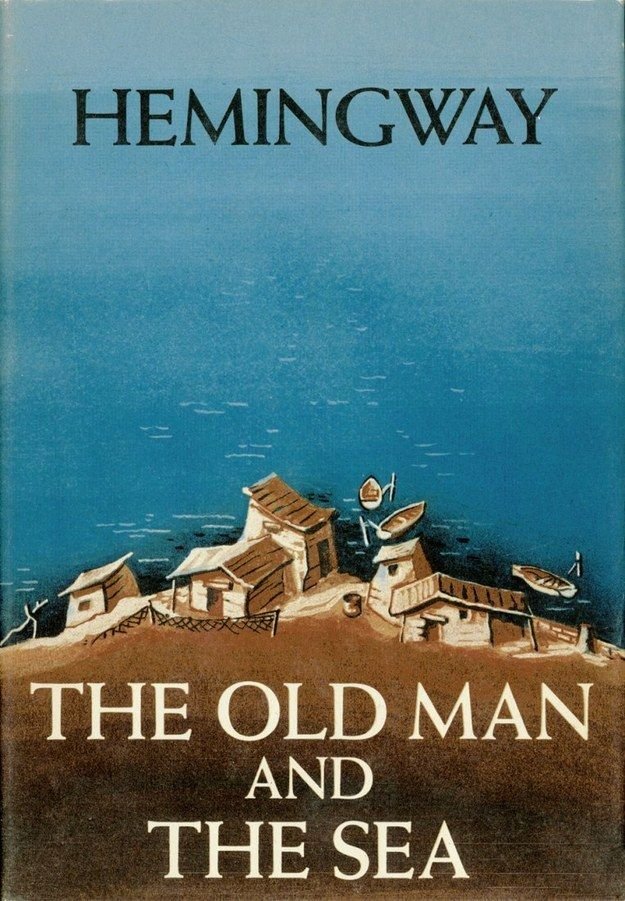
Why Read The Old Man and the Sea?
The Old Man and the Sea is one of the most deceptively simple novels ever written. On its surface, it is about a Cuban fisherman who spends three days at sea battling a giant marlin. Beneath that surface — and Hemingway always worked beneath surfaces — it is a meditation on what it means to endure without surrender, to strive without certainty of success, and to find dignity not in victory but in the quality of the struggle itself.
Published in 1952, the novella follows Santiago, an aged Cuban fisherman who has gone eighty-four days without catching a fish. Considered unlucky by his community and past his prime, he rows alone far out into the Gulf Stream and hooks the largest marlin he has ever encountered — a fish so powerful that it tows his skiff for two days before he can bring it alongside. The battle is physical, mental, and, in Hemingway’s hands, unmistakably spiritual — a contest between a man at the edge of his powers and a force of nature that is simultaneously adversary and equal.
Hemingway developed what he called the “iceberg theory” of writing — the idea that the dignity of movement of an iceberg lies in only one-eighth of it being above water. Every sentence in this novella bears the weight of what it does not say. Santiago’s muttered conversations with himself, his reverence for the marlin, his ruined hands, his solidarity with the stars and the sea — all of it carries meaning that Hemingway trusts the reader to feel without being told what to feel. It is a masterclass in literary restraint and one of the finest examples of the theory in practice.
Who Should Read This
This novella is ideal for anyone beginning serious literary reading — its prose is clean and unintimidating, but its depths reward re-reading and close analysis equally. CAT and GRE candidates will find Santiago’s psychological interior and Hemingway’s symbolic layering rich territory for inference and tone questions. Beyond exam preparation, it speaks directly to anyone navigating failure, ageing, or the question of what constitutes a life well lived — which is to say, it speaks to everyone, eventually.
Key Takeaways from The Old Man and the Sea
True endurance is not the absence of suffering — it is the refusal to let suffering become the final word. Santiago’s hands bleed, his back cramps, he hallucinates from exhaustion, and he keeps going — not because he is certain of success, but because the act of trying, conducted with full commitment, is itself the meaning. Hemingway locates dignity in effort, not outcome.
A worthy adversary is a form of honour. Santiago’s relationship with the marlin is not simply predator and prey — it is mutual recognition between two creatures at the limits of their capability. He calls the fish his brother, admires its greatness even as he kills it, and mourns its death genuinely. Hemingway argues that the quality of what you struggle against defines the quality of your struggle.
Defeat and failure are not the same thing. Santiago returns with only a skeleton — the sharks have stripped the marlin on the long journey back. By any external measure, the expedition has failed. But the old man has proven something to himself about who he still is, and that proof cannot be taken by sharks or circumstance.
Mentorship is the transmission of values, not just skills. The boy Manolin represents the continuation of Santiago’s spirit beyond his own body. The old man’s legacy is not a catch — it is the way of seeing and being that he passes to the boy, who will carry it after the sea has taken everything else.
The Old Man and the Sea Plot Summary
Santiago is an old Cuban fisherman who lives alone in a village near Havana. He has not caught a fish in eighty-four days and is considered salao — the worst form of unlucky — by the other fishermen. The boy Manolin, who learned to fish from Santiago and loves him deeply, has been moved by his parents to a more successful boat but still comes each evening to help the old man with his gear, bring him food, and talk about baseball. Santiago worships Joe DiMaggio, seeing in DiMaggio’s ability to play through a bone spur — to perform brilliantly despite pain — a model for his own situation.
On the eighty-fifth day, Santiago rows far out beyond the other fishing boats into the deep water of the Gulf Stream. He sets his lines with meticulous care. In the middle of the morning, a great marlin takes one of his baits. Santiago cannot pull the fish up — it is too powerful. Instead, it begins to tow his skiff slowly to the northwest. Santiago holds the line across his back and shoulders, bracing himself, and the contest begins. It will last three days.
Through the long hours, Santiago talks to himself, to the fish, to the sea birds, and to his cramping hands. He eats raw fish to keep his strength. He sleeps in brief snatches, keeping the line taut even in sleep. He thinks about DiMaggio, about the boy, about a remembered arm-wrestling contest in which he defeated a great African sailor after a day-long contest. These memories are not escapes — they are resources, reserves of self-knowledge he draws on to sustain his will. On the second night, the fish circles and Santiago pulls, and pulls, and pulls, until he has the great marlin alongside his skiff and drives his harpoon through it.
The marlin is so large — eighteen feet long — that Santiago cannot haul it into the boat. He lashes it to the side and turns for home. But the blood in the water attracts sharks. First one, then others, begin to attack the marlin. Santiago fights them off with the harpoon, then a knife, then an oar, then the tiller, until he has nothing left to fight with and the sharks take everything. He arrives home before dawn with only the skeleton, hauls his mast up the beach, and sleeps. In the morning, tourists mistake the skeleton for a shark, not understanding what they are looking at. The boy comes and sits beside the old man, and when Santiago wakes and talks of going out again, Manolin says simply: “Now we will fish together.” The circle closes.
The Old Man and the Sea Characters
Hemingway populates this spare novella with figures — human, animal, and elemental — each carrying the full weight of the novel’s themes.
One of literature’s great portraits of ageing without self-pity. Stripped of almost everything — youth, luck, the community’s respect — what remains is a pure, distilled selfhood: his knowledge of the sea, his dignity in solitude, his capacity for reverence. He is not noble because he wins — he is noble because he does not collapse.
Santiago’s emotional anchor and the novel’s gesture toward continuity. He represents everything the old man is fighting for — not a catch, but the maintenance of a self worth passing on. His loyalty in the face of his family’s practicality is the novel’s quietest act of moral courage.
Not simply a fish — it is the worthy challenge Santiago has been waiting for, perhaps his entire life. Hemingway renders it with the same respect he gives Santiago: great, beautiful, and doomed. The old man’s love for the marlin, expressed even as he kills it, is the novel’s most complex emotional note.
Santiago thinks of the sea as feminine — la mar — something vast, indifferent, and occasionally generous. In this novel it is not merely background; it is an active presence, a field of contest and communion that gives nothing for free.
They represent the indifferent destructiveness of the world — not evil, not malicious, simply hungry and relentless. Santiago’s battle against them, conducted long after the outcome is certain, is the novel’s most explicit statement about the nature of true courage.
DiMaggio never appears in the novel but is invoked repeatedly as a model of excellence and endurance — specifically, his ability to play through the pain of a bone spur. He functions as Santiago’s internal standard: the image of a man performing at his greatest despite suffering.
Major Themes
Hemingway builds his thematic architecture from the specific and physical upward toward the universal.
Hemingway’s concept of heroism has nothing to do with spectacular victory. Santiago’s heroism lies in holding on, one more hour, one more pull, past the point at which most people would surrender — not because he is certain of success, but because surrender would be a different kind of defeat than the sharks can inflict. The novel proposes endurance itself, conducted without complaint and without self-pity, as the highest human quality.
Santiago does not see himself as separate from the natural world he inhabits. He reveres the marlin, respects the sea, watches the stars for companionship. His struggle against the fish is also a dialogue with it — a form of communion that only the act of total commitment can produce. Hemingway suggests that the most profound encounters with nature are not moments of mastery but moments of mutual recognition.
The marlin’s skeleton is, by any external standard, a failure. But Hemingway is precise about what the sharks take and what they do not. They take the flesh. They cannot take what the struggle has proven to Santiago about himself. True defeat, in Hemingway’s terms, is not losing the fish — it is never having gone out far enough to find it.
Santiago’s relationship with Manolin encodes the novel’s most tender argument — that what endures beyond a single human life is not achievement but the transmission of a way of being. The boy will carry Santiago’s knowledge, his values, and his manner of facing the sea long after the old man is gone. Legacy, in Hemingway’s terms, is not fame but discipleship.
Critical Analysis
A balanced assessment of the novella’s extraordinary craft and its honestly acknowledged limitations.
Hemingway’s iceberg theory finds its fullest expression here — the sentences are stripped to their essentials, and the emotional weight is carried entirely beneath the surface. The restraint is not emptiness; it is extraordinary compression of feeling.
The novel’s symbolic system — the marlin as worthy adversary, the sharks as worldly destruction, the boy as continuity, DiMaggio as the internal standard of excellence — is perfectly integrated. Nothing feels schematic because everything is also concretely, physically real.
By grounding the novel in the precise physical details of Cuban fishing — the tackle, the bait, the stars used for navigation, the feel of the line across a burned shoulder — Hemingway paradoxically achieves maximum universality. The more specific the surface, the more transferable the meaning.
Hemingway’s insistence on stoic restraint leaves the novel with a limited emotional palette. Readers who want psychological complexity rendered explicitly may find Santiago’s inner world too guarded — the iceberg technique can, for some readers, feel like withholding rather than depth.
Women are entirely absent from the novel’s world. Santiago’s dead wife is mentioned in a single detail — a photograph taken down from the wall because it made him feel lonely. This narrows the novel’s human universe in ways that limit its range of engagement with human experience.
The ending — Manolin’s loyalty, the tourists’ misunderstanding, Santiago’s dream of lions — treads close to a sentimentality that the novel’s earlier rigour works to resist. For most readers the ending earns its emotion; for others it tips slightly into the affirming resolution that Hemingway’s best work usually refuses.
Literary & Cultural Impact
A Publishing Phenomenon: The Old Man and the Sea was published in a single issue of Life magazine in September 1952 and sold 5.3 million copies within two days — one of the most remarkable single-publication events in twentieth-century literary history. It was awarded the Pulitzer Prize for Fiction in 1953 and was cited by the Nobel Committee when Hemingway received the Nobel Prize in Literature in 1954, with the judges describing it as “a literary work of great force.”
Influence on Prose Style: The iceberg theory — the principle that what is left out of a story gives it its power — became one of the foundational doctrines of twentieth-century fiction and is taught in virtually every creative writing programme in the English-speaking world. Writers as different as Raymond Carver, Cormac McCarthy, and Elmore Leonard cite Hemingway’s economy as a formative influence.
Cultural Archetype: Beyond literature, Santiago has become a cultural archetype — the figure of the old craftsman at the end of his powers, making one final effort at greatness — invoked in discussions ranging from sports to business to geopolitics. The novel’s central question — what do you do when the world takes everything except your own refusal to give in? — remains as unanswerable and as necessary as it was in 1952.
Love This Book? Master Every Book.
Stop struggling with reading comprehension. Our proven system transforms how you read—whether for CAT, GRE, GMAT, SAT, or personal growth.
Best Quotes from The Old Man and the Sea
But man is not made for defeat. A man can be destroyed but not defeated.
Every day is a new day. It is better to be lucky. But I would rather be exact. Then when luck comes you are ready.
He was an old man who fished alone in a skiff in the Gulf Stream and he had gone eighty-four days now without taking a fish.
I may not be as strong as I think, but I know many tricks and I have resolution.
It is enough to live among them and to fish and to know that you are of them and they of you.



Test Your Understanding
Think you’ve mastered The Old Man and the Sea? Challenge yourself with 15 questions on themes, characters, and key takeaways. Score 80%+ to prove your mastery.
The Old Man and the Sea FAQ
What is The Old Man and the Sea about?
It follows Santiago, an ageing Cuban fisherman who has caught nothing for eighty-four days, as he ventures alone far out to sea, hooks the largest marlin he has ever encountered, and spends three days in a physical and spiritual contest with it. On a deeper level, it is about endurance, dignity, the nature of defeat, and what a man can prove to himself when the world has written him off.
Is it suitable for competitive exam preparation like CAT or GRE?
Very much so — and it is an excellent starting point because the prose is accessible without being simplistic. The novel rewards inference questions, tone analysis, and symbol identification. Hemingway’s iceberg technique means that almost every sentence carries more weight than it appears to, which is precisely the kind of layered text that RC passages for CAT and GRE favour.
What are the main themes?
The central themes are endurance and the redefinition of heroism, the relationship between man and nature as struggle and communion, the distinction between worldly defeat and inner defeat, and the passing of knowledge and values from one generation to the next through mentorship.
What does the marlin symbolise?
The marlin is Santiago’s worthy adversary — the challenge proportionate to his greatest capacities. It represents everything he has been waiting for: a test so demanding that meeting it fully, regardless of outcome, is itself a form of fulfilment. Santiago calls it his brother, mourns its death, and is ultimately defined by the quality of his struggle with it more than by its loss.
Why does the novel matter today?
Its central argument — that a person can be destroyed by circumstance but not defeated if they refuse internal surrender — speaks with particular force to anyone navigating failure, ageing, professional setback, or the quiet indignities of being underestimated. The question of what constitutes a life well lived, and whether outcomes or efforts provide the answer, is one that every generation must re-examine for itself.








