
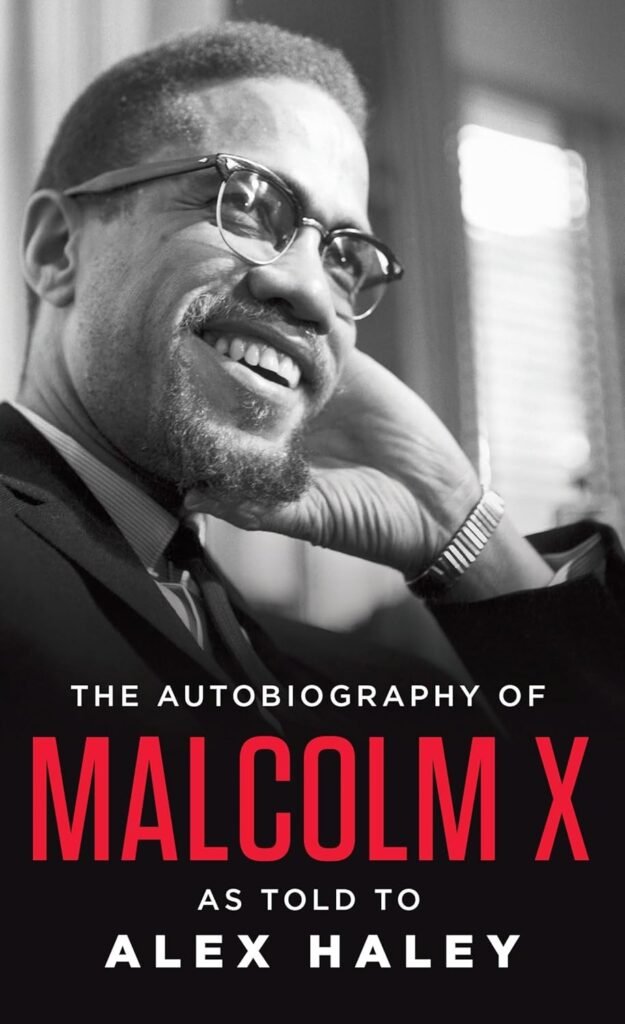
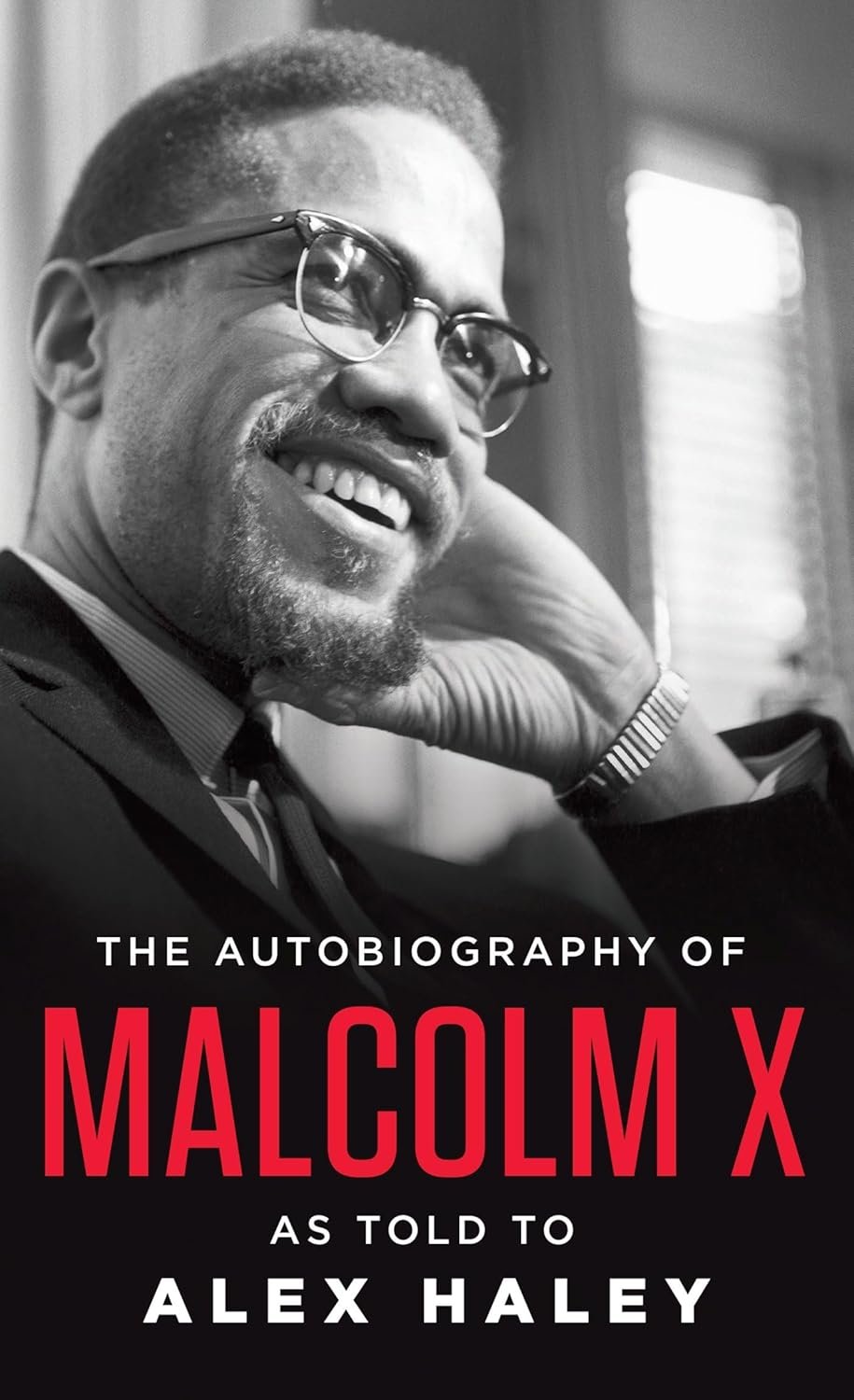
The Autobiography of Malcolm X
Watch Prashant Sir break down the key transformations, the Mecca chapter, and why this remains one of the most intellectually serious books about race ever written.
Why Read The Autobiography of Malcolm X?
The Autobiography of Malcolm X is one of the most important American books of the twentieth century — not despite its anger but partly because of it. Written in collaboration with Alex Haley and published the year of Malcolm’s assassination, it is the first-person account of a man who was born into poverty and racial violence, survived by becoming a criminal, was transformed in prison by the Nation of Islam, built himself into the most feared and most misrepresented Black political voice in America, and then began to move beyond the racial framework that had structured his worldview entirely. The book is, at its deepest level, not a political document but a study in the specific psychology of self-transformation — of what it takes to remake yourself, completely, more than once.
The autobiography covers Malcolm’s full arc: his father’s murder by white supremacists, his mother’s breakdown and institutionalisation, his years in foster care, his seduction by the street life of Boston and Harlem, his arrest and imprisonment, his conversion to the Nation of Islam, his transformation into the NOI’s most effective national minister, his break with the NOI following his discovery of Elijah Muhammad’s moral corruption, his pilgrimage to Mecca, and the final months of his life in which he was building a new political philosophy when he was assassinated.
What distinguishes the autobiography from the vast literature it has generated is its specific honesty about each phase. He does not present his earlier self as simply wrong and his later self as simply right; he presents each transformation as the genuine product of specific conditions and specific thinking, and he is honest about what each phase understood that the others did not. This intellectual honesty — rare in political autobiography — is what makes the book a genuine contribution to the literature of self-knowledge rather than merely a political statement.
Who Should Read This
This is essential reading for anyone who wants to understand the specific experience of race in America from the inside — not as a policy problem but as the daily condition of a specific life in a specific historical moment. MBA and CAT candidates preparing for discussions about race, identity, justice, political philosophy, and the psychology of oppression will find in Malcolm’s account a framework more precise and more demanding than any textbook treatment. Beyond preparation, it belongs on every reading list for anyone who wants to understand the Civil Rights era and the psychology of radical self-transformation.
Key Takeaways from The Autobiography of Malcolm X
Identity is not fixed — it is continuously constructed and reconstructed in response to experience, knowledge, and the courage to follow thinking wherever it leads. Malcolm remade himself at least three times — from street hustler to NOI minister to post-Mecca internationalist. The autobiography is the most complete available account of what radical self-transformation actually requires, including the willingness to acknowledge that your earlier self was wrong in specific, traceable ways.
Reading — systematic, sustained, self-directed reading — is the most powerful instrument for self-education. Malcolm’s account of teaching himself to read properly in prison — copying the dictionary by hand, reading everything in the prison library — is one of the most vivid accounts of what genuine self-education looks like. He did not merely acquire information; he rebuilt his capacity to think, producing a transformation more complete than most formally educated people achieve.
The Mecca pilgrimage was the autobiography’s most intellectually significant event — confronting Malcolm with the reality of a genuinely non-racial religious community that directly contradicted the framework he had built his entire political identity around. His willingness to follow that experience to its conclusion — to acknowledge that his previous framework was wrong — is the autobiography’s most demanding act of intellectual honesty.
Systemic racism does not require individual racists — it reproduces itself through institutions, histories, and the specific ways poverty, violence, and exclusion compound across generations. Malcolm’s life story is the most precise available illustration: every degradation of his early life was the product not of individual malice but of a system operating according to its own logic. Understanding racism as a system rather than a sentiment is the autobiography’s most important analytical contribution.
Key Ideas in The Autobiography of Malcolm X
The autobiography’s most important structural feature is its organisation around transformations rather than around a single, stable identity. Most political autobiographies present their subject’s evolution as a journey toward a final, correct position; this book presents a man who is genuinely changed by experience more than once, and who is honest about the inadequacies of each previous position from the vantage point of the next. This structure is itself the autobiography’s deepest argument: that intellectual honesty requires the continuous willingness to be changed by what you learn, regardless of the cost to your current identity and commitments.
The prison education section is one of the most instructive accounts of self-directed learning available in any memoir. Malcolm’s description of copying the dictionary by hand — first to improve his handwriting, then because he discovered the world that language opened — is not a story about the acquisition of literacy in the narrow sense. It is a story about the discovery that the world described in books is substantially different from the world described by the conditions of his life, and that the gap between those two descriptions was itself evidence of a specific historical injustice. He did not merely learn to read; he learned what had been withheld from him and why, and that discovery was the engine of his political awakening.
The Nation of Islam sections are both the autobiography’s most controversial and most important — controversial because the NOI’s racial theology is explicitly repudiated by the autobiography’s later sections, and important because they document the specific psychological function that the NOI served for a man whose entire life had been shaped by racial humiliation. The NOI gave Malcolm an explanation for his suffering that did not require him to accept the white world’s account of who he was. Understanding why the NOI’s framework was effective for Malcolm is essential to understanding what racism does to the people it targets, and the autobiography provides the most personal available account of that specific psychological experience.
The Mecca chapter is the autobiography’s intellectual climax — the specific experience that exposed the limitations of the racial framework Malcolm had built his identity around. What he found in Mecca was not merely theological; it was sociological: a community of genuine diversity organised around a shared practice rather than a racial hierarchy. The experience did not simply add information to his existing framework; it demonstrated that the framework itself was inadequate to account for the reality he was observing. His decision to follow this discovery to its conclusion — to begin building a new political philosophy that went beyond race — is the autobiography’s most consequential intellectual act, and the one that most likely contributed to his assassination.
Key Themes in The Autobiography of Malcolm X
Five interconnected themes run through the autobiography — each developed not through abstract argument but through the specific texture of a life lived at the sharpest edge of American racial history.
Core Arguments
Four interconnected arguments run through the autobiography — each directed at a specific inadequacy in the dominant frameworks for thinking about race, justice, and liberation.
Malcolm’s most pointed and most enduring political argument is directed not at white supremacists but at white liberals — the specific critique that liberal goodwill toward Black Americans, when it does not address the structural conditions of racial inequality, is a form of accommodation to those conditions rather than a challenge to them. The liberal who supports civil rights in principle but opposes the specific measures required to address structural inequality is, in Malcolm’s analysis, a more effective obstacle to change than the explicit racist, because they provide the appearance of progress without its substance. This argument — sharper and more specific than anything in the mainstream civil rights discourse of the period — remains one of the most uncomfortable analyses of the gap between liberal intention and liberal consequence.
Malcolm’s critique of non-violent civil disobedience is one of the most specific and most intellectually serious available — and it is frequently misread as a simple endorsement of violence. His actual argument is conditional: non-violent resistance is a viable strategy in a society where the state is responsive to moral pressure and where the dominant culture is sufficiently invested in its stated values to be shamed into changing. In a society where the state responds to peaceful protest with lethal force and where the dominant culture has demonstrated that it is not moved by moral appeal alone, non-violence is not a strategy but a capitulation. This is not an endorsement of violence for its own sake; it is an argument about the conditions under which non-violent resistance can achieve its goals.
The autobiography argues that the most fundamental form of liberation is the liberation of self-definition — the refusal to accept the dominant culture’s account of who you are. The NOI’s framework served a specific and genuine psychological function: it gave Malcolm a counter-narrative that made his suffering legible as the product of injustice rather than of inferiority. The argument that oppressed communities require their own account of their own experience — not merely equal access to the dominant culture’s account — is the autobiography’s most lasting contribution to the theory of liberation.
The autobiography’s most forward-looking argument — and the one cut short by his assassination — is the move toward a political philosophy that went beyond racial nationalism to connect the struggle of Black Americans to the broader struggle of colonised and economically exploited people globally. The Organisation of Afro-American Unity was Malcolm’s attempt to situate American racism within the global context of colonial exploitation and to find solidarity across racial lines with people whose suffering had the same structural causes. This vision — more complex, more internationalist, and more radical in its structural analysis than the NOI’s racial theology — is what his final months were building toward, and its incompleteness is one of the autobiography’s most painful aspects.
Critical Analysis
A balanced assessment of a political autobiography that achieves something genuinely rare: it is intellectually honest about its own subject’s limitations at every phase, including the phases its subject had already transcended.
The autobiography’s most immediately striking quality is the specific power of Malcolm’s voice — direct, precise, intellectually demanding, and rhetorically formidable. Alex Haley’s role as collaborator is acknowledged, but the voice is unmistakably Malcolm’s, and it carries the specific authority of a man who taught himself everything he knew and who deployed that knowledge with an intensity that the formally educated rarely match. The voice is both the autobiography’s most important literary achievement and its most important political instrument.
Most political autobiographies present a retrospectively coherent development toward a final, correct position, softening or omitting the phases that do not fit the final narrative. Malcolm’s autobiography presents each phase on its own terms — including the NOI’s racial theology, which he had explicitly rejected by the time he told the story. This honesty is rare and valuable: it allows the reader to understand each position from the inside rather than merely from the perspective of its supersession.
The autobiography provides one of the most precise first-person accounts available of racism operating as a system rather than as a collection of individual prejudices — showing, through the specific events of one life, how racial capitalism reproduces poverty, criminalises survival strategies, and systematically withholds educational and economic resources. This structural analysis was ahead of its time in 1965 and remains essential reading for anyone seeking to understand how systemic racism actually works.
The autobiography’s most significant limitation is its consistent marginalisation of women — Malcolm’s relationships with women are described primarily in terms of their function for his own development, and the NOI’s specific gender ideology (which confined women to domestic and subordinate roles) is not critically examined. For a document so precise about every other form of hierarchy and oppression, the absence of serious engagement with gender is both intellectually inconsistent and historically consequential. Feminist scholars have written extensively about this gap, and it is essential context for a complete engagement with the text.
The autobiography was told to and shaped by Alex Haley, whose own views differed from Malcolm’s and who has acknowledged shaping the narrative in specific ways. The epilogue Haley added after Malcolm’s assassination, while valuable as a primary account of their collaboration, also raises questions about which interpretive choices were Malcolm’s and which were Haley’s — particularly in the later sections, where Malcolm’s thinking was changing most rapidly.
The autobiography ends with Malcolm in the middle of his most important intellectual development — the post-Mecca reconstruction of his political philosophy. His assassination at thirty-nine left both the autobiography and the thinking it documented incomplete. What the book presents as a conclusion is actually a transition — the beginning of a third phase of political thinking that was still being formed when it was cut off. Readers should engage with the autobiography knowing that the trajectory it establishes was not completed.
Legacy & Cultural Impact
Publication and Recognition: The Autobiography of Malcolm X was published in October 1965, seven months after Malcolm’s assassination, and has since been recognised as one of the most important American books of the twentieth century — named by Time magazine as one of the ten most important non-fiction books of the century. It has sold over ten million copies, been translated into dozens of languages, and been taught in universities, high schools, and prisons across the United States and internationally. Spike Lee’s 1992 film, with Denzel Washington’s performance, introduced a new generation to the autobiography’s material.
Cultural Impact — Contested and Lasting: In the decade following its publication, the autobiography became one of the foundational texts of the Black Power movement — its account of self-definition, structural racism, and the inadequacy of liberal accommodation shaped the political thinking of a generation of Black American activists and intellectuals. In subsequent decades, it was read differently by different audiences: as a cautionary tale about racial militancy, as a model of intellectual courage and self-transformation, and as a primary document of the Civil Rights era whose structural analysis remained relevant decades after the formal legal changes of the 1960s.
Malcolm and Martin — Complementary, Not Opposed: The autobiography’s relationship to the broader Civil Rights movement is one of the most instructive available case studies in the relationship between radical and reformist politics. Malcolm and Martin Luther King Jr. are routinely presented as opposites — the violent and the non-violent, the angry and the reconciling — but this opposition obscures the degree to which they were engaged in a genuine dialogue. Malcolm’s willingness to name what liberal accommodation could not address gave King’s moral framework a sharper political edge than it could have had without the contrast, and King’s moral authority gave Malcolm’s structural analysis a humanising counterpart. The two figures are best understood as complementary rather than opposed.
Resonance for Indian Readers: The autobiography carries specific resonances in the Indian context: the specific experience of colonialism and its aftermath; the question of whether liberation movements should seek accommodation within the dominant framework or its structural transformation; the psychology of communities that have been told systematically that their culture, history, and identity are inferior; and the political question of how societies build genuine equality after formal discrimination has been abolished. The autobiography is not Indian history, but its questions are questions that any post-colonial society must eventually answer, and Malcolm’s precision in formulating those questions makes it essential reading for anyone thinking seriously about them.
Love This Book? Master Every Book.
Stop struggling with reading comprehension. Our proven system transforms how you read—whether for CAT, GRE, GMAT, SAT, or personal growth.
Best Quotes from The Autobiography of Malcolm X
Education is our passport to the future, for tomorrow belongs only to the people who prepare for it today.
You don’t have to be a man to fight for freedom. All you have to do is to be an intelligent human being.
I am not a racist. I am against every form of racism and segregation, every form of discrimination. I believe in human beings, and that all human beings should be respected as such, regardless of their color.
The future belongs to those who prepare for it today.
People don’t realize how a man’s whole life can be changed by one book.
If You Liked This, Try…
No books found.
Test Your Understanding
Think you’ve mastered The Autobiography of Malcolm X? Challenge yourself with 15 questions on the key transformations, arguments, and themes. Score 80%+ to prove your mastery.
The Autobiography of Malcolm X FAQ
What is The Autobiography of Malcolm X about?
It is the first-person account of Malcolm X’s life — told to Alex Haley in the months before his assassination — covering his childhood in poverty and racial violence, his street years in Boston and Harlem, his imprisonment and self-education, his conversion to the Nation of Islam and transformation into its most powerful national minister, his break with the NOI and pilgrimage to Mecca, and the final months of his life in which he was building a new, post-racial political philosophy. At its deepest level, it is a study in radical self-transformation — of what it takes to remake yourself, completely, multiple times.
Is it useful for MBA and CAT preparation?
Directly and substantially — particularly for GD/PI discussions about race, identity, systemic inequality, colonialism, political philosophy, and the psychology of oppression. Malcolm’s framework — racism as system rather than sentiment, the politics of self-definition, the conditions for non-violent resistance, the post-Mecca vision of solidarity beyond race — provides specific, well-argued analytical tools for questions that most candidates answer with generic statements. The autobiography is also the primary source for the Malcolm-versus-King discussion that appears regularly in Civil Rights strategy debates, and understanding both figures seriously requires engaging with this text.
What changed after Malcolm X’s pilgrimage to Mecca?
The pilgrimage confronted Malcolm with the lived reality of a genuinely non-racial community — Muslims of every race, nationality, and colour practising together as genuine equals — that directly contradicted the racial theology he had built his identity around. It did not turn him into an integrationist or a supporter of the mainstream civil rights movement’s strategy. It did lead him to abandon the NOI’s specific racial theology and to begin building a political philosophy that located the struggle of Black Americans within the global context of anti-colonial resistance — connecting racial justice to economic justice and situating both within an internationalist framework that went beyond American racial categories.
Why was Malcolm X so critical of white liberals?
Because he argued that liberal goodwill toward Black Americans, when it did not address the structural conditions of racial inequality, was accommodation to those conditions rather than a challenge to them. The liberal who supports civil rights in principle but opposes the specific measures required to address structural inequality — reparations, economic redistribution, the dismantling of systemic barriers rather than merely the removal of formal discrimination — is, in Malcolm’s analysis, more effective as an obstacle to structural change than the explicit racist, because they provide the appearance of progress while the underlying conditions remain unchanged.
How should we understand Malcolm X’s views on violence?
Malcolm’s position on violence is frequently misread as a simple endorsement of it. His actual argument was conditional: non-violent resistance is a viable strategy in a society where the state is responsive to moral pressure and where the dominant culture is sufficiently invested in its stated values to be shamed into changing. In a society where the state responds to peaceful protest with lethal force and where moral appeal has repeatedly failed to produce structural change, non-violence is not a principled strategy but a capitulation to the existing power arrangement. This is not a celebration of violence for its own sake; it is a specific argument about the conditions under which non-violent resistance can realistically achieve its goals — an argument that remains one of the most intellectually serious contributions to the debate about liberation strategy.








