
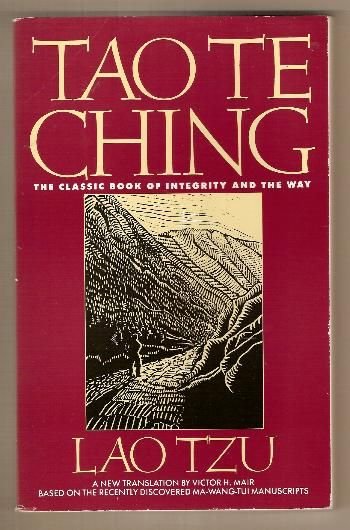
Why Read Tao Te Ching?
Tao Te Ching is one of the most translated texts in human history — second only to the Bible — and one of the most deceptive in its apparent simplicity. Its 81 short verses can be read in an afternoon, but they have been contemplated, debated, and interpreted for over two and a half millennia without exhaustion. Written in classical Chinese with a compression that defeats literal translation, it is a text that does not explain the Tao so much as gesture toward it — a philosophical poem that insists, from its very first line, that the thing it is pointing at cannot be captured in words.
The Tao Te Ching is attributed to Lao Tzu — “the Old Master” — a semi-legendary figure said to have been a contemporary of Confucius. The Tao — the “Way” — is the fundamental principle of the universe: the undifferentiated ground of being from which all things emerge and to which all things return. It cannot be named, defined, or grasped conceptually. What can be said is how it operates: through effortlessness (wu wei), through receptivity, through the power of the soft over the hard, the empty over the full, the low over the high.
The Tao Te Ching is simultaneously a metaphysical treatise, a guide to personal conduct, and a manual of governance — each of its three registers interpenetrating the others in a way that makes the text inexhaustible to any single reading. The same verse read at twenty and at sixty yields genuinely different meaning — a quality that almost no other philosophical text can claim.
Who Should Read This
This is a book for anyone who wants to encounter a fundamentally different way of thinking about power, action, and the nature of reality — one that begins from premises entirely different from the Western philosophical tradition. Essential for students of Eastern philosophy and comparative religion, CAT/GRE aspirants building cross-cultural philosophical reading comprehension, leaders and practitioners interested in effortless effectiveness, and anyone drawn to poetry as a vehicle for philosophical insight.
Key Takeaways from Tao Te Ching
Wu wei — “non-action” or “effortless action” — is the Tao Te Ching’s most practical and most misunderstood concept. It does not mean passivity but action perfectly aligned with the natural flow of things — action without force, without ego, without resistance. The great Taoist leader governs without imposing, accomplishes without striving. “Do nothing, and nothing is left undone.”
Water is the Tao Te Ching’s master image — the softest substance, which nonetheless wears away the hardest stone. Lao Tzu uses water repeatedly to illustrate the Taoist paradox that softness overcomes hardness and receptivity overcomes assertion. This is not a counsel of weakness but a profound counter-argument to the assumption that power operates through force.
Usefulness comes from emptiness — a wheel’s hub, a pot’s hollow, a room’s empty space are what make them functional. Lao Tzu’s meditation on the utility of the void challenges the assumption that value lies in what is present, and suggests that the most important thing is often the space that allows things to function. Applied to leadership: receptivity, silence, and restraint create the most.
The Tao Te Ching consistently reverses conventional hierarchies — the weak over the strong, the low over the high, the soft over the hard, the feminine over the masculine. This is a sustained argument that the values most cultures prize — strength, hardness, assertion, ambition — are less durable and less effective than their apparent opposites. The text invites a fundamental reorientation of what is worth pursuing.
Key Ideas in Tao Te Ching
The Tao Te Ching does not develop its ideas sequentially — it circles them, approaches them from different angles, and lets them resonate against each other across 81 short verses. Any attempt to summarize it linearly misrepresents its method, which is itself an expression of the Taoist understanding that truth cannot be captured in systematic argument.
The Tao itself — the Way — is the text’s unreachable center. It is the undifferentiated ground of all being, the principle from which all things emerge and to which all things return, the natural order that operates beneath and through all phenomena. It is explicitly beyond naming and beyond conceptual grasp — the text opens by insisting on this. What Lao Tzu can describe is not the Tao itself but Te — its power or virtue as it manifests in the world.
Wu wei — literally “non-doing” — is the practical expression of alignment with the Tao. It is not passivity or laziness but action so perfectly calibrated to the situation that it requires no force — the master craftsman who works with the grain of the wood, the skilled leader who governs so lightly that the people feel ungoverned, the sage who accomplishes everything without apparent effort. Wu wei stands in radical opposition to the Western valorization of striving, ambition, and assertion, proposing instead that the most effective action is the action that is least felt.
The text’s political philosophy applies these principles to governance. The ideal ruler is the one whose subjects barely know they exist; the worst ruler is the one who is feared. This ranking inverts the conventional hierarchy of political effectiveness entirely: the ruler who accomplishes everything through gentle, invisible influence is superior to the one who maintains order through charisma or coercion. Many verses describe the ideal state as small, self-sufficient, and ungoverned — a vision so radical that it anticipates aspects of both anarchism and deep ecology.
Core Frameworks
Six interlocking philosophical concepts that together constitute the Taoist worldview — each illuminating the same fundamental principles from a different angle.
The Tao cannot be defined, named, or grasped conceptually — any description immediately falsifies it. Lao Tzu approaches it through negation (it is not this, not that), through analogy (it is like water, like an empty vessel), and through paradox (it does nothing and yet nothing is left undone). The practical implication is that there is a natural order to things — a way things flow when not interfered with — and that human flourishing consists in alignment with this order rather than resistance to it.
Wu wei is better understood as action without ego-driven effort — doing what needs to be done in the way the situation itself calls for, without imposing one’s own agenda. Its paradox is captured in the verse “do nothing, and nothing is left undone”: the person who tries too hard, who forces outcomes, who imposes their will, achieves less than the one who acts in perfect alignment with what is actually needed.
Te is the specific expression of the Tao in a particular entity or moment — the natural power that flows from being genuinely what one is, without pretense or performance. In a leader, Te is the authority that arises not from office or force but from genuine virtue and alignment with natural order. Te is not achieved through effort but through the removal of what blocks it: ego-driven striving, forced performance, and the anxious pursuit of recognition.
Lao Tzu uses the image of water to make this argument concrete: water is the softest substance, yet it wears away the hardest stone; it flows downward and takes the lowest position, yet it is essential to all life. The metaphysical claim is that the qualities conventionally devalued — softness, receptivity, emptiness, the feminine, the low — are actually more powerful and more durable than their conventional opposites.
Three concrete images: the wheel whose usefulness depends on the empty hub; the clay pot whose usefulness depends on the hollow interior; the room whose usefulness depends on the empty space enclosed by walls. In each case, it is what is not there that makes the thing useful. Applied to leadership: the most effective leaders create emptiness that others can fill, rather than being “full” of their own agenda and presence.
The Tao Te Ching consistently reverses conventional assumptions: the soft overcomes the hard, the low overcomes the high, the empty is more useful than the full, the child is closer to the Tao than the adult, the leader who governs least governs best. These reversals are a sustained argument that the Tao’s power operates through what conventional culture devalues — and that alignment with this power requires a fundamental reorientation of what one considers worth pursuing.
Core Arguments
Four philosophical arguments that build from metaphysics to politics — each following from the central premise that reality has a natural order, and that human flourishing consists in alignment with it.
The text’s opening verse — “The Tao that can be told is not the eternal Tao” — establishes the central epistemological claim: the ultimate ground of reality cannot be captured in language or concept. This is not mystical evasion but a philosophical position with significant implications. If the Tao cannot be named, then no ideology, religion, or philosophical system can claim to have captured it. The practical implication is humility: the person who is certain they have grasped the truth is furthest from the Tao; the person who holds their understanding lightly and remains open is closest to it.
Across many verses, Lao Tzu argues that the driven pursuit of conventional goods — wealth, fame, power, knowledge — is self-undermining. The person who chases fame becomes enslaved to others’ opinions; the person who strives for virtue performs virtue rather than embodying it. This argument — that attachment to outcomes prevents the achievement of those outcomes — anticipates by centuries the insights of Buddhist non-attachment and the modern understanding that intrinsic motivation produces better results than extrinsic pressure.
Lao Tzu’s political philosophy is among the most radical in the philosophical canon: the best ruler is the one whose subjects, when the work is done, say “we did it ourselves.” The leader who rules through charisma is less effective than the one who rules through example; the one who rules through coercion is less effective than either. The best governance is so light and so aligned with the people’s actual needs that it is barely felt — the ruler creates conditions for natural flourishing and then steps back.
Many of the Tao Te Ching’s verses return to the value of simplicity — the simple life, the small community, the uncomplicated self. The deeper argument is not nostalgic; it is about the conditions for genuine renewal. Complexity, over-extension, and the accumulation of obligations pull people away from alignment with the Tao. Return to simplicity is not regression but recalibration — a return to the ground from which genuine growth becomes possible again.
Critical Analysis
A balanced assessment of a text whose philosophical originality and inexhaustibility are matched only by the genuine challenges it poses to reader and translator alike.
The Tao Te Ching offers a genuinely alternative metaphysical and ethical framework to the Western philosophical tradition — its understanding of power, action, and reality is not a variant of anything in Plato, Aristotle, or the Stoics but something genuinely different, making it irreplaceable for any reader who wants to understand the full range of human philosophical achievement.
Because the text works through paradox, image, and poetic compression rather than explicit argument, it resists definitive interpretation and rewards return across a lifetime. The same verse read at twenty and at sixty yields genuinely different meaning — a quality that almost no other philosophical text can claim.
The Tao Te Ching’s principles apply with equal force to personal conduct, leadership, governance, and spiritual practice. Its insights are not confined to a single domain but illuminate the same fundamental patterns across all areas of life.
Classical Chinese is a language of enormous density and ambiguity, and the Tao Te Ching’s compression means that every translation is also an interpretation. There are over 250 English translations, and they differ dramatically — not in minor shades but in fundamental meaning. Any reader in English is reading one interpreter’s vision of the text, not the text itself.
Lao Tzu’s method — approaching his subject through paradox, negation, and poetic indirection rather than explicit argument — is philosophically motivated but can make the text feel evasive or empty to readers who want direct claims and supporting arguments. Some readers find this liberating; others find it exasperating.
Lao Tzu’s ideal of the small, self-sufficient, ungoverned community is genuinely beautiful but offers limited direct guidance for complex modern societies, global economies, or large-scale institutional governance. The political sections of the text require the most careful translation across contexts.
Literary & Cultural Impact
Two and a Half Millennia of Continuous Influence: The Tao Te Ching is, by some counts, the most translated text in history after the Bible — a statistic that reflects both the depth of its influence and the irresistible challenge it poses to translators. In China, it is the founding text of Taoism (alongside the later Zhuangzi) and has been a continuous presence in Chinese intellectual, artistic, and political life for over two millennia. Its influence on Chinese Buddhism — particularly Chan (Zen) Buddhism — is profound: the Zen emphasis on direct experience over conceptual understanding, on the limits of language, and on the value of effortless action all reflect Taoist inheritance.
In the Western Tradition: The Tao Te Ching arrived with significant force in the 19th century through German Romanticism and has been a persistent presence in Western alternative spirituality and counter-cultural movements ever since. The Beat Generation writers — Kerouac, Ginsberg, Snyder — drew on Taoist ideas; the 1960s counter-culture absorbed wu wei into its critique of achievement culture; contemporary mindfulness and flow psychology both carry Taoist influence, even when their practitioners are unaware of it.
In Leadership and Organizations: The Tao Te Ching has found an unlikely but significant audience in leadership and organizational theory. Its framework of effortless effectiveness, receptive power, and leading by example appeals to practitioners who find conventional models of assertive, ego-driven leadership unsatisfying. It has influenced servant leadership theory, facilitative leadership models, and the broader tradition of “leadership as stewardship” in contemporary organizational development.
For Competitive Exam Preparation: The Tao Te Ching occupies a distinctive position on the Readlite list: it is the most accessible text in terms of sentence length and reading time, but one of the most demanding in terms of interpretive depth. It provides excellent practice for reading that examines tone, implication, and poetic compression — skills directly tested in CAT and GRE passages that require readers to identify the unstated assumption or the underlying philosophical position of an indirect argument.
Love This Book? Master Every Book.
Stop struggling with reading comprehension. Our proven system transforms how you read—whether for CAT, GRE, GMAT, SAT, or personal growth.
Best Quotes from Tao Te Ching
The Tao that can be told is not the eternal Tao.
To the mind that is still, the whole universe surrenders.
Water is fluid, soft, and yielding. But water will wear away rock, which is rigid and cannot yield. What is soft is strong.
Knowing others is wisdom; knowing yourself is enlightenment. Mastering others requires force; mastering yourself requires strength.
A journey of a thousand miles begins with a single step.
Test Your Understanding
Think you’ve mastered Tao Te Ching? Challenge yourself with 15 questions on Lao Tzu’s key concepts, arguments, and philosophical frameworks. Score 80%+ to prove your mastery.
Tao Te Ching FAQ
What is the Tao Te Ching about?
The Tao Te Ching is an 81-verse philosophical poem attributed to the ancient Chinese sage Lao Tzu, written around 400 BCE. It describes the Tao — the Way — as the fundamental principle of the universe, the natural order from which all things emerge and to which all things return, and explains how human beings can live and lead in alignment with this order. Its central concepts include wu wei (effortless, non-forced action), the power of softness and receptivity over hardness and assertion, the utility of emptiness, and the paradox that the most effective leadership is the most invisible.
What does “Tao” mean?
“Tao” (also romanized as “Dao”) literally means “way” or “path” but in the Tao Te Ching carries a meaning far beyond its literal translation. It refers to the fundamental principle of the universe — the undifferentiated ground of being, the natural order that operates beneath all phenomena, the pattern by which things flow when not interfered with. Lao Tzu insists from the very first line that the Tao cannot be adequately named or described — any definition immediately falsifies it by reducing it to a particular thing. The Tao is better approached through contemplation and the practice of wu wei than through conceptual analysis.
What is wu wei and how can it be practiced?
Wu wei — literally “non-doing” — is the mode of action that is perfectly aligned with the natural flow of things, requiring no force, no ego-driven striving, no imposition of one’s agenda on reality. In practice, it means acting in response to what the situation actually requires rather than what one’s ambitions, fears, or fixed principles demand. Practically, wu wei looks like: the leader who listens more than speaks, the athlete who is “in the zone” and performing without conscious effort, the craftsman whose skill is so internalized that the work flows without strain. It is less a technique than an orientation — a relationship to action that develops through long practice and genuine self-knowledge.
Which translation of the Tao Te Ching is best?
With over 250 English translations, choosing is genuinely difficult. Stephen Mitchell’s version (Harper Perennial) is the most widely read for its poetic beauty and accessibility, though scholars note its significant liberties with the original. Ursula K. Le Guin’s translation (Shambhala) is lyrical and her commentary is outstanding. D.C. Lau’s translation (Penguin Classics) is the scholarly standard — more literal and faithful to the Chinese. Roger Ames and David Hall’s translation (Ballantine) offers the most philosophically rigorous engagement with the original. For a first reading, Mitchell or Le Guin; for deeper study, Lau or Ames/Hall.
How does the Tao Te Ching compare to Stoic texts like Meditations or Letters from a Stoic?
The Tao Te Ching and the Stoic texts share a concern with the distinction between what is within our control and what is not, and both counsel a form of acceptance of natural order. But their underlying metaphysics and practical emphases differ significantly. Stoicism locates virtue in active rational self-governance — the disciplined application of reason to desire and action. Taoism locates it in alignment with a natural order that exceeds rational governance — in receptivity, effortlessness, and the release of ego-driven control. Where the Stoic sage is rational and disciplined, the Taoist sage is fluid and yielding. Reading both traditions together produces a richer understanding of the full range of human wisdom about how to live well under conditions one cannot fully control.








