
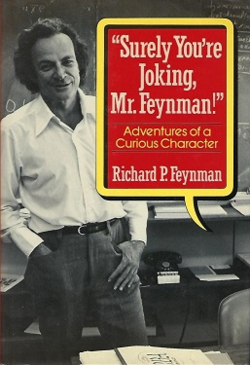
Why Read Surely You’re Joking, Mr. Feynman!?
Surely You’re Joking, Mr. Feynman! is the most entertaining and most intellectually galvanising memoir in the history of popular science — a collection of autobiographical stories told in the irrepressible voice of Richard Feynman, the theoretical physicist who won the Nobel Prize in 1965 for his work on quantum electrodynamics, who helped build the atomic bomb at Los Alamos while cracking safes for amusement, and who maintained throughout a radically honest, relentlessly curious, and entirely unimpressed relationship with authority, prestige, and academic respectability.
The book is not a conventional memoir — it has no linear narrative, no sustained argument, and no formal structure beyond the loose chronological grouping of stories from different periods of Feynman’s life. It is a collection of anecdotes, each illustrating some aspect of the Feynman method: the refusal to accept authority without verification, the pleasure of discovering how things actually work rather than how they are supposed to work, the willingness to appear foolish in the service of genuine curiosity, and the conviction that the most sophisticated intellectual virtue is the ability to say “I don’t know.”
The stories range from the genuinely important — his experiences at Los Alamos, his investigation of the Challenger disaster, his account of why Brazilian physics education was failing its students — to the delightfully trivial: his adventures with ant communication, his experiments with sensory deprivation tanks, his discovery that he could tell the difference between freshly washed and unwashed plates by smell. What connects them is the Feynman personality: insatiable curiosity, contempt for pomposity, and the conviction that the universe is interesting enough on its own terms that no embellishment is needed.
Who Should Read This
This is a book for anyone who wants to understand what genuine scientific curiosity looks like in practice — not as a professional methodology but as a way of inhabiting the world, approaching every phenomenon with the same delight and the same demand for honest understanding. Essential for intermediate science readers who want the most enjoyable and most inspiring account of what it means to be a scientist, students who need an antidote to the dryness of formal science education, CAT/GRE aspirants building intermediate-level comprehension in conversational nonfiction prose, and any reader who has ever felt that curiosity is more important than credentials.
Key Takeaways from Surely You’re Joking, Mr. Feynman!
The most important scientific virtue is not intelligence, not credentials, and not specialisation — it is the willingness to say “I don’t know” and then to find out. Feynman’s stories consistently return to this principle: discovering what something actually is, as opposed to what you assumed it to be, is always more interesting than the assumption. Real understanding is demonstrated by connecting ideas to observable phenomena.
Authority is not the same as knowledge, and prestige is not the same as understanding. The most instructive stories are those in which Feynman encounters people who use the language of expertise without the substance — the philosophers who cannot explain their terminology, the Brazilian physics students who can recite equations they have never applied, the NASA engineers who knew about the O-ring problem but could not say so through official channels.
The pleasure of discovery is available in everything — not just in the physics laboratory but in ant trails, spinning plates, bongo drums, and the biology of chromosomes. Feynman’s curiosity was not domain-specific; he applied the same methods and the same delight to every phenomenon he encountered. Genuine curiosity is a skill that transfers across domains, and the scientist’s toolkit of careful observation and honest evaluation is useful far beyond professional science.
Feynman’s account of Los Alamos is the most intimate personal record of the Manhattan Project’s scientific culture available — and his account of the psychological aftermath, when he returned to civilian life unable to stop calculating how far a nuclear bomb would destroy every city he visited, is one of the most honest reckonings with what it meant to have helped build the bomb.
Key Ideas in Surely You’re Joking, Mr. Feynman!
The book opens with Feynman as a child in Far Rockaway, Queens — fixing radios by thinking, discovering that most adults are satisfied by an authoritative-sounding explanation whether or not they understand it. This childhood material establishes the essential Feynman character: an insatiable curiosity about how things work that is not satisfied by names or descriptions but only by mechanisms, a willingness to appear ignorant in order to become less ignorant, and a pleasure in the gap between the social performance of understanding and the reality of it.
The Los Alamos chapters are the book’s most historically important. Feynman arrived at twenty-four, one of the youngest physicists at the facility, and responded to the extraordinary combination of intellectual intensity and institutional authority by doing what he always did: probing the limits of what was permitted. He cracked safes not to access classified materials but because he wanted to understand how the locks worked. He wrote teasing letters to his wife in coded form to see how military censors would respond. The portrait that emerges is not of a rebel but of someone for whom the constraints of authority were simply less interesting than the problems they were supposed to be protecting.
The Brazil chapters document Feynman’s year as a visiting physics professor in Rio de Janeiro in the early 1950s, and they contain one of the book’s most important extended arguments. He found that his Brazilian students were extraordinarily good at reciting physics — reproducing equations, defining terms, passing examinations — but could not apply any of it to novel problems or real phenomena. He pointed to the blue sky and asked what caused the colour. None could answer. His diagnosis — that Brazilian physics education was producing students who had the appearance of knowledge without its substance — was received by the faculty as an insult; it was intended as a careful observation about the difference between information and understanding.
The safecracking stories function as an extended metaphor for Feynman’s epistemological method: the careful construction of a model of how something works, tested against reality, revised until it accurately predicts the outcome. He became extraordinarily good at opening safes not through brute force but through observation, inference, and willingness to test hypotheses until one worked. The pleasure of the safecracking stories is the same pleasure as the pleasure of doing physics.
Core Frameworks in Surely You’re Joking, Mr. Feynman!
Each of the book’s recurring themes constitutes a framework — a set of principles that Feynman applies consistently across domains, from physics to safecracking to institutional investigation.
Core Arguments
Feynman argues through demonstration rather than assertion — four principles emerge consistently from the pattern of stories, each with direct implications beyond professional science.
The book’s most practically important argument — delivered through demonstration rather than assertion — is that the curiosity Feynman displays is not an innate personality trait that some people have and others lack but a specific method that can be learned and practiced. The method involves refusing to accept explanations that cannot be connected to observable phenomena; asking “how do you know that?” about statements presented as authoritative; being willing to appear ignorant in order to learn; and finding genuine pleasure in the discovery of how things actually work, as opposed to the social pleasure of demonstrating that one already knows. This method is applicable in any domain and at any level of expertise.
Throughout the book, Feynman’s most effective intellectual move is the willingness to say “I don’t know” in contexts where social pressure demands the performance of knowledge. The philosophy conference story, the biology seminar story, the visit to the social science faculty — in each case, Feynman’s willingness to admit ignorance and ask genuinely naive questions exposes the gap between the social performance of understanding and its reality. This is not anti-intellectualism — Feynman is one of the most intellectually demanding figures of the 20th century — but a specific argument about what genuine intellectual standards look like, as opposed to the social markers that academic institutions frequently substitute for them.
The Brazil chapter is the book’s most explicit argument about education, but the theme runs throughout: genuine education produces the ability to connect knowledge to reality, to apply principles to novel situations, and to recognise the limits of one’s own understanding. Education that produces only the ability to recite — however accurately — is not education but its simulation. This argument remains radical wherever it is applied, because the social and institutional structures of education — examinations, credentials, grades — reward recitation more reliably than understanding, and the two are easily confused from outside.
The Challenger appendix’s famous line — which Feynman insisted on including in the official report over NASA’s objections — is simultaneously the book’s most practically consequential argument and its clearest statement of the Feynman method applied to institutional life. The institutional failure that led to Challenger was not ignorance (the O-ring problem was known to engineers) but the substitution of institutional optimism for empirical honesty: a culture in which managers told engineers what decision had been made and then asked for data to support it. The Feynman method — which insists that data must precede conclusions — is not just a scientific method but a moral one, applicable wherever the temptation to substitute preferred narratives for honest observation exists.
Critical Analysis
A balanced assessment examining the book’s extraordinary voice and range alongside its structural limitations and the aspects of Feynman’s persona that have not aged equally well.
Feynman’s voice — captured from conversations and rendered with minimal editing by Ralph Leighton — is one of the most distinctive and most purely pleasurable in all of popular science. It is conversational, witty, self-deprecating, entirely unimpressed by its own achievements, and possessed of the specific verbal rhythm of a Queens-born New Yorker who is simultaneously explaining something precisely and enjoying the explanation. Reading the book feels like being in the presence of the most entertaining dinner companion imaginable, who also happens to be one of the most brilliant physicists of the 20th century.
The book’s range — from quantum electrodynamics to safecracking, from bongo drums to the Challenger investigation, from art to ant communication — is itself the argument. Feynman’s curiosity was genuinely universal, and the book demonstrates by example that the scientific method is not the property of professional science but a general-purpose tool for understanding reality.
The passages on the Rogers Commission investigation and Feynman’s famous O-ring demonstration are among the most important documents in the history of science communication and institutional accountability. The Challenger story is the Feynman method applied to exactly the kind of high-stakes institutional failure where honest observation and honest reporting are most difficult and most important.
The book’s greatest strength — its anecdotal, conversational structure — is also its primary limitation for readers who want sustained argument or comprehensive coverage of Feynman’s physics. Each story is complete in itself but the book as a whole builds no cumulative picture of Feynman’s scientific contributions. Readers who want to understand what quantum electrodynamics is, and why it was worth a Nobel Prize, will not find a satisfying account here.
Feynman’s treatment of women — particularly in stories about picking up women in bars and the psychological techniques he describes using — reflects the attitudes of a mid-20th-century male scientist that are genuinely problematic by contemporary standards. The book’s celebration of the Feynman persona makes no editorial acknowledgment of these aspects, and readers should be aware that the Feynman charm includes elements that are not charming.
Feynman’s pose of innocent naivety — the man who doesn’t care about prestige, who is just following his curiosity — is real but not entirely unperformed. The consistent narrative of Feynman as the irreverent outsider who sees through pretension is itself a carefully maintained self-presentation, and readers who are alert to this dimension will find the book somewhat more complicated than its breezy surface suggests.
Literary & Cultural Impact
Immediate Success and Lasting Influence: Surely You’re Joking, Mr. Feynman! was published in January 1985 and became an immediate bestseller — unusual for a book by a working physicist — spending thirty-four weeks on the New York Times bestseller list and selling over a million copies in its first year. Its sequel, What Do You Care What Other People Think? (1988), contains the full account of Feynman’s Challenger investigation. Together the two books established Feynman as the most publicly beloved physicist since Albert Einstein, and the Feynman persona — the curious, irreverent, genuinely joyful scientist — became one of the most influential models of scientific identity in popular culture.
Impact on Science Communication: The book established that a scientist writing about their own work and life in a genuinely personal and accessible voice could reach a mass audience without sacrificing intellectual honesty — a model that has influenced science communicators from Neil deGrasse Tyson to Brian Greene to Richard Dawkins. For science education, it became one of the most widely cited books for inspiring students to pursue science, particularly among undergraduates who found in it a model of scientific curiosity that their formal education had not provided.
Feynman’s Legacy: Feynman died of kidney cancer on 15 February 1988, three years after the book’s publication. His reported last words — “I’d hate to die twice. It’s so boring” — are entirely in character. His Feynman Lectures on Physics (1963–65), delivered at Caltech and transcribed for publication, remain the most celebrated physics teaching text ever written and are now available free online.
For Exam Preparation: Surely You’re Joking is excellent intermediate-level reading comprehension in voice-driven narrative nonfiction. Its consistent movement between anecdote and principle, between specific observation and general argument, provides direct practice for the inference and reasoning skills that CAT and GRE passages test — particularly the skill of identifying the author’s implicit argument from the pattern of examples given.
Love This Book? Master Every Book.
Stop struggling with reading comprehension. Our proven system transforms how you read—whether for CAT, GRE, GMAT, SAT, or personal growth.
Best Quotes from Surely You’re Joking, Mr. Feynman!
The first principle is that you must not fool yourself — and you are the easiest person to fool.
For a successful technology, reality must take precedence over public relations, for nature cannot be fooled.
Study hard what interests you the most in the most undisciplined, irreverent and original manner possible.
I learned very early the difference between knowing the name of something and knowing something.
Physics is like sex: sure, it may give some practical results, but that’s not why we do it.

Test Your Understanding
Think you’ve mastered Surely You’re Joking, Mr. Feynman!? Challenge yourself with 15 questions on the Feynman method, the Brazil chapter, Los Alamos, the Challenger investigation, and key arguments. Score 80%+ to prove your mastery.
Surely You’re Joking, Mr. Feynman! FAQ
Do I need to know physics to enjoy this book?
No — this is the most important thing to know about Surely You’re Joking. The book is not about physics in any technical sense; it is about a person who happens to do physics, told in stories that require no prior scientific knowledge. The stories about safecracking, bongo drums, ant communication, learning to draw, and picking up women in bars require no physics background at all. The stories about Los Alamos and the Challenger investigation require only general knowledge that a nuclear weapon exists and that the Space Shuttle Challenger exploded shortly after launch in 1986. If you enjoy reading about curious, irreverent, funny people who approach every problem with the same delight and the same refusal to accept received wisdom, this book is for you regardless of your science background.
What is the spinning plate story and why is it famous?
The spinning plate story is one of the book’s most famous anecdotes because it illustrates the connection between playful curiosity and serious scientific discovery. Feynman was in a period of professional paralysis after the war when he saw a student in the Cornell cafeteria throw a plate in the air with a wobble. He noticed that the plate wobbled faster than it rotated, and that the wobble and rotation had a specific ratio. He calculated the ratio just for fun, with no application in mind, and found it was 2:1. He then found himself pursuing the related equations in more interesting directions, eventually arriving at a connection to the equations of electron spin in quantum electrodynamics that contributed to his Nobel Prize work. The story illustrates Feynman’s conviction that the most important physics begins with playful curiosity rather than directed research, and that the most consequential scientific work often starts with something that looks useless.
What does Feynman mean by knowing the name of something versus knowing something?
This is the book’s most important epistemological distinction, introduced in the childhood stories about Feynman’s father. Feynman’s father taught him that knowing the name of a bird tells you nothing about the bird itself — it tells you only what humans have agreed to call it in a particular language. Knowing something about the bird means understanding its behaviour: why it preens its feathers, how it finds food, what the structure of its feathers means for its flight. This distinction — between the label and the thing labelled, between the social performance of knowledge and its reality — is the foundation of Feynman’s intellectual method. It appears in the Brazil chapter (students who know optics principles but cannot explain why the sky is blue), in the philosophy conference (philosophers who use technical terms they cannot define), and throughout the book. The principle is one of the most practically useful in popular science literature.
How does this book relate to A Brief History of Time and Cosmos on the Readlite list?
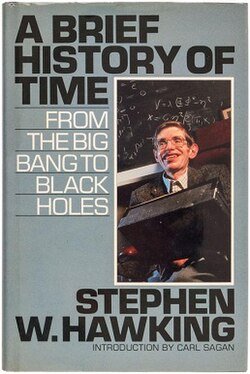
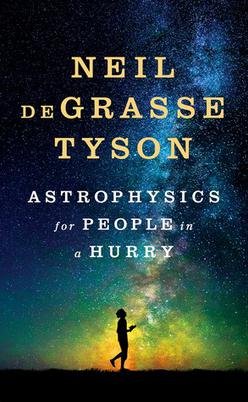
The books serve different functions in the science series. Astrophysics for People in a Hurry (Tyson) and A Brief History of Time (Hawking) are primarily about the content of physics — what physicists have discovered about the universe. Surely You’re Joking is about the practice and culture of physics — what it actually feels like to be a physicist and how physicists think about problems. Cosmos (Sagan) is the closest in spirit — both are celebrations of scientific curiosity and both use personal voice to communicate scientific enthusiasm. The distinction is that Sagan’s perspective is primarily outward-looking (the universe as the subject of wonder) while Feynman’s is primarily methodological (the act of inquiry as the source of joy). Together the four books provide the most complete picture of science available in the Readlite series: what we know, how we know it, what it feels like to find out, and why it matters.
What is the most important lesson from the Challenger investigation story?
The most important lesson is stated in Feynman’s appendix to the Rogers Commission report: “For a successful technology, reality must take precedence over public relations, for nature cannot be fooled.” The specific institutional failure at NASA was not ignorance — multiple engineers knew about the O-ring problem and had documented it — but a culture in which the flow of information from engineers to managers was shaped by what managers wanted to hear rather than by what the evidence showed. Feynman’s response was to bypass those channels entirely — to talk directly to engineers, obtain specific technical data rather than management summaries, and verify the mechanism himself with the ice-water O-ring demonstration. The lesson is a description of what happens in any institution where reporting uncomfortable information is systematically discouraged, and where the social cost of accurate pessimism exceeds the social cost of inaccurate optimism.








