
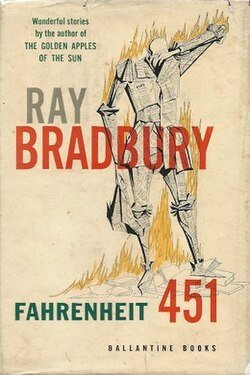
Why Read Fahrenheit 451?
Fahrenheit 451 is one of the most urgent and eerily accurate prophecies in the history of fiction. Ray Bradbury’s novel about a society that burns books — not because a tyrannical government imposes censorship from above but because a population chose distraction over depth, speed over substance, and the comfort of ignorance over the discomfort of thought — has grown more relevant with every passing decade and feels, in the age of shrinking attention spans and algorithmic entertainment, less like warning than diagnosis.
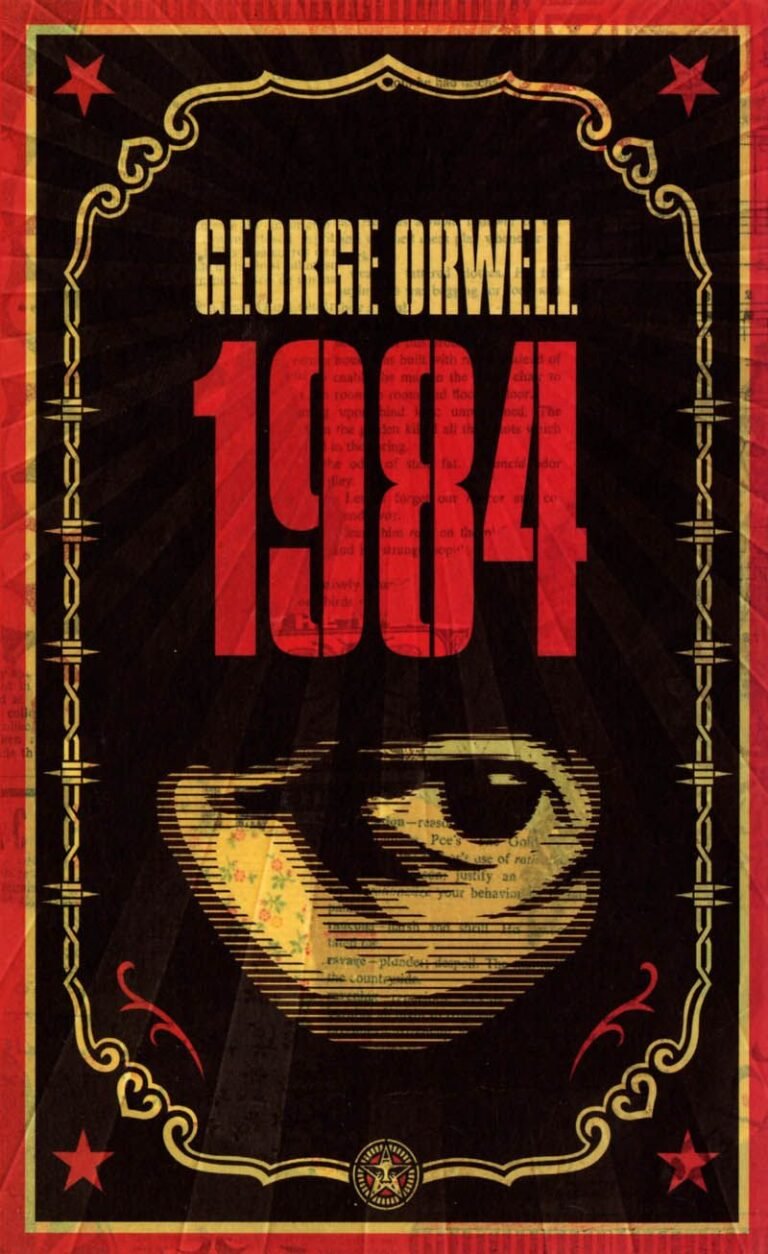
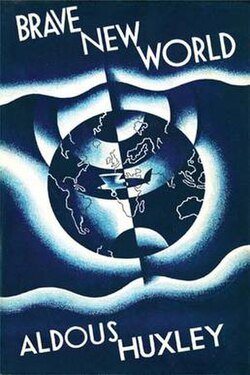
Published in 1953 — the same decade as 1984 and Brave New World — Fahrenheit 451 completes the 20th century’s great dystopian trilogy, but with a distinctly American inflection. Bradbury’s totalitarianism is not imposed by a surveillance state or engineered by scientists; it emerged from below, from a population that gradually stopped reading, stopped thinking, and eventually demanded that the books which made them feel inadequate or uncomfortable be removed entirely. The firemen who burn books are not oppressors but public servants, doing exactly what the public asked of them.
The novel follows Guy Montag, a fireman who begins to question the society he serves after encounters with his eccentric teenage neighbor Clarisse and with a woman who chooses to burn with her books rather than abandon them. At a scant 194 pages, the novel is simultaneously a thriller, a love letter to reading, and a philosophical meditation on the relationship between books, memory, and civilization. For reading comprehension preparation, its compressed prose — dense with metaphor, image, and argument — is excellent practice for the literary fiction passages that appear in advanced CAT and GRE exams.
Who Should Read This
Fahrenheit 451 is essential reading for anyone who cares about books, reading, and the life of the mind — and for anyone who has wondered whether the contemporary culture of distraction, instant gratification, and information overload represents something lost as well as something gained. Particularly valuable for CAT and GRE aspirants preparing for literary fiction and social criticism passages, for MBA candidates preparing discussions on media, technology and society, and for any reader who wants the most concentrated fictional argument ever made for why reading matters.
Key Takeaways from Fahrenheit 451
Censorship in Bradbury’s world came from below, not above. The books were not burned by a dictator’s decree but by popular demand — a population that found books divisive, uncomfortable, and slow gradually demanded their removal. Bradbury’s warning is not primarily about government oppression but about voluntary intellectual surrender: the possibility that a free society might choose ignorance, and call the choice happiness.
Speed and distraction are the enemies of thought. The citizens of Bradbury’s world live surrounded by “parlor walls” — floor-to-ceiling interactive television screens — and “Seashell radios” piping constant sound directly into their ears. The effect is not oppression but stupefaction: a population too stimulated, too entertained, and too busy to think, remember, or connect. Bradbury wrote this in 1953; it reads today as a description of the smartphone.
Books are not merely containers of information but preservers of human complexity. Captain Beatty’s explanation of why books were burned — because they contained contradictions, made people feel inadequate, and forced uncomfortable comparisons — is the novel’s sharpest satirical insight: books were dangerous not because they were wrong but because they were right about how complicated, painful, and contradictory human experience is. Entertainment offers no such complications.
Memory and literature are the foundations of civilization. The novel’s extraordinary ending — in which a community of exiles has each memorized an entire book, becoming the book they have preserved — is Bradbury’s most hopeful and most direct statement: that as long as human beings remember what was written, civilization can be rebuilt. The book people are not revolutionaries but gardeners, tending the seeds of a culture that will outlast the one that burned it.
Fahrenheit 451 Plot Summary
Guy Montag is a fireman — in this future, firemen start fires rather than extinguish them, burning houses where books have been illegally hidden. He is professionally content and personally numb, returning each night to a wife who sleeps in a medicated haze in front of her wall-sized television screens. His world is one of perpetual, shallow stimulation: fast cars, constant music, interactive entertainment, and the social prohibition of anything slow, sad, or complex.
The disruption comes from Clarisse McClellan, his seventeen-year-old neighbor, who walks slowly, asks questions, notices things — fireflies, the smell of rain, the taste of rain, the face of the moon — and who asks Montag, with genuine curiosity, whether he is happy. He is not, though he has never known it. Within days Clarisse disappears — killed, it is implied, by a speeding car — but the question she planted grows. When Montag and his crew burn a house and its owner chooses to burn with her books rather than abandon them, he steals a book from the flames for the first time. Then another. Then more.
Montag goes to his superior, Captain Beatty — a brilliantly characterized figure who has read everything and chosen burning — who delivers a monologue that is the novel’s philosophical centrepiece: a history of how the book-burning society came about, driven not by government decree but by the accelerating pace of modern life, the rise of mass media, the shrinking of attention spans, and the democratic demand that nothing make anyone feel inferior or uncomfortable. Books were not banned; they were made redundant, and then unpleasant, and then illegal as a courtesy to a population that had already stopped reading them.
Montag connects with Faber, a retired English professor, who helps him understand what books actually are and why they matter. Their conspiracy to smuggle and preserve books is discovered; Beatty is killed in a confrontation that seals Montag’s break with the system. He flees the city, pursued by the Mechanical Hound — the novel’s image of automated, technological death — and eventually reaches the railroad tracks that lead to the river and, beyond it, to a community of exiles who have each memorized a complete book. As Montag finds them, the city — target of an unnamed war — is obliterated by bombs. The book people begin to walk toward the ruins, carrying in their memories everything that will be needed to rebuild.
Fahrenheit 451 Characters
Each character embodies a different relationship to the book-burning society — from complicit contentment to knowing destruction to courageous preservation — together mapping the full range of human responses to voluntary intellectual surrender.
A fireman in his mid-thirties who begins the novel professionally satisfied and personally hollow and ends it as a fugitive carrying the Book of Ecclesiastes in his memory toward a destroyed and rebuilding world. Montag’s awakening is not intellectual but sensory and emotional — triggered by Clarisse’s questions, the book-woman’s death, and a growing inability to ignore what his work destroys. He is not naturally philosophical; his transformation is the novel’s argument that the capacity for awakening exists in anyone, if the right catalyst arrives.
Montag’s wife, who lives in a permanent state of medicated, televised contentment — or what passes for it. She nearly dies from a sleeping pill overdose at the novel’s opening (the technicians who pump her stomach treat it as routine), yet has no memory of it and no desire to examine what it means. She is the novel’s portrait of the society’s willing victim: not oppressed but voluntarily anaesthetized, spending her days with the “family” on her parlor walls and eventually informing on her own husband.
Montag’s fire captain and the novel’s most intellectually complex character. Beatty has read everything — he quotes literature fluently and uses it as a weapon — and has chosen, with full knowledge of what books contain, to burn them. He is the novel’s most disturbing figure not because he is ignorant but because he is not: his choice to destroy rather than preserve, made with open eyes, represents the deepest possible betrayal of the intellectual tradition he has mastered. His death at Montag’s hands feels both inevitable and tragic.
The seventeen-year-old neighbor whose simple attentiveness — she notices the world, asks genuine questions, tastes rain and looks at the moon — catalyzes Montag’s awakening. Clarisse appears only in the novel’s opening pages before her implied death, but her presence reverberates throughout: she is the novel’s image of what it means to be genuinely awake in a world designed for sleep. Her question — “Are you happy?” — is the most subversive act in the novel, more dangerous to the system than any book.
A retired English professor who chose silence and safety over resistance when the book burnings began, and who is consumed by guilt for his passivity. Faber represents the intellectual who understands what is being lost but is too afraid to act alone — and who finds, in Montag’s urgent, clumsy courage, a catalyst for his own belated action. His radio earpiece, through which he guides Montag, is the novel’s image of the relationship between knowledge and courage: understanding alone is not enough, but it is the necessary precondition for action.
The leader of the community of book exiles who have each memorized a complete work of literature, philosophy, or science, becoming the living vessels of human knowledge. Granger is calm, purposeful, and forward-looking — his group is not mourning the past but preserving it for a future they believe will come. His final speech, comparing humanity to a phoenix that burns and rises, is the novel’s most direct statement of hope: that the capacity for self-destruction is matched by a capacity for self-renewal, if memory is preserved.
Major Themes
Bradbury weaves four interlocking themes through the novel — each one a different facet of his central argument about what a society destroys when it chooses comfort and entertainment over the difficulty and depth that books demand.
Bradbury’s most original contribution to the dystopian tradition is his account of how censorship arose — not through government imposition but through popular demand. As the pace of modern life accelerated, books became too long, too slow, and too challenging; as mass media expanded, attention spans contracted; as diversity increased, any book that offended any group was gradually removed. The firemen are not oppressors but sanitation workers, cleaning up what the population had already discarded. This “censorship from below” is Bradbury’s specific warning to democratic societies: that freedom of expression can be surrendered voluntarily, one comfortable choice at a time.
The novel draws a sustained contrast between two modes of existence: the deep, slow, sometimes painful life of genuine thought, memory, and connection that books make possible, and the fast, stimulating, painless life of sensation and entertainment that the wall screens provide. Bradbury does not moralize — he dramatizes. The contrast between Clarisse (who sees, tastes, and questions) and Mildred (who watches and sleeps) is the novel’s most direct illustration of what is at stake in the choice between depth and distraction.
Captain Beatty’s monologue on why books were burned contains Bradbury’s sharpest insight: books are dangerous because they are honest about the complexity, contradiction, and difficulty of human experience. They contain opposing views; they make people feel inadequate; they force uncomfortable comparisons; they slow readers down enough to notice what they would rather not see. Entertainment offers no such complications. The burning of books is therefore not the suppression of particular ideas but the suppression of the complexity and difficulty of thought itself.
The novel’s closing image — a community of human beings who have become the books they carry in memory, walking toward a destroyed city to begin rebuilding — is Bradbury’s most direct statement about what civilization requires. It requires memory: the preservation of what has been learned, created, and understood across generations. When that memory is burned, civilization does not merely lose information; it loses the accumulated wisdom, beauty, and complexity that make it worth rebuilding. The book people are not nostalgists but guardians of the preconditions for a human future.
Critical Analysis
A balanced assessment of one of the most prophetically accurate American novels of the 20th century — examining its extraordinary imaginative and literary achievements alongside its genuine structural limitations.
Bradbury’s 1953 vision of a society addicted to wall-screen entertainment, constant audio stimulation, and the social prohibition of anything slow or uncomfortable reads in the smartphone era as description rather than warning — a measure of imaginative accuracy that is genuinely extraordinary.
The novel’s language is dense with image and metaphor — Bradbury writes with a poet’s compression and a thriller writer’s urgency — producing a reading experience that is itself an argument for the kind of linguistic richness books provide and entertainment cannot.
Captain Beatty — the book-burning intellectual who has read everything — is one of the great minor antagonists in American fiction, whose complexity (and the genuine force of his argument) prevents the novel from collapsing into simple polemic and gives it the philosophical weight it needs.
Mildred’s characterization is almost entirely defined by her passivity and her role as a symbol of willing anaesthesia; Clarisse appears only briefly before her death; the novel’s emotional and intellectual life is conducted almost entirely by men, which limits both its representational scope and its sociological claims.
Despite its urgency and its subject matter, the novel’s characters — with the exception of Beatty — are more emblematic than emotionally realized; Montag’s transformation is told more than shown, and the reader is asked to accept his awakening rather than fully experience it alongside him.
The ending — the city destroyed, the book people walking forward, the phoenix metaphor — resolves the novel’s tensions with a symbolic neatness that some readers find genuinely hopeful and others find insufficiently earned, given the totality of the world that has been lost.
Literary & Cultural Impact
A Cultural Touchstone for Every Era of Distraction: Fahrenheit 451 has sold over 10 million copies and is one of the most widely taught American novels in secondary and university education. It was adapted for the screen by François Truffaut in 1966 — one of the great French New Wave director’s rare English-language films — and has been adapted for radio, stage, and television multiple times since. The novel’s title has entered common cultural usage as shorthand for the temperature at which paper catches fire and, more broadly, for any act of cultural destruction or intellectual suppression.
Huxley’s Prophet, Not Orwell’s: The novel’s prescience has been repeatedly noted by critics and cultural commentators. Neil Postman’s Amusing Ourselves to Death (1985) argued that Bradbury’s vision — like Huxley’s — was more accurate than Orwell’s for understanding how modern democratic societies manage information and attention. In a 2007 interview, Bradbury himself said that the novel was not about government censorship but about television and the way it destroys interest in reading — a clarification that places it firmly in the tradition of Huxley rather than Orwell.
Essential for Exam Preparation and Contemporary Relevance: For competitive exam aspirants, Fahrenheit 451 is among the most directly relevant fiction texts on the reading list. Its themes — censorship, the role of media in shaping attention and thought, the value of books and reading, the relationship between distraction and democracy — appear with significant frequency in advanced CAT and GRE reading comprehension passages drawn from media studies, literary criticism, and social philosophy. Its prose style — compressed, imagistic, and dense with meaning — is itself a model of the kind of writing that tests reading comprehension at the highest level, rewarding readers who can track argument and image simultaneously rather than reading for plot alone.
Love This Book? Master Every Book.
Stop struggling with reading comprehension. Our proven system transforms how you read—whether for CAT, GRE, GMAT, SAT, or personal growth.
Best Quotes from Fahrenheit 451
You don’t have to burn books to destroy a culture. Just get people to stop reading them.
A book is a loaded gun in the house next door.
We need not to be let alone. We need to be really bothered once in a while. How long is it since you were really bothered? About something important, about something real?
There must be something in books, things we can’t imagine, to make a woman stay in a burning house; there must be something there. You don’t stay for nothing.
If you hide your ignorance, no one will hit you and you’ll never learn.
Test Your Understanding
Think you’ve mastered Fahrenheit 451? Challenge yourself with 15 questions on Bradbury’s characters, themes, and the novel’s argument about censorship, distraction, and the value of reading. Score 80%+ to prove your mastery.
Fahrenheit 451 FAQ
What is Fahrenheit 451 about?
Set in a future America where books are illegal and firemen burn them, the novel follows Guy Montag, a fireman who begins to question the society he serves after encounters with his questioning neighbor Clarisse and a woman who chooses to burn with her books. The novel traces his awakening, his break with the system, and his eventual joining of a community of exiles who have memorized books to preserve them for a future civilization. Its central argument is that the book-burning society arose not from tyranny but from voluntary intellectual surrender — a population that chose entertainment over thought.
Is Fahrenheit 451 difficult to read?
It is rated Intermediate — clear in its narrative but dense in its prose, which is richly imagistic and rewards slow reading. At 194 pages it is one of the shortest novels on the list. Captain Beatty’s monologue in the middle section is the most demanding passage, packed with historical and literary argument, and deserves careful attention. Most readers complete it in a single sitting of four hours or less.
What are the main themes in Fahrenheit 451?
The novel’s central themes are censorship arising from popular demand rather than government imposition, the relationship between distraction, entertainment, and intellectual atrophy, the value of books as preservers of human complexity and contradiction, the role of memory in sustaining civilization, and the possibility of individual awakening within a deliberately stupefied society.
What does the title Fahrenheit 451 mean?
451 degrees Fahrenheit is the temperature at which paper auto-ignites — the temperature at which books burn. The title functions both as a literal description of the novel’s central act (book burning) and as a symbol: the precise point at which the accumulated knowledge, beauty, and complexity preserved in books is destroyed. Bradbury chose it for its specificity and its chilling precision — it makes the destruction feel not metaphorical but physical and exact.
Why is Fahrenheit 451 still relevant today?
Because its specific warning — that a free society can voluntarily abandon depth, complexity, and the life of the mind in favor of stimulation, entertainment, and comfortable ignorance — is more visibly realized in contemporary culture than at any point since the novel was published. Bradbury’s parlor walls are streaming services; his Seashell radios are earbuds; his speeding cars are the infinite scroll. The novel’s relevance has not diminished with time but compounded, making it one of the most urgent works of fiction to read in the age of algorithmic distraction.








