
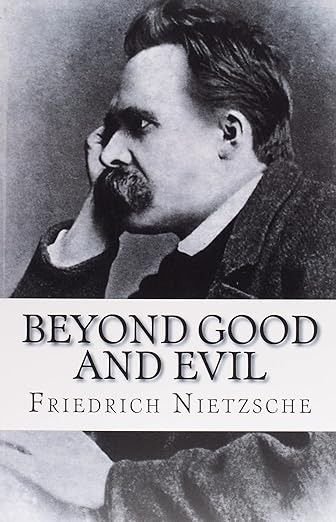
Why Read Beyond Good and Evil?
Beyond Good and Evil is the most systematically argued and intellectually disciplined of Nietzsche’s mature works — the book in which he lays out, with aphoristic brilliance and relentless psychological acuity, his critique of the entire Western philosophical and moral tradition. It is a profoundly uncomfortable book, designed to disturb rather than reassure, and it rewards readers who are willing to be challenged at the level of their deepest assumptions. To read it carefully is to understand why Nietzsche became the most influential — and most dangerously misread — philosopher of the modern era.
Published in 1886 as a “prelude to a philosophy of the future,” Beyond Good and Evil is organized into nine parts covering the prejudices of philosophers, the free spirit, the nature of religion, the will to power, the critique of contemporary morality, the nature of nobility, and the question of what a genuinely new philosophy might look like. Nietzsche’s central argument builds across nine sections: that all previous philosophy has been unconscious autobiography, that the distinction between good and evil is a cultural invention serving specific psychological functions, that “slave morality” has triumphed in the West and suppressed the conditions for human greatness, and that a revaluation of all values is the urgent philosophical task of the coming age.
What makes the book extraordinary — and dangerous to misread — is the precision of Nietzsche’s psychological analysis. His “will to power” is not a political program but a psychological hypothesis: that the fundamental drive in living systems is not survival or pleasure but the expansion and expression of power in its broadest sense — mastery, growth, creativity, self-overcoming. Nietzsche’s task is to distinguish between life-affirming and life-denying expressions of this universal drive.
Who Should Read This
This is a book for readers who are prepared to have their assumptions interrogated rather than confirmed. It is not a book for the philosophically faint-hearted, and it demands careful, critical reading — Nietzsche is best read as a provocateur whose arguments require engagement and resistance, not passive acceptance. Essential for advanced students of philosophy, intellectual history, and European literature; CAT/GRE aspirants who need practice with dense aphoristic argumentative prose; and anyone seriously engaged with the question of where moral values come from and what they are worth.
Key Takeaways from Beyond Good and Evil
Every philosophical system is unconscious autobiography — the philosopher believes they are pursuing objective truth but is actually rationalizing their own psychological constitution and drives. This “genealogical” method of reading philosophy — asking not “is this argument valid?” but “what kind of person needs to believe this?” — is Nietzsche’s most lasting methodological contribution.
The will to power is not the desire to dominate others but the drive toward self-overcoming — growth, creativity, mastery, the expansion of one’s capacities. Its highest expressions are artistic creation and philosophical self-transformation; its lowest are resentment, the morality of pity, and the leveling impulse of democratic politics.
“Slave morality” — the moral system built on resentment, which defines good as whatever the powerful are not — is Nietzsche’s diagnosis of the dominant value system of the modern West. Christianity, democracy, socialism, and utilitarian ethics all share the same psychological root: the inversion of aristocratic values by those who redefine greatness as vice.
The “free spirit” — the philosopher liberated from conventional values, thinking experimentally without metaphysical reassurance — is the positive vision toward which the entire critique builds. The free spirit is not the person who rejects all values but the one who creates their own from genuine self-knowledge, on the far side of the values they have dismantled.
Key Ideas in Beyond Good and Evil
Beyond Good and Evil opens with a diagnosis of philosophy’s foundational failure: philosophers have always believed they were pursuing truth disinterestedly, but in fact their systems are expressions of their psychological needs, cultural assumptions, and unconscious drives. The very distinction between truth and appearance that structures Western philosophy from Plato through Kant — this distinction, Nietzsche argues, is itself a prejudice, a symptom of the philosopher’s will to find a stable ground beneath the flux of experience.
The second major move is the introduction of the will to power as a psychological hypothesis. Against the utilitarian reduction of all motivation to pleasure-seeking and against the Darwinian emphasis on survival, Nietzsche proposes that the fundamental drive in living systems is the drive toward the expansion of power in its broadest sense — not domination of others but self-overcoming, growth, the intensification and expression of one’s capacities. This hypothesis reframes the entire question of morality: if every moral system is an expression of will to power, the question is not which system is “true” but which expressions of will to power are life-affirming and which are life-denying.
The book’s central polemical target is what Nietzsche calls “the morality of pity” — the system of values, dominant in both Christianity and modern secular ethics, that centers compassion, equality, and the reduction of suffering as the highest goods. His argument is that the elevation of pity to the supreme value is a symptom of a culture that has lost confidence in its capacity for greatness, and that the morality of equality systematically suppresses the conditions under which exceptional human achievement is possible.
The positive vision — sketched rather than fully developed here — is of the “free spirit” and, beyond that, of the genuine philosopher of the future: someone who has gone through the full critique of received values, who can live without metaphysical consolation, who affirms life in its totality including suffering and difficulty, and who creates new values from genuine self-knowledge rather than borrowing the values of the herd. This is the figure “beyond good and evil” — not the person who has abandoned ethics but the one who has moved beyond the specific moral framework that Nietzsche believes is strangling European culture.
Core Frameworks
Six interlocking conceptual tools that together constitute Nietzsche’s philosophical method — each one transforming how the phenomena it addresses must be read.
Rather than evaluating arguments on their logical merits alone, Nietzsche traces the psychological drives and historical circumstances from which they emerged. Plato’s Forms are diagnosed as the expression of a philosopher who needed to escape sensory flux. Kantian ethics is diagnosed as secularized Christianity. This method became the foundation for Foucault’s “archaeology of knowledge” and the broader tradition of ideology critique.
Master morality originates in the self-affirmation of a powerful class — defining “good” as whatever they are (strong, creative, life-affirming). Slave morality originates in resentment — defining “evil” as whatever the powerful are and “good” as whatever they are not (humble, suffering, equal). Nietzsche argues that slave morality — whose supreme historical expression is Christianity — has triumphed in the modern West.
Every living system seeks not primarily survival or pleasure but the expansion and expression of its power — mastery, growth, creative self-overcoming. This drive manifests differently across different types: the artist expresses it through creation, the philosopher through conceptual mastery, the resentful person through the morality of pity (which gives psychological power by defining strength as evil).
The philosopher who has experimented with every value system and found none unconditionally binding — who can live without metaphysical foundations and without the reassurance of conventional morality. Nietzsche is careful to distinguish the free spirit from the merely dissolute: freedom from conventional values requires greater self-mastery, not less.
All knowledge is necessarily perspectival — produced from a particular standpoint with particular interests. The philosopher’s dream of objective, disinterested truth is itself a prejudice. This does not mean all perspectives are equally valid, but that the ideal of a perspective-free truth is incoherent. Perspectivism directly anticipates poststructuralism and contemporary philosophy of science.
Both democratic politics and nationalist sentiment are expressions of the herd instinct — the drive to level all distinctions, to suppress the exceptional individual in favor of the comfortable majority. This is not an argument for aristocratic privilege as a political system but a diagnosis of what Nietzsche sees as the cultural consequences of democratic leveling on the conditions of human excellence.
Core Arguments
Four interlocking arguments that build from diagnosis to prescription — each requiring the previous to be in place before it can be understood correctly.
Nietzsche’s opening salvo — sustained across Part One — is that philosophers have never genuinely pursued truth but have always sought confirmation of what they already believed. The history of Western philosophy from Plato to Kant is a history of elaborate rationalization: each philosopher builds a system that “proves” the values and metaphysical commitments they brought to the enterprise. This argument does not refute these philosophies logically but places them in a psychological and historical context that changes how they must be read.
The categories “good” and “evil” are not discovered but invented — not metaphysical facts about the universe but expressions of particular psychological and historical configurations. The specific configuration that produced the modern West’s moral vocabulary is the “slave revolt in morality”: the inversion of aristocratic values by the resentful, who redefined strength and self-assertion as “evil” and weakness and pity as “good.” This historical diagnosis is an argument that the values we take as self-evident have a contingent history.
One of the book’s most deliberately provocative arguments is against pity — specifically, against the elevation of compassion and the reduction of suffering to the status of supreme moral values. Nietzsche’s argument is psychological rather than sadistic: the morality of pity is fundamentally life-denying because it directs all value toward the elimination of suffering and thereby devalues the suffering that is inseparable from genuine growth, creativity, and self-overcoming. This is not an argument for cruelty but for what Nietzsche calls “pathos of distance.”
The book’s final positive vision is of a new type of philosopher — the “philosopher of the future” who is also a “commander and legislator”: someone who creates values rather than merely analyzing or transmitting them. These philosophers will be rare, will be misunderstood, and will produce a “revaluation of all values.” Nietzsche is honest that he himself is only a forerunner of this philosophy — a diagnostician of the problem rather than its solution.
Critical Analysis
A balanced assessment examining both the genuine philosophical achievement of the book and the serious dangers its form and reception history present to the unprepared reader.
Nietzsche’s ability to identify the hidden motivations beneath avowed values — to read resentment in apparent altruism, insecurity in apparent confidence, life-denial in apparent virtue — is a genuinely original philosophical contribution that transformed psychology, social theory, and literary criticism, making him the intellectual ancestor of Freud, Foucault, and virtually all subsequent “hermeneutics of suspicion.”
The aphoristic form, at its best in this book, allows Nietzsche to compress genuine philosophical insight into sentences of extraordinary density — the best of them function like lenses, permanently changing how the reader sees the phenomena they address.
Nietzsche says things that are deeply uncomfortable — about democracy, Christianity, pity, and equality — with the courage of someone who believes the diagnosis is necessary regardless of whether it is welcome. This willingness to follow arguments to unpopular conclusions is itself a philosophical virtue the book both demands and models.
Nietzsche’s work was appropriated by his sister Elisabeth Förster-Nietzsche after his mental collapse, selectively edited to support anti-Semitic and proto-Nazi ideology, and used as philosophical justification for fascism — a misreading Nietzsche himself explicitly rejected in the text, but one whose consequences were catastrophic and that any reader must actively work to prevent repeating.
The compressed, non-linear structure makes it exceptionally easy to quote Nietzsche out of context in ways that invert his meaning — the book’s most famous lines almost all require their surrounding argument to be understood correctly, and the aphorism stripped of context becomes a slogan rather than a thought.
Nietzsche is a far more convincing diagnostician than architect — his critique of received morality is powerful and precise, but the “philosophy of the future” and the “revaluation of all values” he calls for remain gestures rather than fully articulated positions, leaving the reader knowing what must be dismantled but with limited guidance on what should replace it.
Literary & Cultural Impact
From Obscurity to Ubiquity: Beyond Good and Evil was published in 1886 to almost complete commercial indifference — Nietzsche paid for its printing himself. Within two decades of his mental collapse in 1889, however, he had become the most discussed philosopher in Europe, and by the mid-20th century his influence on Western thought had become virtually impossible to contain within a single intellectual tradition.
Philosophical Lineage: The direct philosophical lineage runs in multiple, often contradictory directions. In existentialism, Heidegger’s engagement with Nietzsche spans a multi-volume series; Sartre’s atheist humanism is inconceivable without Nietzsche’s “death of God.” In poststructuralism, Derrida’s deconstruction and Foucault’s genealogical method are both direct developments of Nietzsche’s perspectivism and genealogical critique. In psychology, his analysis of unconscious motivation and resentment directly influenced both Freud and Alfred Adler.
The Catastrophic Misappropriation: The appropriation of Nietzsche by Nazi ideology — facilitated by Elisabeth Förster-Nietzsche’s selective editing of his unpublished notes — is an essential part of the book’s reception history and a permanent warning about what happens when aphoristic philosophy is read without critical engagement. Nietzsche himself was explicitly and repeatedly anti-nationalist, anti-anti-Semitic, and contemptuous of German cultural chauvinism — but fragments of his language, extracted from their argumentative context, proved horrifyingly malleable.
For Competitive Exam Preparation: Beyond Good and Evil is among the most demanding texts on the Readlite advanced list. Its aphoristic structure — dense, non-linear, requiring inference rather than sequential argument-following — is precisely the structure that the hardest GRE analytical reading passages deploy. Nietzsche’s key ideas (the will to power, master/slave morality, perspectivism, the genealogical method) also appear with high frequency in advanced exam passages on philosophy, ethics, and intellectual history.
Love This Book? Master Every Book.
Stop struggling with reading comprehension. Our proven system transforms how you read—whether for CAT, GRE, GMAT, SAT, or personal growth.
Best Quotes from Beyond Good and Evil
He who fights with monsters should look to it that he himself does not become a monster. And if you gaze long into an abyss, the abyss also gazes into you.
That which does not kill us makes us stronger.
There are no facts, only interpretations.
In individuals, insanity is rare; but in groups, parties, nations and epochs, it is the rule.
The thought of suicide is a great consolation: by means of it one gets successfully through many a bad night.
Test Your Understanding
Think you’ve mastered Beyond Good and Evil? Challenge yourself with 15 questions on Nietzsche’s key arguments, frameworks, and major ideas. Score 80%+ to prove your mastery.
Beyond Good and Evil FAQ
What is Beyond Good and Evil about?
Beyond Good and Evil is Nietzsche’s most systematic mature philosophical work — a sustained critique of the entire Western philosophical and moral tradition, from Plato and Kant through Christianity and modern democracy. Its central arguments are that all philosophy has been unconscious autobiography, that the distinction between good and evil is a cultural invention rooted in psychological resentment, that the modern West’s dominant moral system (“slave morality”) is life-denying, and that a genuine “revaluation of all values” is the urgent philosophical task of the coming age.
Was Nietzsche a Nazi or proto-fascist?
No — and this is one of the most important corrections in intellectual history. Nietzsche was explicitly and repeatedly anti-nationalist, anti-anti-Semitic, and contemptuous of German cultural chauvinism throughout his work. The association with Nazi ideology was created after his mental collapse by his sister Elisabeth Förster-Nietzsche, who selectively edited his unpublished notes and managed his archive with deliberate political intent. Any serious reading of the texts themselves makes this misappropriation unmistakable.
What is the will to power?
The will to power is Nietzsche’s psychological hypothesis about the fundamental drive underlying all human and biological activity. It is not the desire to dominate other people, but the drive toward self-overcoming: growth, creative mastery, the intensification and expansion of one’s capacities. Its highest expressions are artistic creation, philosophical self-transformation, and genuine self-discipline; its lowest are resentment, the desire to level others down to one’s own height, and the morality of pity. Understanding the will to power correctly is essential to reading Nietzsche without misreading him.
What is slave morality and why does it matter?
Slave morality, in Nietzsche’s analysis, is a moral system originating in resentment — the psychological response of those who cannot achieve greatness themselves and so redefine greatness as evil. It defines “good” as whatever the powerful are not (humble, suffering, equal) and “evil” as whatever they are (strong, creative, exceptional). Nietzsche argues that this value system — whose supreme historical expression is Christianity — has become dominant in the modern West and systematically suppresses the conditions under which exceptional human achievement is possible.
How should Nietzsche be read — as a guide or as a provocation?
As both, but always critically. Nietzsche himself insisted that his ideal reader was one who could engage with his ideas as hypotheses and provocations rather than doctrines, who would resist as well as consider. The reader who finishes Beyond Good and Evil believing everything Nietzsche says has misread it; so has the reader who dismisses it entirely. The correct response is the discomfort of being unable to entirely refuse his diagnoses while being unwilling to fully accept his prescriptions.








