
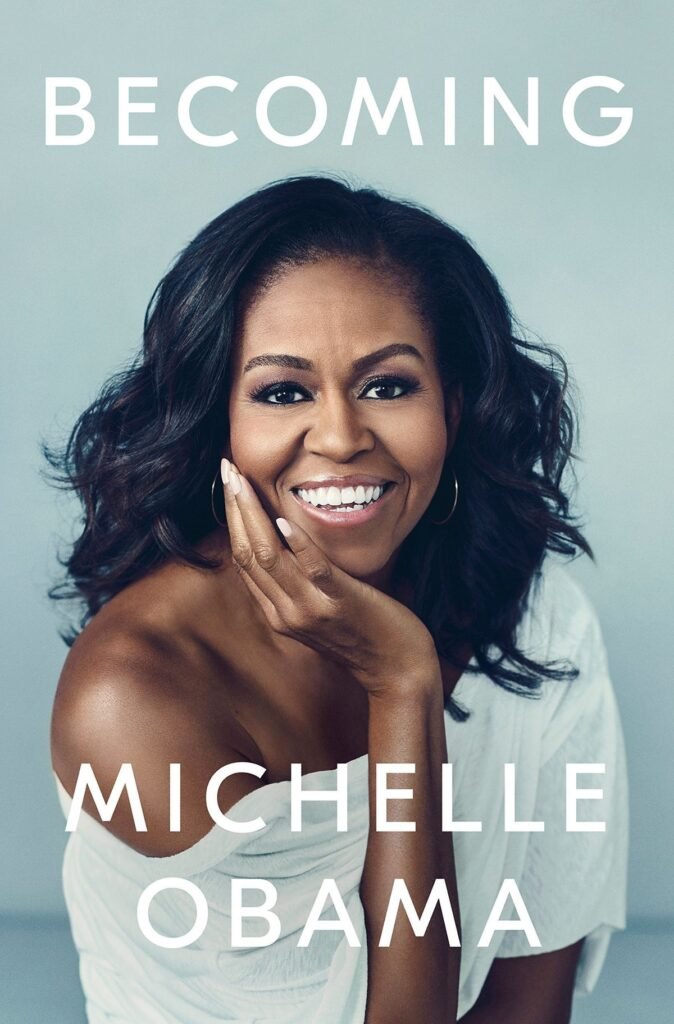
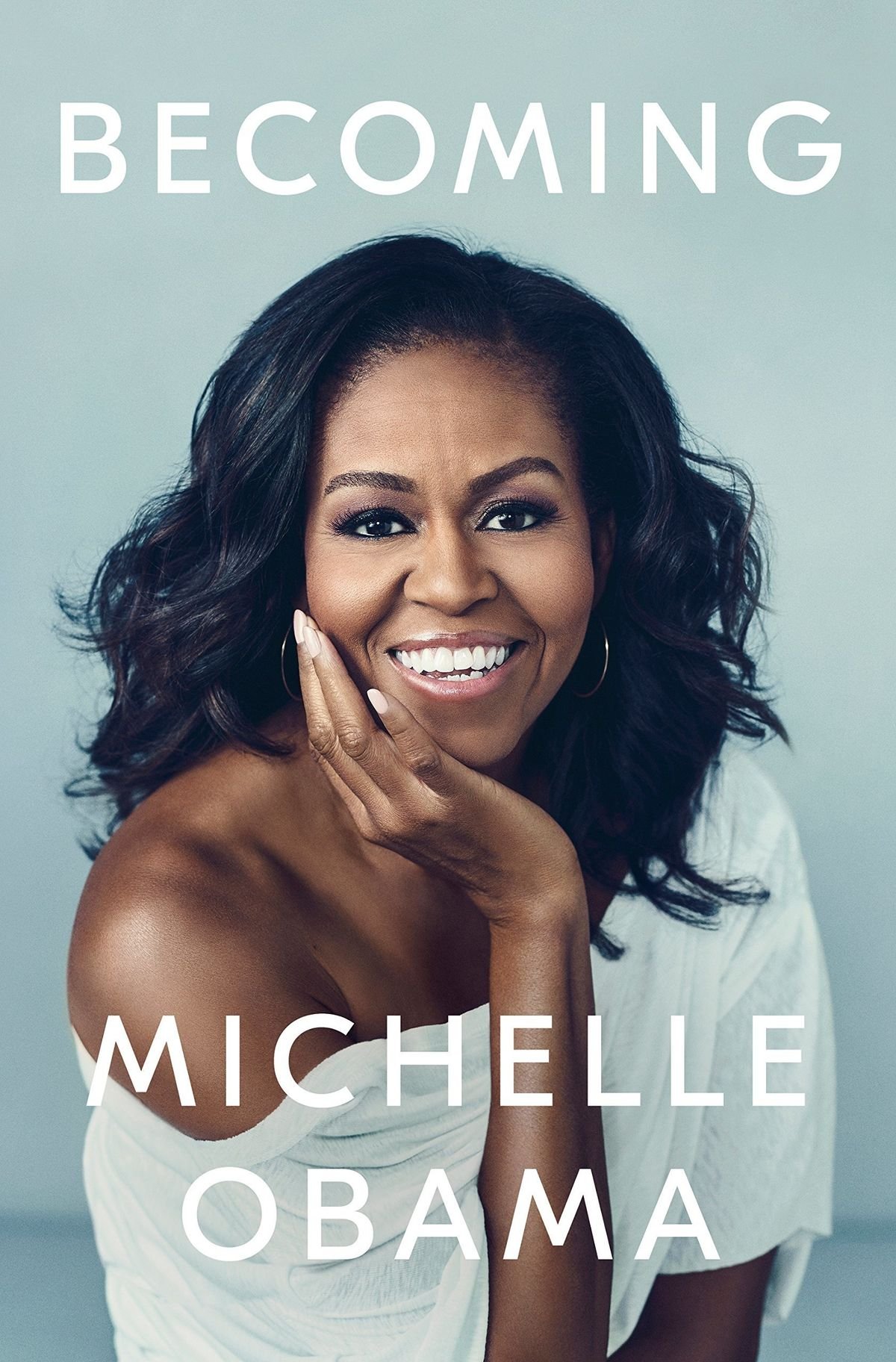
Becoming
Watch Prashant Sir break down the key themes, the South Side formation argument, and why this memoir works as both a personal account and a framework for navigating institutions that were not designed for you.
Why Read Becoming?
Becoming is the memoir that surprised almost everyone who expected a polished account of a polished life. Michelle Obama’s book is not a defence of the Obama administration, not a political manifesto, and not the carefully managed public image that eight years in the White House produced. It is, with unusual candour, the account of a Black girl from the South Side of Chicago who learned, incrementally and at significant cost, that she was capable of more than the world around her had been designed to tell her — and who spent the years of her husband’s presidency in a complex, sometimes painful negotiation between who she had built herself to be and what the role she had not chosen required of her.
The memoir is structured in three parts: “Becoming Me” (her childhood, education, and early career), “Becoming Us” (her marriage to Barack Obama, their life in Chicago, and the political ascent that eventually took them to Washington), and “Becoming More” (the White House years and their aftermath). This structure is explicit rather than accidental — Obama is making an argument about identity as a continuous process rather than a fixed destination, and the title’s present progressive tense is the memoir’s most important formal choice.
The memoir is consistently more honest about her own ambivalence — about the presidency, about the sacrifices her family made, about the specific difficulties of being a Black woman in the most scrutinised household in America — than the genre of political memoir typically permits. This honesty is precisely what made it extraordinary rather than merely successful.
Who Should Read This
This is among the most accessible and most widely read memoirs of the past decade — and one of the most substantive beneath its accessibility. CAT and MBA candidates preparing for personal interviews about identity, self-development, leadership, and the relationship between individual ambition and the demands of circumstances will find in Obama’s account both a framework and a vocabulary. Beyond preparation, it belongs on the reading list of every young professional navigating the gap between who they are and who institutions expect them to be.
Key Takeaways from Becoming
“Am I good enough?” is the question that institutions are specifically designed to make you ask — and recognising that the question is produced by the institution rather than by your actual capabilities is the first act of self-liberation. The gatekeepers’ assessment of your potential is not evidence about your potential; it is evidence about the gatekeepers’ assumptions, and the most important thing you can do with that assessment is ignore it.
Where you come from is not a liability to be overcome — it is a resource to be understood. Obama’s insistence on the specific value of her South Side Chicago formation is the memoir’s most important argument against the assimilation narrative most success stories tell. She did not succeed by becoming someone different from who she was; she succeeded by understanding who she was clearly enough to deploy it effectively in environments that had not been designed for her.
Marriage to an extraordinarily ambitious person requires negotiating whose ambition takes precedence — and that negotiation is rarely equal, and rarely without cost. Obama’s account of the specific tensions between her professional trajectory and Barack’s political ambitions is the memoir’s most honest section. The memoir does not resolve this tension; it documents it, which is more useful than resolution would be.
Identity is not a fixed achievement — it is a continuous project, conducted against the specific pressures that each new context produces. The memoir’s title is present progressive for a reason. “Becoming” is the permanent condition, not a phase that ends when you have become something. This is the memoir’s most important philosophical claim and its most honest one.
Key Ideas in Becoming
The memoir’s most important structural feature is its insistence on ordinariness as the foundation of extraordinary achievement. Obama does not begin with the White House; she begins with a small apartment on Euclid Avenue on the South Side of Chicago, with a father who had multiple sclerosis and never complained, and with the specific value system that working-class Black Chicago produced in her: the conviction that you work hard, you behave with dignity, you look out for your community, and you do not let institutions define you. This foundation is not background — it is the memoir’s argument about what made everything else possible.
The Princeton and Harvard Law School sections are the memoir’s most instructive about the specific experience of being the first generation from your community to enter a world that was not designed for you. Obama describes arriving at Princeton and immediately encountering the gap between her academic capabilities — which were demonstrably excellent — and the institutional culture’s assumptions about who belonged there. She does not describe this as a psychological problem she solved but as a structural reality she navigated — by doing the work, by building her own community among other students of colour, and by refusing to accept the institution’s ambient message that her presence was contingent rather than earned.
The marriage sections are the memoir’s most personally honest — and the most unusual in a genre that typically treats political marriages with diplomatic distance. Obama is specific about the specific frustrations: the campaign trail’s demands on her time and her children’s stability; the specific moment when she realised that her own professional ambitions had been structurally subordinated to Barack’s political career; the marital counselling they sought and what it produced. This honesty is the memoir’s most significant departure from the genre’s conventions and the quality that produced both its extraordinary commercial success and its most uncomfortable conversations.
The White House years describe the specific challenges of raising two daughters in the most scrutinised household in America, the specific limitations that the First Lady role imposed on her professional identity, and the specific experience of being a Black woman in a role whose previous occupants were all white. Every public appearance, every policy initiative, and every personal choice was filtered through the lens of race and gender in ways that exhausted rather than energised her. “When they go low, we go high” — her most widely quoted contribution to political discourse — is presented not as a slogan but as a hard-won, sometimes costly personal conviction about what kind of person she wanted to be regardless of what was done to her.
Key Themes in Becoming
Five interconnected themes run through the memoir — each developed not through abstract argument but through the specific texture of a life navigated across multiple, demanding contexts.
Core Arguments
Four interconnected arguments run through the memoir — each directed at a specific inadequacy in how we typically talk about success, identity, leadership, and the costs of public life.
Obama’s most culturally significant argument is the challenge to the assimilation narrative that most success stories tell: the idea that success in elite institutions requires adopting the values, habits, and self-presentation of those institutions’ dominant culture. Obama’s argument is the opposite: that the most effective way to succeed in those institutions was not to become a version of their expected occupant but to understand her own formation clearly enough to deploy it as a resource — to bring the specific work ethic, communal orientation, and clarity of purpose that her South Side formation had produced into spaces that had not been designed to receive it.
One of the memoir’s most structurally important arguments concerns the specific role of the First Lady — an institutional position with enormous public visibility, no formal authority, and a job description defined entirely by its relationship to the person who actually holds office. Obama’s account of navigating this role — finding within it the space to pursue the policy initiatives and public engagements that mattered to her while accepting the structural limitations she could not change — is one of the most honest available accounts of what it means to hold significant influence without formal power. For anyone thinking about leadership and the specific challenge of working within institutional constraints you did not choose, it is directly applicable.
Obama’s most quoted political contribution — “when they go low, we go high” — is presented in the memoir not as an easy inspiration but as a hard-won, continuously costly commitment. The specific content of “going low” that she experienced — the racist caricatures, the birtherism targeting her husband, the specific forms of scrutiny applied to her physical appearance and identity — makes the commitment to “going high” not a comfortable moral position but a specific daily choice against the entirely reasonable impulse to respond in kind. The memoir’s contribution to this formulation is the honesty about what it costs to maintain it.
The memoir’s most psychologically complex argument concerns the specific experience of being a representative figure — someone whose individual conduct is interpreted not merely as individual behaviour but as evidence about an entire community. Every public appearance Michelle Obama made was, for significant portions of the American public, a statement about Black womanhood, Black family values, and the capacity of Black people to inhabit the highest offices in the country. The memoir is honest about the weight of this representational responsibility — the way it simultaneously gives her conduct additional significance and makes the normal human privilege of individual imperfection politically impossible.
Critical Analysis
A balanced assessment of the bestselling memoir in history — one that earns its extraordinary commercial success through genuine literary and intellectual qualities, and one whose limitations are worth understanding clearly.
The memoir’s most important quality is its willingness to express genuine ambivalence — about the presidency, about the sacrifices the political life required, about the specific limitations of the First Lady role — in a genre where political memoir typically performs gratitude and pride. This honesty is the quality that made the book extraordinary rather than merely successful, and it is what allows the memoir to function as a genuine account of a complex life rather than a managed public image.
Obama’s consistent return to her childhood formation — not as background but as the active resource that equipped her for each new challenge — is both the memoir’s most structurally important decision and its most politically significant. It is an argument, made through one life, that the communities most systematically excluded by elite institutions are also the communities that produce the specific qualities of character those institutions most need.
The memoir is written with the specific kind of clarity that makes complex experience immediately communicable — it does not sacrifice precision for accessibility but achieves both simultaneously. This quality made it the bestselling memoir in history, and it also made it the most politically effective document Obama has produced — because it reached people who would never have read a policy paper and gave them a first-person account of an experience they had been told, in a thousand ways, was not fully theirs to inhabit.
Despite its unusual personal honesty, the memoir maintains a careful diplomatic distance from specific policy debates — the Obama administration’s specific decisions, their specific consequences, and Obama’s own positions on contested policy questions are handled with restraint reflecting both personal loyalty and political calculation. For readers seeking serious engagement with the Obama presidency’s specific achievements and failures, this restraint is a genuine limitation — the memoir is a personal account that declines to be a political one, and the distinction matters.
The memoir is honest within specific limits — the limits of what can be said about a living husband, living children, and a political legacy still being negotiated. Some of the most interesting questions it raises — about the specific nature of the Obama marriage, about the specific tensions between Michelle’s ambitions and Barack’s career — are acknowledged rather than fully explored. The honesty is real; it operates within chosen constraints.
The memoir’s final movement — toward a message of hope, possibility, and the importance of civic engagement — is the book’s least surprising section and its most conventionally inspirational. After the specific honesty of the earlier chapters, the conclusion’s more generic uplift feels somewhat formulaic, though it reflects both Obama’s genuine convictions and the specific political context in which the book was written and published.
Legacy & Cultural Impact
Publication and Records: Becoming was published in November 2018 and immediately became the bestselling memoir in history — selling over 3 million copies in the United States in its first two weeks, over 10 million worldwide in its first year, and over 17 million by 2023. It was translated into 56 languages, won multiple awards including the Grammy for Best Spoken Word Album (for the audiobook, narrated by Obama herself), and spawned a global arena tour in which she spoke to over 300,000 people in ten countries. Netflix produced a documentary about the book tour that reached millions more.
Cultural Reach Beyond Commercial Success: The memoir reached audiences — particularly Black women, young women of colour, and first-generation professional aspirants — for whom the combination of Obama’s specific formation, her specific professional achievements, and her specific honesty about the costs of those achievements produced a kind of recognition that purely inspirational narratives cannot provide. The memoir worked not because it told people their dreams could come true but because it told the truth about what achieving them actually required — the work, the negotiation, the ambivalence, and the specific costs — and trusted its readers to find that truth more useful than the sanitised version.
Educational Adoption: The book is taught in universities, high schools, and professional development programmes across the United States and internationally — not primarily as a political text but as a model of memoir craft and as a primary document of the specific experience of identity negotiation in elite institutional contexts. Its account of the gatekeeping problem, the assimilation fallacy, and the representational burden of being a first in a given space has been incorporated into diversity, equity, and inclusion curricula at multiple institutions.
Resonance for Indian Readers: The memoir resonates along several specific dimensions in the Indian context. The experience of being the first from your family or community to enter elite institutions — and the specific navigation of the cultural gap between your formation and the institution’s assumptions — is a recognisable structure for a large proportion of competitive exam aspirants. The tension between individual professional ambition and the demands of family and community is a central experience for first-generation Indian professionals. The specific argument about ordinariness as foundation rather than liability — the insistence that the values produced by ordinary backgrounds are not inferior to those produced by elite formations but differently located and differently deployable — is an argument with particular salience in a society where English-medium education and metropolitan origin are systematically over-valorised.
Love This Book? Master Every Book.
Stop struggling with reading comprehension. Our proven system transforms how you read—whether for CAT, GRE, GMAT, SAT, or personal growth.
Best Quotes from Becoming
Your story is what you have, what you will always have. It is something to own.
I have been at probably every powerful table that you can think of. I have worked at nonprofits, I have been at foundations, I have worked in corporations, served on corporate boards, I have been at G-summits, I have sat in at the UN: they are not that smart.
Failure is a feeling long before it becomes an actual result. It’s vulnerability that breeds with self-doubt and then is escalated, often deliberately, by fear.
When they go low, we go high.
I have learned that as long as I hold fast to my beliefs and values — and follow my own moral compass — then the only expectations I need to live up to are my own.
If You Liked This, Try…
No books found.
Test Your Understanding
Think you’ve mastered Becoming? Challenge yourself with 15 questions on the key themes, the South Side formation argument, and core ideas. Score 80%+ to prove your mastery.
Becoming FAQ
What is Becoming about?
It is Michelle Obama’s memoir, structured in three parts — “Becoming Me” (her South Side Chicago childhood, her education, her early career), “Becoming Us” (her marriage to Barack Obama and the political life it produced), and “Becoming More” (the White House years and their aftermath). It is not a political memoir of the Obama administration but a personal account of how a specific woman from a specific background navigated a series of increasingly demanding contexts — each of which required a new negotiation of who she was and who she was willing to become.
Is it useful for MBA and CAT preparation?
Yes — particularly for personal interviews about identity, self-development, leadership, ambition, and the experience of navigating institutional environments that were not designed for you. Obama’s specific frameworks — ordinariness as foundation rather than liability, the gatekeeping problem, “becoming” as a permanent process rather than a destination — provide vocabulary and analytical tools for questions that most candidates answer with generic statements about hard work and determination. The memoir is also one of the most accessible primary documents available on the specific experience of being a first in a given institutional space, which is directly relevant to any candidate thinking about diversity and inclusion in leadership contexts.
What is the memoir’s most important lesson?
That “becoming” is not a destination but a permanent condition — that identity is a continuous project of construction and negotiation rather than a fixed achievement. This is the memoir’s most honest and most useful argument: it challenges the implicit assumption of most success narratives (that there is a point at which you have arrived and can stop negotiating) and replaces it with a more demanding and more accurate description of what maintaining integrity across multiple contexts actually requires. For any person navigating multiple roles and multiple institutions simultaneously, this is the most immediately applicable insight the memoir provides.
How honest is the memoir about the difficulties of the Obama marriage?
More honest than the genre typically permits — specifically about the tensions between Obama’s professional ambitions and Barack’s political career, the specific moments when his choices required sacrifices she had not chosen, and the marital counselling they sought to navigate those tensions. She does not present the marriage as a simple love story and does not pretend that the political life was equally chosen by both of them. She also does not break through the specific limits that ongoing marriage and continuing public partnership impose — there is a level of specificity about their relationship that is acknowledged but not crossed, and readers should engage with the honesty knowing it operates within those constraints.
What is the significance of the title Becoming?
The title is the memoir’s most important formal choice — a present progressive verb rather than a noun or a completed past tense. Obama is making a specific argument: that identity is not a destination you arrive at but a continuous process you are always in the middle of. The three-part structure (“Becoming Me,” “Becoming Us,” “Becoming More”) is the formal expression of this argument — each section introduces a new context that requires a new negotiation of who she is. The memoir ends not with arrival but with the recognition that the process continues, which is both its most honest quality and its most demanding message: that the work of becoming who you are is never finished, and that this is not a limitation but the condition of a life fully lived.








