
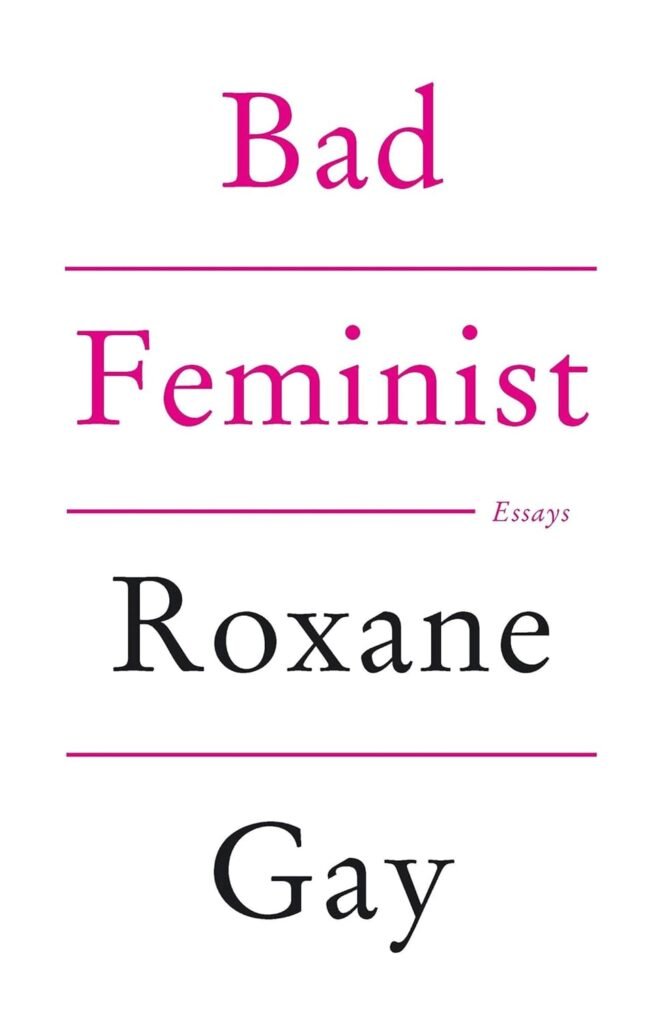
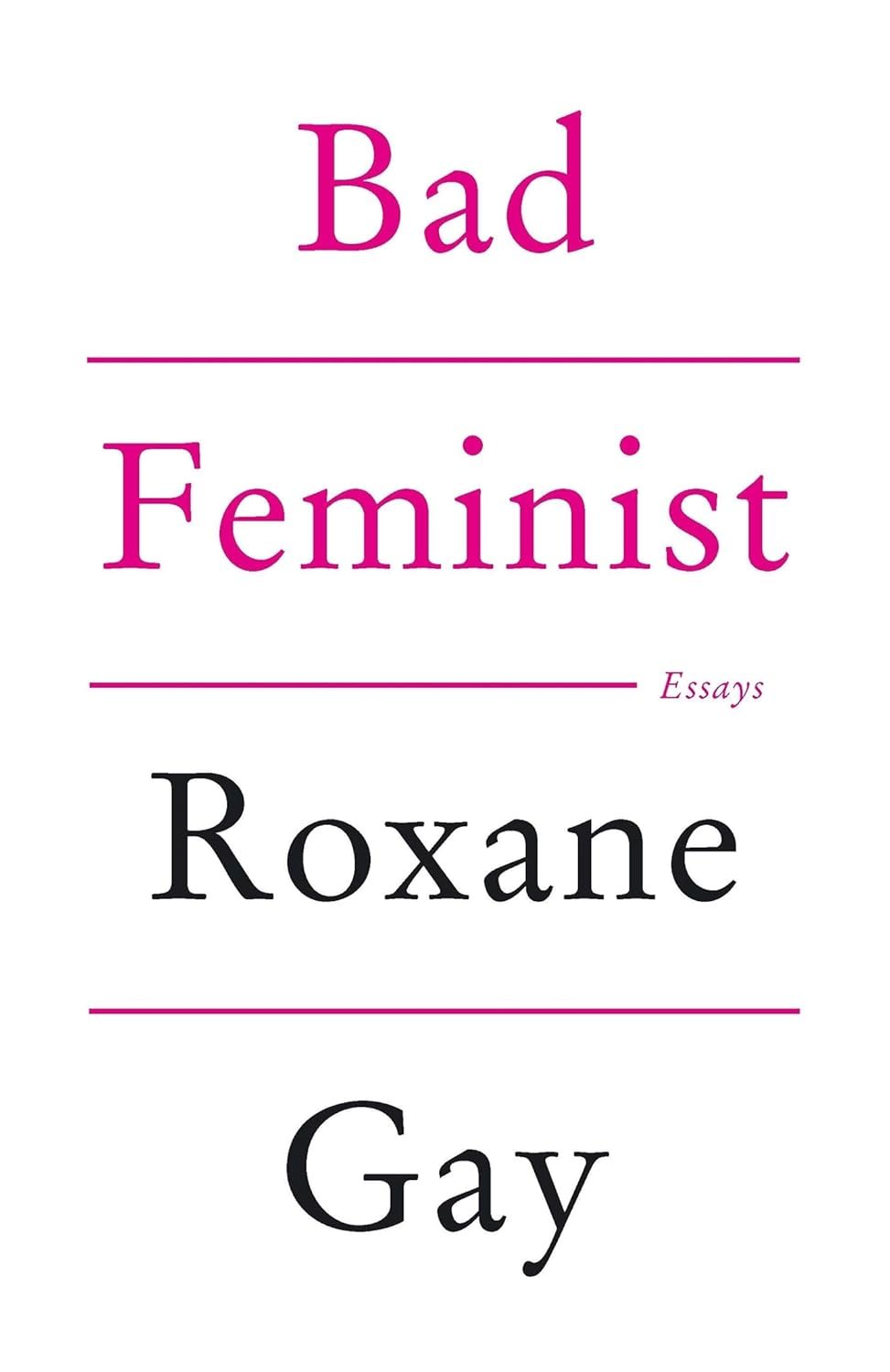
Bad Feminist
Watch Prashant Sir break down Roxane Gay’s central argument about ideological purity, why popular culture is political infrastructure, and what it means to be honest about the gap between your values and your pleasures.
Why Read Bad Feminist?
Bad Feminist arrives at its central argument in its title: that feminism as a political commitment does not require feminist purity as a personal performance, and that the insistence on purity — the demand that feminist women embody in their daily lives the complete and consistent expression of feminist principles — is both politically counterproductive and intellectually dishonest. Roxane Gay is a feminist who loves certain cultural products that are bad for women, holds certain personal preferences that are inconsistent with feminist theory, and refuses to pretend otherwise — and her argument is that this honesty makes her feminism more useful, not less. The resulting collection is the most readable and most honest engagement with contemporary feminist cultural criticism available in a single volume.
The collection is organised into five loosely thematic sections — “Me,” “Gender & Sexuality,” “Race & Entertainment,” “Politics, Gender & Race,” and “Back to Me” — and moves between personal essay, cultural criticism, film and television review, and political commentary with the ease of a writer who is equally at home in all of these modes. Gay writes about competitive Scrabble and Sweet Valley High, about Django Unchained and Chris Brown, about abortion politics and campus rape, about being Black in spaces that are not designed for her, about being fat in a culture organised to make fat people feel bad about existing.
All of it is connected by the same specific quality: a complete refusal to be dishonest about what she actually thinks, feels, or experiences in the service of any ideological position, including the one she holds. The book was published in 2014 and became an immediate cultural phenomenon — a New York Times bestseller that made the case, through accumulation rather than argument, that the personal and the political are inseparable not as a slogan but as a lived reality.
Who Should Read This
This is essential reading for anyone who wants to engage seriously with contemporary feminism, cultural criticism, and the specific intersection of race, gender, and popular culture. CAT and MBA candidates preparing for GD/PI discussions about gender, diversity, cultural criticism, and the ethics of representation will find in Gay’s essays both a framework and a vocabulary more grounded in lived experience than most academic treatments. Beyond preparation, it belongs on the reading list of every student of cultural criticism and every person navigating the gap between their values and their pleasures.
Key Takeaways from Bad Feminist
Ideological purity is neither achievable nor desirable — and demanding it of political movements produces the specific failure mode in which members spend more energy policing each other than building the coalitions that political change requires. Gay’s “bad feminist” position is not an abandonment of feminist commitment but a more honest account of what feminist commitment actually looks like in a life lived inside a culture that is simultaneously the object of feminist critique and the medium through which feminist thinkers actually live.
Popular culture is not trivial — it is the primary medium through which a culture’s values, assumptions, and power arrangements are reproduced and contested, and treating it as beneath serious analysis is a specific form of intellectual evasion. The stories a culture tells about women, race, and sexuality are not incidental to the conditions of women’s and marginalised people’s lives — they are constitutive of those conditions, and they deserve the same analytical attention that explicitly political discourse receives.
Representation matters — not because seeing yourself in a film resolves the conditions of your marginalisation, but because the systematic absence of certain kinds of people from certain kinds of stories is itself evidence of a specific set of assumptions about whose lives are worth telling. Gay’s critique of Hollywood’s treatment of race is the collection’s most politically specific argument — and one of the most honest available accounts of how representation functions as a political instrument rather than merely an aesthetic choice.
The personal essay is a political form — not because every personal experience is a political statement but because the specific experience of living in a body that a culture has decided to treat as a problem produces knowledge about that culture that more abstract political discourse cannot access. Gay’s willingness to write about her own body, her own desires, her own contradictions, and her own experiences of being Black and female and fat in America is not self-indulgence; it is political evidence about the conditions of that marginalisation.
Key Ideas in Bad Feminist
The collection’s central argument — stated in the title essay and developed throughout — is that feminist identity does not require feminist purity. Gay loves Lil Wayne despite his frequent misogyny. She watched and enjoyed films she simultaneously recognises as deeply problematic in their treatment of gender. She holds personal preferences — about pink, about romantic comedies, about competitive Scrabble — that are inconsistent with the image of a rigorous feminist intellectual. And she refuses to resolve this inconsistency by either abandoning the feminist commitment or pretending the inconsistent preferences do not exist. The “bad feminist” position is the honest position available to anyone who is simultaneously committed to a set of values and living inside a culture whose products they cannot entirely curate to align with those values — which is everyone who holds any value at all.
The race and entertainment section is the collection’s most politically specific and most analytically developed. Gay’s engagement with Hollywood’s treatment of Black characters — the specific forms of representation that have historically been permitted, the specific stories about Black life that the film industry has found commercially viable, and the specific ways in which even nominally progressive films can reproduce the racial assumptions they appear to challenge — is among the most precise available cultural criticism of the American film industry from the perspective of a Black viewer. Her analysis of Django Unchained is one of the most complete available accounts of the specific difficulty of engaging with a film that is simultaneously a genuine political intervention and a deeply troubling deployment of racial violence as entertainment.
The personal essays — about Gay’s experiences with her body, about competitive Scrabble, about being Black in rooms that were not designed for Black people — are the collection’s most distinctive formal contribution. They are not confessional in the sense of performing vulnerability for its own sake; they are precise in the sense of using specific personal experience as evidence for specific analytical claims. The essay about Sweet Valley High — about what it meant to grow up reading books in which everyone was blond, thin, and wealthy, and to love them anyway — is the collection’s most concentrated expression of the “bad feminist” position: the specific experience of loving cultural products that were actively not designed for you and that embedded in their pleasure a specific account of your own inadequacy.
The political essays — on abortion, on campus sexual violence, on the specific failures of political discourse to engage seriously with the lived realities of women’s lives — are the collection’s most overtly polemical and its most directly applicable to GD/PI discussions. Gay is not interested in presenting balanced perspectives on questions she considers settled. The willingness to be direct and unapologetic is itself part of the essay’s argument — that the demand for “balance” on questions that involve the specific rights and bodies of women is itself a political instrument for avoiding those questions.
Key Themes in Bad Feminist
Five themes run through Gay’s essays — each developed through the accumulation of specific instances rather than through sustained abstract argument, which is the collection’s method and part of its argument about how cultural criticism should be conducted.
Core Arguments
Four arguments run through the collection — each directed at a specific inadequacy in how political movements, cultural institutions, and individual readers think about the relationship between values and lived practice.
Gay’s most politically important argument — and the one most directly applicable to any political movement — is the case against ideological purity as a standard for political membership. Purity politics, as Gay diagnoses it, produces the specific failure mode in which political movements spend more energy policing members’ conduct than building the coalitions that political change requires; it alienates potential allies whose imperfect commitment is more politically useful than their principled exclusion; and it demands a standard of consistency that no one actually meets. The bad feminist is not someone who has failed at feminism; she is someone who is honest about the gap between political commitment and lived practice — a gap that everyone who holds any political commitment experiences, and that purity politics manages only by insisting on not acknowledging it.
One of the collection’s most consistent methodological arguments is that gender cannot be analysed in isolation from race, class, sexuality, and other dimensions of identity and marginalisation. Gay’s specific contribution to this argument is its embodiment in personal essay form — she does not make the intersectional argument abstractly, she makes it through the specific account of what it means to be Black and female and fat in America simultaneously, and how each of those dimensions of her identity shapes and is shaped by the others. The personal essay format makes the analytical claim more concrete and more credible than a purely theoretical account would have done.
The collection’s most important methodological contribution is its sustained argument that popular culture is not trivial — that the films, television programmes, novels, and music that a culture produces and consumes are part of its political infrastructure, shaping the assumptions, expectations, and imaginations through which political life is conducted. Gay’s treatment of Django Unchained, of Tyler Perry’s films, of Sweet Valley High, as objects of serious political analysis is not the elevation of popular culture for its own sake; it is the argument that the political analyst who ignores popular culture is ignoring the medium through which most political formation actually occurs.
One of the collection’s most philosophically interesting arguments concerns the specific ethical question of what you owe the values you hold when the cultural products you enjoy violate those values. Gay’s answer is not that you must stop enjoying the problematic product; it is that you must be honest about the specific ways in which the product is problematic and about the specific ways in which your enjoyment of it is in tension with your values. The dishonesty is not the enjoyment; it is the refusal to acknowledge the tension. This is the collection’s most practically applicable argument for readers who have ever loved something they knew they should not love.
Critical Analysis
A balanced assessment of the most accessible and most widely read collection of feminist cultural criticism of the past decade — one whose popularity is the product of genuine craft and genuine intellectual honesty, and whose limitations are worth understanding as clearly as its strengths.
Gay’s prose is the collection’s most important quality — direct, specific, frequently funny, and entirely honest about its own positions and its own inconsistencies. She is one of the most readable cultural critics writing in English, and the accessibility of her voice never comes at the cost of the precision of her analysis. The combination of intellectual rigour and human warmth is the specific quality that made the book a popular phenomenon as well as a critical one.
The collection’s most distinctive formal achievement is its refusal to separate the analytical from the personal — its insistence on conducting cultural criticism from inside the specific body, the specific history, and the specific pleasures of a particular person rather than from the implied neutral position that academic cultural criticism typically occupies. This embodied approach makes the analysis more honest, more specific, and more credible than a more conventionally academic treatment of the same subjects would have been.
The collection’s engagement with popular culture across the full spectrum — from Sweet Valley High to Toni Morrison, from Django Unchained to reality television — demonstrates both the breadth of Gay’s cultural engagement and the rigour of her analytical framework. The range is itself an argument: that the analytical framework that works on Django Unchained and on Sweet Valley High and on abortion politics is more robust than one that only works in its home territory.
The collection is a collection of essays rather than a systematic argument, which means that its central claims are developed by accumulation and example rather than through sustained argumentative development. Readers seeking a systematic theoretical framework for feminist cultural criticism will find the collection suggestive rather than complete — it points toward arguments more fully developed by theorists like bell hooks, Audre Lorde, and Kimberlé Crenshaw rather than developing those arguments itself.
The collection’s engagement with American popular culture — its specific films, its specific political debates, its specific celebrities — is simultaneously its greatest strength and its most significant limitation for non-American readers. Many of the specific cultural objects Gay analyses will require contextualisation for readers outside the American cultural context, and some of the essays’ most politically specific arguments are shaped by the conditions of American racial politics in ways that do not translate without adjustment.
As with most essay collections, the quality across the individual essays is uneven — some are fully developed arguments, others are closer to extended observations or personal reflections that do not develop their analytical potential fully. The best essays in the collection are among the best cultural criticism of the past decade; the weakest are competent but considerably less distinctive, and readers who encounter the weaker essays first may not persist to the stronger ones.
Legacy & Cultural Impact
Publication and Reception: Bad Feminist was published in August 2014 and became an immediate cultural and commercial success — debuting on the New York Times bestseller list, selling over a million copies, and introducing Gay’s work to a wide general audience that had previously known her primarily through her fiction and her online writing. It was named one of the best books of the year by numerous publications and has been in continuous print since its publication. It is widely taught in university courses on feminism, cultural studies, gender studies, and creative non-fiction, and has become one of the standard reference points for contemporary feminist cultural criticism in the accessible register.
Influence on Feminist Writing: The book’s most important cultural impact has been its contribution to the specific mode of feminist cultural criticism that engages seriously with popular culture from an explicitly personal and embodied position — the mode associated with writers like Gay, Lindy West, Samantha Irby, and others who have combined intellectual rigour with personal honesty in ways that academic cultural criticism had typically not permitted. This mode has become one of the dominant registers of contemporary feminist writing, and Bad Feminist is the book most widely cited as its accessible introduction.
The Concept in the Culture: The specific concept of the “bad feminist” has entered the broader cultural vocabulary — used by people who have not read the book to describe the gap between their values and their pleasures that Gay’s argument addresses. This diffusion of the concept beyond the book’s readership is evidence of its cultural resonance, though Gay has noted that the concept is frequently misused in ways that flatten the specific argument she was making — deploying “bad feminist” as a licence for disengagement rather than as a call for more honest engagement.
Relevance for Indian Readers and MBA Candidates: The argument about representation — about whose lives are considered worth telling and whose experiences are considered worth taking seriously — is as applicable to Indian popular culture as to American. The argument about the gap between political commitment and lived practice is a universal one that any holder of any value will recognise. For MBA and CAT candidates preparing for GD/PI discussions about gender, representation, and the politics of popular culture, the collection provides the most accessible available introduction to the analytical tools that contemporary feminist cultural criticism has developed — and a model of how to make complex arguments clearly and honestly without either academic abstraction or ideological performance.
Love This Book? Master Every Book.
Stop struggling with reading comprehension. Our proven system transforms how you read—whether for CAT, GRE, GMAT, SAT, or personal growth.
Best Quotes from Bad Feminist
I am a bad feminist. I would rather be a bad feminist than no feminist at all.
When feminism falls short of its ideals, it is not feminism that is to blame; it is the people who are imperfect, because we are all imperfect.
I embrace the label of bad feminist because I am human. I am messy. I’m not trying to be an example. I am not trying to be perfect. I am just trying — trying to support what I believe in, trying to do some good in this world, trying to make some noise with my writing while also being myself.
We don’t always have to be the best of ourselves, but we do have to try to be better.
The struggle is real and the struggle is necessary because if we don’t say anything, nothing will change.
If You Liked This, Try…
No books found.
Test Your Understanding
Think you’ve mastered Bad Feminist? Challenge yourself with 15 questions on Gay’s central argument, key themes, and the ethics of enjoyment. Score 80%+ to prove your mastery.
Bad Feminist FAQ
What is Bad Feminist about?
It is a collection of essays organised around the central argument that feminist identity does not require feminist purity — that it is possible and honest to be committed to feminist values while simultaneously loving cultural products that violate those values, holding personal preferences that are inconsistent with feminist theory, and living a life that does not perfectly embody the political commitments you hold. The essays range across personal narrative, film and television criticism, political commentary, and cultural analysis, unified by Gay’s consistent willingness to be honest about her own contradictions and to analyse popular culture with the same rigour she applies to explicitly political questions.
Is it useful for MBA and CAT preparation?
Yes — particularly for GD/PI discussions about gender, feminism, representation in media, the relationship between popular culture and political values, and the specific question of how political movements handle the gap between their ideals and the messy reality of their members’ lives. Gay’s specific frameworks — the bad feminist argument, the intersectional analysis of race and gender, the argument that popular culture is political infrastructure — provide vocabulary and analytical tools for engaging with these questions at a level of sophistication that most candidates do not bring. The collection is also among the most accessible available introductions to contemporary feminist cultural criticism for readers who have not previously engaged with the academic literature in this area.
What does “bad feminist” mean?
It is Gay’s self-description for a feminist who is honest about the gap between her feminist commitments and her actual lived preferences, pleasures, and contradictions — rather than performing ideological purity by either abandoning the contradictions or pretending they do not exist. The “bad” is ironic: Gay is not a bad feminist in the sense of being a poor or uncommitted one; she is “bad” in the sense of refusing the purity that more orthodox versions of feminist identity demand. Her argument is that this honesty makes her feminism more credible and more useful, not less — because it engages honestly with the conditions under which all people who hold political commitments actually live, which are always messier and more contradictory than any ideological framework can fully accommodate.
How does Gay handle cultural products she both enjoys and finds politically problematic?
She holds both responses simultaneously and refuses to resolve the tension by either abandoning the enjoyment or pretending the political problem does not exist. Her analysis of Lil Wayne — whose music she loves and whose misogyny she documents specifically — is the collection’s clearest example of this method: she does not argue that the music’s misogyny is not real or not serious, and she does not pretend that she does not enjoy the music despite the misogyny. She argues instead that the honest response is to acknowledge both — to enjoy the music and to be honest about its specific political failures, rather than either enjoying it innocently or abandoning it ostentatiously. The ethics of enjoyment, for Gay, is the ethics of honest acknowledgment rather than the ethics of purity.
Should I read Bad Feminist before or after Gay’s memoir Hunger?
Bad Feminist first. The essay collection establishes the analytical framework — the bad feminist argument, the body as political territory, the intersectional analysis of race and gender — that Hunger: A Memoir of (My) Body (2017) then develops in explicitly autobiographical form. Hunger is Gay’s account of her relationship with food and her body following a sexual assault at twelve — a more personal, more sustained, and in some ways more difficult book than Bad Feminist, because it is less able to use the essay form’s movement between subjects as a way of managing emotional proximity to the material. Reading the two together provides a more complete account of Gay’s intellectual and political formation than either provides alone: Bad Feminist makes the arguments analytically, Hunger makes them autobiographically, and together they constitute one of the most complete available accounts of what it means to think and write seriously about the body, power, and culture from inside the specific experience of marginalisation.








