

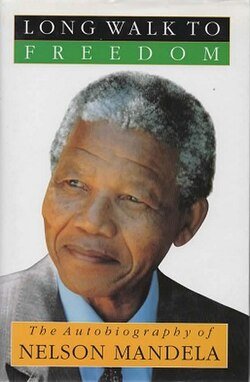
Long Walk to Freedom
Watch Prashant Sir break down the key ideas, themes, and leadership lessons in Mandela’s extraordinary autobiography.
Why Read Long Walk to Freedom?
Long Walk to Freedom is one of the most important political autobiographies of the twentieth century — not because its subject is famous, though Mandela is among the most recognised figures in modern history, but because it is the first-person account of a man who endured decades of imprisonment, isolation, and systematic dehumanisation and who emerged from it committed not to revenge but to reconciliation. The book is the documentation of how that commitment was formed, tested, and held — and it is far more complex, more honest, and more instructive than the saintly simplifications that Mandela’s public image typically produces.
The autobiography covers Mandela’s full arc: his Thembu royal childhood in the Eastern Cape, his legal education and early political awakening in Johannesburg, his transformation from idealistic lawyer to militant activist, his underground years as the “Black Pimpernel,” his arrest and the Rivonia Trial of 1963–64 at which he faced the death penalty, his twenty-seven years on Robben Island, the secret negotiations with the apartheid government that preceded his release, and the four years between his release in 1990 and his inauguration as South Africa’s first democratically elected president in 1994.
What distinguishes the book from hagiography is Mandela’s own honesty about his limitations — his failures as a husband and father, his early militancy, the specific evolution of his political thinking under pressure, and the specific moments when his commitment to negotiation over violence was genuinely contested within his own movement and within himself. He does not present himself as a saint who never doubted; he presents himself as a man who made specific choices under specific pressures and who is willing to account for both.
Who Should Read This
This is essential reading for anyone who wants to understand political leadership at its most demanding. CAT and MBA candidates preparing for discussions about leadership, ethics, negotiation, and social change will find in Mandela’s account specific, documented case studies in principled decision-making under extreme pressure that no business school case study can match for depth or consequence. Beyond preparation, it is required reading for anyone who wants to understand how political change actually happens — through what combination of principle, strategy, negotiation, sacrifice, and patience.
Key Takeaways from Long Walk to Freedom
Dignity is not given by circumstances — it is chosen, continuously, against circumstances designed to deny it. Mandela’s conduct on Robben Island was the active assertion of personhood in a system designed to destroy it, and became one of the primary instruments through which he maintained both his integrity and his authority.
Negotiation is not betrayal of principle — it is the instrument through which principle achieves consequence in the real world. Mandela’s argument was that the goal was not the defeat of the enemy but the liberation of all South Africans — including white South Africans — from the system of apartheid.
Patience is not passivity — it is the strategic capacity to maintain purpose across timeframes that would exhaust anyone operating on shorter motivational horizons. This patience was a specific form of strategic clarity about the relationship between the long-term goal and the immediate conditions.
The most powerful political act is the refusal to become what you are fighting against. Mandela’s insistence on non-racialism was a moral commitment that required him to resist the entirely understandable desire for vengeance that twenty-seven years of unjust imprisonment could have produced.
Key Ideas in Long Walk to Freedom
The book’s opening sections — the Thembu childhood, the initiation into manhood, the early years in Johannesburg — are the autobiography’s most underread and most important. They establish that Mandela did not emerge fully formed from a prison cell; he was formed, specifically and in detail, by a cultural tradition that gave him a particular understanding of leadership, dignity, and the relationship between the individual and the community. The Thembu chief’s court, where disputes were resolved through extended discussion until consensus was reached and every voice had been heard, is Mandela’s explicit model for the leadership style he later practised.
The Rivonia Trial of 1963–64 is the autobiography’s most concentrated political statement. Mandela’s statement from the dock, which he knew might be his last public words before a death sentence, was a complete articulation of his political philosophy — the case for non-racialism, the acknowledgment of the ANC’s turn to sabotage and its necessity, and the famous closing lines about the ideal of a democratic and free society as one for which he was “prepared to die.” The statement was not a plea for mercy; it was a moral challenge to the court and to history.
The Robben Island sections are the autobiography’s most psychologically rich. The debate club, the garden, the gradual establishment of a de facto university among the prisoners, the patient legal contestation of every prison regulation — these were not merely coping mechanisms. They were the specific practices through which Mandela continued to be a political actor within the conditions of his imprisonment, revealing a quality of strategic intelligence that the hagiographic simplification of his story typically obscures.
The negotiation sections — beginning with secret meetings with justice minister Kobie Coetsee — are the autobiography’s most strategically instructive passages. Mandela’s account is unusually candid about the specific compromises made, the specific red lines maintained, and the specific moments when the entire process was in danger of collapse, making it one of the most detailed available accounts of how a negotiated political transition actually works from the inside.
Key Themes in Long Walk to Freedom
Five interlocking themes run through the autobiography, each examining a different dimension of Mandela’s political and personal journey.
Core Arguments
Four interlocking arguments distinguish Long Walk to Freedom as a work of political philosophy, not merely personal memoir.
Mandela’s most consequential and most controversial argument is the case for negotiated transition over military victory. His argument is that the goal — a non-racial democratic South Africa — could not be built on the foundation of military defeat and racial reversal: that a South Africa in which Black majority rule replaced white minority rule without structural change would reproduce the injustice it had replaced. The negotiated transition was not a compromise of the goal; it was the specific mechanism through which the goal could be achieved rather than merely substituted for a different version of the same problem.
The autobiography provides one of the most thoughtful available accounts of a political movement’s specific decision to turn to armed struggle. Mandela’s founding of Umkhonto we Sizwe in 1961 followed thirty years of non-violent ANC protest that had produced no political change. His argument — that non-violence requires a state willing to receive protest without lethal force, and that the South African state had demonstrated it was not such a state — is one of the most carefully reasoned defences of a movement’s turn to violence in the political literature. He is also candid about the ways in which the struggle’s violence eventually exceeded the original intention.
One of the autobiography’s most important arguments is that Robben Island was not an interruption of the struggle but a continuation of it by other means. Mandela’s account of the prison years is organised around the specific ways in which he and his fellow prisoners maintained their political identity, developed their thinking, educated each other, and extended their authority through the debate club, the garden, the legal challenges, and the eventual negotiations with prison authorities. The prison was not where the struggle paused; it was where its most patient and most consequential phase was conducted.
The autobiography’s most philosophically significant argument is for non-racialism as the only coherent foundation for a just society. Mandela argues that racial justice — the replacement of white privilege with Black privilege — would not be justice; it would be a rearrangement of injustice. The only just arrangement is one in which race determines neither privilege nor disadvantage — in which character rather than category determines opportunity. This argument was contested within the ANC; Mandela held it not as a political tactic but as a moral conviction, and the post-apartheid constitutional settlement reflects it.
Critical Analysis
A balanced assessment of the autobiography’s extraordinary strengths as a primary political document and the genuine limitations of its form and perspective.
No other first-person account of the anti-apartheid struggle covers as much ground with as much operational detail. Mandela is specific about the legal arguments, the political debates, the prison regulations, and the specific decisions that shaped each phase of the struggle — making the book an extraordinary primary source for anyone seeking to understand how political change actually happens rather than how it is retrospectively narrated.
The autobiography’s most valuable quality is Mandela’s willingness to acknowledge his own limitations — his early racial exclusivism, his failures as a husband and father, the specific moments when his judgment was contested and possibly wrong. This honesty is rare in political autobiography, where the temptation to construct a retrospectively coherent heroic narrative is almost irresistible.
The autobiography provides what political philosophy textbooks cannot: specific documentation of how abstract principles — non-racialism, reconciliation, negotiated transition — were tested against concrete circumstances and held or modified. This is political theory as lived experiment, and the gap between the ideal and the actual is documented with a specificity that makes the ideal more rather than less credible.
Written and published in 1994, the autobiography covers the four years between Mandela’s release and his inauguration — among the most consequential and complicated of his political life — relatively briefly. The book ends at the moment of triumph, which means it does not examine the specific compromises of the transition with the critical distance that subsequent events would have enabled.
Mandela is more candid about his political life than his personal one. His marriages — to Evelyn Mase and to Winnie Madikizela-Mandela — are described with a restraint that reflects genuine personal pain but leaves the reader with a less complete picture of who he was outside his political role. The children he largely missed raising are present as an acknowledged cost rather than as fully developed relationships.
Despite its self-critical honesty, the autobiography is written by its subject. Its account of contested decisions — including the secret negotiations with the apartheid government — is necessarily filtered through Mandela’s own justification of those decisions. People who disagreed with him are present as resistances to be persuaded rather than as holders of positions that might have had genuine merit. A complete account of the period requires supplementing the autobiography with other perspectives.
Impact & Influence
Reception and Reach: Long Walk to Freedom was published in 1994 — the year of South Africa’s first democratic election — and immediately became one of the most widely read political autobiographies of the century, selling over 10 million copies worldwide and being translated into more than 50 languages. It was adapted into a feature film in 2013, with Idris Elba receiving wide critical praise in the title role. It remains the definitive first-person account of the anti-apartheid struggle and of South Africa’s negotiated transition to democracy.
Two Levels of Impact: The book’s cultural impact operated at two distinct levels. As a political document, it provided the most detailed available account of how the ANC conducted its struggle, how the negotiation process worked, and what specific choices produced the peaceful transition that most observers had considered impossible. As a personal inspiration, it became one of the defining examples of the twentieth century of what sustained commitment to principle under extreme adversity looks like — cited by politicians, activists, and ordinary people across the world as evidence that the long view, maintained against every pressure to abandon it, can produce outcomes that the short view cannot.
Mandela’s Death and Legacy: Mandela’s death in December 2013, at the age of ninety-five, produced a global outpouring of grief and celebration that confirmed his status as the twentieth century’s most universally admired political figure. The specific quality of the grief — the sense of the world having lost not merely a great man but a specific kind of moral standard — reflected the autobiography’s central argument: that the most important thing about Mandela was not what he achieved but how he chose to achieve it.
Indian Context: The autobiography carries specific resonances in the Indian context: the explicit acknowledgment of Gandhi’s influence on early ANC non-violent resistance; the specific experience of colonial subjugation and its aftermath; and the question of how a former colony builds a nation after liberation. The comparison between Mandela and Nehru — both lawyers, both leaders of liberation movements against British colonial power, both architects of post-independence constitutional democracy — is one of the most instructive available comparisons in modern political history, and the autobiography is essential reading for anyone wanting to engage with it seriously.
Love This Book? Master Every Book.
Stop struggling with reading comprehension. Our proven system transforms how you read—whether for CAT, GRE, GMAT, SAT, or personal growth.
Best Quotes from Long Walk to Freedom
I am the product of Africa and her long-cherished dream of a rebirth that can now begin to be realised so that all of her children may play in the sun.
It always seems impossible until it’s done.
A good head and a good heart are always a formidable combination.
I learned that courage was not the absence of fear, but the triumph over it. The brave man is not he who does not feel afraid, but he who conquers that fear.
Education is the most powerful weapon which you can use to change the world.
If You Liked This, Try…
No books found.
Test Your Understanding
Think you’ve mastered Long Walk to Freedom? Challenge yourself with 15 questions on key themes, leadership philosophy, and Mandela’s core arguments. Score 80%+ to prove your mastery.
Long Walk to Freedom FAQ
What is Long Walk to Freedom about?
It is Nelson Mandela’s autobiography, covering his full life from his Thembu childhood in the Eastern Cape through his legal education, political awakening, underground years, arrest, twenty-seven years of imprisonment, secret negotiations with the apartheid government, release in 1990, and inauguration as South Africa’s first democratically elected president in 1994. It is simultaneously a personal memoir, a political history of the anti-apartheid struggle, and a sustained argument about the specific kind of leadership that principled social change requires.
Is Long Walk to Freedom useful for MBA and CAT preparation?
Directly and substantially — particularly for GD/PI discussions about leadership, ethics, negotiation, social change, and political philosophy. Mandela’s account of specific decisions under extreme pressure provides case studies in principled decision-making that no business school text can match for depth or consequence. The specific frameworks — leadership as service, negotiation as principled instrument, patience as strategic capacity — are all directly applicable to discussions about what leadership actually requires.
What is the most important lesson in the book?
The refusal to become what you are fighting against — the insistence on non-racialism even after twenty-seven years of racial injustice, the commitment to reconciliation even when revenge was not merely understandable but arguably deserved. This is the autobiography’s most demanding and most consequential argument: that the goal of justice is not served by the reversal of injustice but only by its structural elimination, which requires treating even those who have perpetrated injustice as capable of participating in a just society.
How does Mandela justify the ANC’s turn to armed struggle?
He justifies it through a specific argument about the conditions under which non-violent resistance is a viable political strategy: non-violence requires a state willing to receive protest without lethal force, and the South African state had demonstrated, through the Sharpeville Massacre and subsequent events, that it was not such a state. The turn to armed struggle — specifically to sabotage of infrastructure rather than attacks on people — was the product of thirty years of non-violent protest that had produced no political change. He is candid about the limitations of this justification and about the ways in which the struggle’s violence exceeded the original intention.
How does Long Walk to Freedom compare to Born a Crime as an account of South African racial injustice?
The two books are complementary rather than comparable. Born a Crime gives you apartheid from the inside of a daily life — the specific, textured experience of navigating the system as a person it had no category for, told with a comedian’s precision and personal warmth. Long Walk to Freedom gives you apartheid from the inside of the struggle against it — the political architecture, the specific decisions, the cost of sustained resistance over decades, told with a statesman’s deliberateness and a historian’s sense of consequence. Together they provide the most complete available personal account of what apartheid was — as both lived experience and political structure.








