

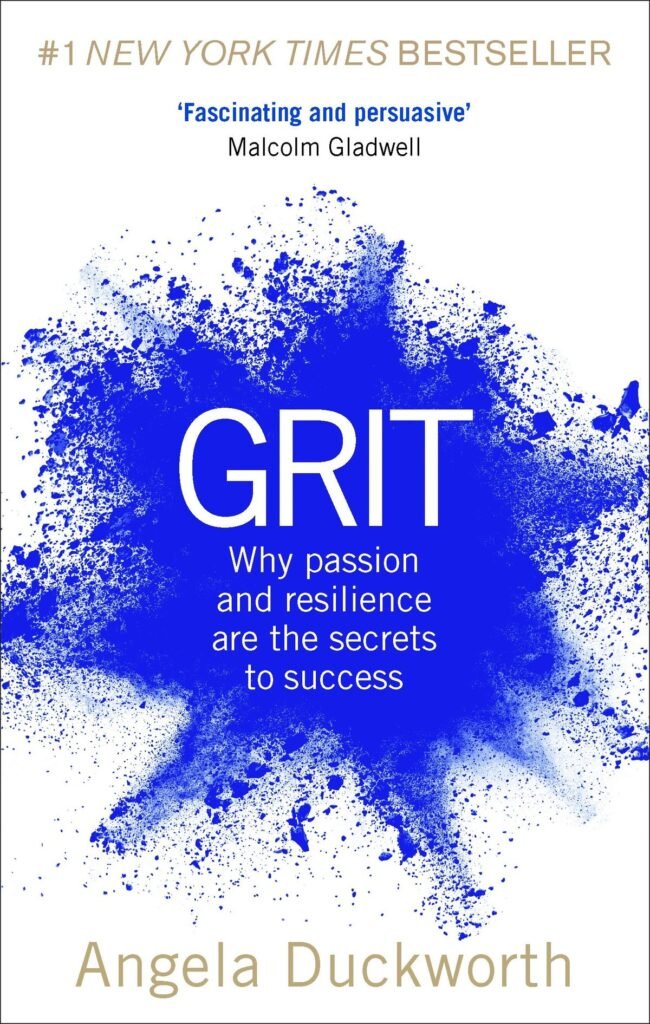
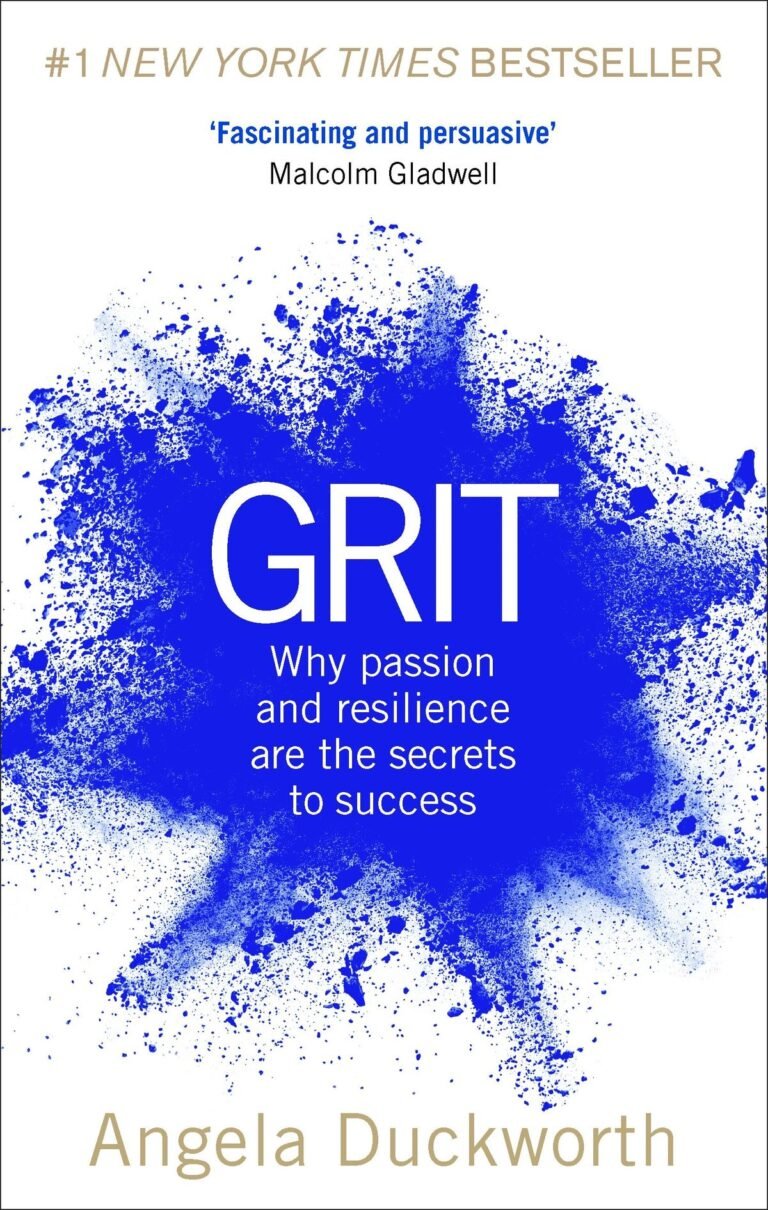
Grit
Watch Prashant Sir break down the key ideas, frameworks, and research behind Duckworth’s landmark work on passion and perseverance.
Why Read Grit?
Grit arrives at one of the most persistent questions in human development — why do some people achieve more than their apparent talent predicts? — and answers it with a decade of rigorous research and a concept so intuitive it is easy to underestimate: the combination of passion and long-term perseverance that Duckworth calls grit is a better predictor of exceptional achievement than talent, intelligence, or any measurable fixed attribute.
Duckworth began her research career after leaving a demanding consulting job to teach seventh-grade maths in New York City public schools. What struck her was not that her brightest students performed best — it was that the relationship between measured intelligence and actual achievement was far messier than expected. Some of her highest-IQ students were underperforming; some of her most determined students were outperforming every prediction.
The answer — grit, defined as passion and perseverance for long-term goals — emerged from studies conducted across the United States Military Academy at West Point, the National Spelling Bee, the Chicago public school system, and workplaces ranging from sales organisations to the Special Forces. In every context, grit predicted achievement better than talent.
Who Should Read This
This is essential reading for every competitive exam aspirant, student, and professional who has ever wondered whether they have “what it takes.” CAT and MBA candidates preparing for one of the most demanding selection processes in Indian higher education will find in Duckworth’s framework both a reframing of what preparation requires and a practical methodology for building the specific qualities that long-term challenging goals demand.
Key Takeaways from Grit
Talent multiplied by effort equals skill; skill multiplied by effort equals achievement. Effort counts twice — a less talented person who works harder will, over time, outperform a more talented person who works less.
Passion is not the excitement of novelty — it is a compass direction. The passion component of grit is a sustained, deepening engagement with the same domain over years, not a feeling of romantic enthusiasm at the start.
Deliberate practice — focused, feedback-informed work at the edge of your current ability — is the mechanism through which effort produces real skill. The grittiest people work longer at the right edge of their ability.
Grit can be grown. Duckworth identifies four cultivatable assets: interest (discover through exploration), practice (choose deliberately), purpose (connect to something beyond yourself), and hope (believe effort makes a difference).
Key Ideas in Grit
Duckworth opens with the talent equation that organises the book’s entire argument: talent × effort = skill; skill × effort = achievement. The structure of this equation is the book’s central claim. Talent — the rate at which skills improve when effort is applied — matters. But effort appears twice: once in the conversion of talent into skill, and once in the conversion of skill into achievement. A person with twice the talent but half the effort will be outperformed by a person with half the talent and twice the effort, because effort’s double appearance in the equation compensates for its apparent deficit.
The grit research began at West Point, where the military academy’s Whole Candidate Score had consistently failed to predict who would survive Beast Barracks — the brutal first summer of training. Duckworth administered her Grit Scale and found that grit predicted Beast Barracks completion better than the Whole Candidate Score, physical fitness, and every other available measure. The finding has since been replicated at the Spelling Bee, in Chicago public schools, and across professional domains from sales to journalism.
The concept of passion in Duckworth’s framework requires careful definition. Passion, as she uses it, is not the romantic excitement of a new interest — it is the sustained, deepening engagement with a single domain over years or decades. Gritty people are not people who found their passion; they are people who cultivated it through years of exploration and deepening engagement.
The deliberate practice section draws on Anders Ericsson’s research on expert performance. World-class performers are characterised not by the total volume of their practice but by its quality — by the degree to which they have submitted themselves, day after day, to the specific discomfort of working at their current limits rather than the comfortable repetition of what they can already do.
Core Frameworks in Grit
Duckworth builds five precise, actionable frameworks for understanding and developing grit.
Core Arguments
Duckworth builds her case through four interlocking arguments that challenge the most widely held assumptions about achievement.
Duckworth’s foundational argument targets what she calls the “naturalness bias” — the tendency to be more impressed by apparently effortless achievement than by achievement that is clearly the product of hard work. Research shows that identical performance is consistently rated as more impressive when it appears to have required less effort. This bias actively discourages effort by teaching people that difficulty is evidence of inadequate talent rather than the normal conditions of skill development.
The popular career advice to “follow your passion” implies passion is a pre-existing condition you discover by listening to your inner voice. Duckworth’s research shows that interests emerge through interaction with the world, not introspection; they deepen through practice and increasing competence; and they typically develop slowly over years. Telling young people to follow their passion without teaching them how interests develop can produce paralysis — the inability to commit because nothing yet feels like a “passion” in the romantic sense the advice implies.
Deliberate practice is not enjoyable — it is, by definition, working at the edge of current ability, which means regularly failing. Yet gritty people do more of it. The resolution is not that gritty people enjoy deliberate practice more. What they have is a relationship to the meaning of that practice strong enough to sustain commitment through discomfort. Purpose converts practice from an ordeal to an investment — and that conversion is what makes sustained deliberate practice possible.
Organisations — teams, schools, businesses, military units — have cultures that are either grit-fostering or grit-eroding, and those cultures are set primarily by the example of their leaders. A coach who models relentless work and absorbs setbacks without despair creates a culture in which grit is the norm. Grit cannot be taught through a workshop or a poster; it must be demonstrated, demanded, and rewarded by the people at the top of every hierarchy.
Critical Analysis
A balanced assessment of Grit’s strengths as a research-driven framework and the limitations its critics have identified.
Duckworth’s evidence base spans West Point, spelling bees, sales organisations, special forces, and Chicago public schools. The consistency of the grit finding across such diverse contexts makes a compelling case for the concept’s generality.
The formulation talent × effort = skill; skill × effort = achievement is unusually precise for a popular psychology book. It locates talent as a rate multiplier that effort compensates for over time — making the argument testable and resistant to the most obvious objections.
The four psychological assets of grit — interest, practice, purpose, hope — are specific enough to be individually addressed. A reader can identify their most significant constraint and address it specifically, rather than concluding only that they should “be grittier.”
Critics argue the Grit Scale measures something very similar to conscientiousness — an established Big Five personality trait — and that grit may be a rebranding of an existing construct rather than a genuinely new one. Duckworth has engaged with this criticism, but the debate is ongoing.
Like the mindset framework, grit research has been criticised for locating the primary determinant of achievement in individual psychology rather than structural conditions. A student from a disadvantaged background who develops exceptional grit may still achieve less than a student from an advantaged background with average grit.
The book’s prescriptions for developing passion — explore broadly, follow curiosity — are sound in principle but underspecified in practice. The guidance on how to move from exploration to commitment, and how to maintain engagement through the periods of plateau that characterise all long-term skill development, is less developed than the case for why passion matters.
Impact & Influence
Cultural Reach: Grit was published in May 2016 and spent weeks on the New York Times bestseller list, selling over a million copies in its first year and more than 3 million copies worldwide. It has been translated into over 40 languages. Duckworth’s 2013 TED talk — “The Key to Success? Grit” — had already accumulated over 25 million views, establishing her as one of the most visible public psychologists in the world.
Educational Policy: The concept’s penetration into education has been substantial and at times contested. Schools began posting grit posters, teaching grit lessons, and incorporating perseverance metrics into assessments. Duckworth herself has expressed ambivalence about some of these implementations, noting that grit cannot be taught through a worksheet without the cultural and pedagogical conditions that foster genuine perseverance.
Relationship to Mindset: The book’s most important intellectual context is its relationship to Carol Dweck’s Mindset. The two books are complementary frameworks: Dweck identifies the belief system that makes sustained effort possible (the growth mindset); Duckworth identifies the behavioural and motivational architecture of that sustained effort (grit’s four components). The growth mindset is the foundation without which grit cannot function; grit is the developed capacity that the growth mindset enables but does not by itself produce.
Relevance for Indian Competitive Exam Aspirants: The CAT preparation journey — typically twelve to eighteen months of sustained study, punctuated by setbacks and requiring the maintenance of effort through plateaus — is as close to a laboratory test of grit as a civilian academic context provides. The students who pass with high scores are not always those who started with the highest aptitude; they are reliably those who maintained the combination of deliberate practice and sustained directional commitment that the book describes as grit.
Love This Book? Master Every Book.
Stop struggling with reading comprehension. Our proven system transforms how you read—whether for CAT, GRE, GMAT, SAT, or personal growth.
Best Quotes from Grit
Enthusiasm is common. Endurance is rare.
Grit is living life like it’s a marathon, not a sprint.
Our potential is one thing. What we do with it is quite another.
At its core, the idea of grit is simple: talent is not destiny. Effort matters tremendously.
Interests are not discovered through introspection. Instead, interests are triggered by interactions with the outside world.
Test Your Understanding
Think you’ve mastered Grit? Challenge yourself with 15 questions on the talent equation, deliberate practice, and key frameworks. Score 80%+ to prove your mastery.
Grit FAQ
What is Grit about?
Grit argues that the combination of passion (sustained interest in a long-term goal) and perseverance (the determination to pursue that goal through difficulty and setback) — which Duckworth calls grit — is a better predictor of exceptional achievement than talent, intelligence, or any fixed attribute. The book presents research evidence across diverse domains, develops a precise framework for what grit is and how it works, and provides specific, evidence-based guidance for cultivating each of its components.
Is Grit useful for competitive exam preparation like CAT or GRE?
Directly and specifically. The CAT preparation journey is among the most demanding test cases of grit available in civilian academic life — it requires sustained effort over a long horizon, the maintenance of motivation through setbacks and plateaus, and the development of skills that do not respond quickly to effort. Duckworth’s framework — particularly the distinction between deliberate and ordinary practice, the importance of connecting effort to purpose, and the role of hope as the foundation of persistence — is a practical methodology for the specific psychological demands of high-stakes, long-horizon preparation.
What is the most important idea in Grit?
The talent equation — talent × effort = skill; skill × effort = achievement — is the book’s most structurally important contribution. It resolves the apparent contradiction between “talent matters” and “effort matters” by assigning each a specific role: talent determines the rate of skill development; effort determines whether skills develop at all and whether they produce achievement. The double appearance of effort in the equation is the mathematical expression of grit’s advantage over talent.
How does grit relate to passion? Aren’t they different things?
In Duckworth’s framework, passion is one of grit’s two components — but she defines it differently from its common usage. Passion here does not mean romantic excitement or inspiration at the start of a new interest. It means the sustained, deepening engagement with a single domain over time — the compass direction that keeps you returning to the same problems and goals over years. Most people confuse the excitement of novelty with passion. Genuine passion develops slowly through exploration and deepening commitment, and it is this sustained directional quality that constitutes the passion component of grit.
How does Grit relate to Carol Dweck’s Mindset?
The two books are best understood as complementary frameworks. Dweck’s growth mindset is the psychological foundation that makes grit possible: the belief that effort produces development is the precondition without which sustained effort cannot be maintained through difficulty. Duckworth’s grit is the developed capacity that the growth mindset enables — the specific behavioural and motivational architecture of sustained, passion-directed, deliberately practised effort toward long-term goals. You cannot be gritty without a growth mindset; you can have a growth mindset without yet having developed grit. The growth mindset is the foundation; grit is what you build on it.








