

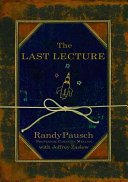
The Last Lecture
Watch Prashant Sir break down Randy Pausch’s landmark talk — the childhood dreams, the brick walls, the head fakes, and the specific wisdom a dying professor left for three children who were too young to understand it at the time.
Why Read The Last Lecture?
The Last Lecture began as a ninety-minute talk that Randy Pausch, a Carnegie Mellon computer science professor, delivered in September 2007 after being diagnosed with terminal pancreatic cancer. Carnegie Mellon’s “Last Lecture” series invited faculty to imagine a final address to students — what would you say if this were your last chance to say it? For Pausch, the question was not hypothetical. He had months to live. The lecture he delivered — about childhood dreams, about living, about enabling others — became one of the most widely viewed talks in the history of the internet, and this book is its extension and its permanent form.
Co-written with Wall Street Journal columnist Jeffrey Zaslow, the book is structured loosely around three themes: the specific childhood dreams Pausch held and pursued; the lessons about living that his academic and personal life produced; and the specific wisdom he wanted to leave for his three young children, who would grow up without him. The book is addressed, ultimately, to those children — a father’s attempt to compress everything he would have taught them over a lifetime into a document they could carry into their lives without him.
What separates The Last Lecture from other deathbed wisdom books is Pausch’s specific temperament. Where Morrie Schwartz thought in terms of relationships, culture, and love, Randy Pausch was an engineer and computer scientist who thought in terms of problems, systems, and achievability. His wisdom is practical, optimistic, and structured — less philosophical, more immediately actionable — reflecting a man whose core conviction was that almost any dream is achievable if you are willing to do the work and accept the feedback.
Who Should Read This
This is among the most accessible and immediately uplifting books in the database. MBA and CAT candidates preparing for personal interview questions about childhood ambitions, overcoming obstacles, and what you want to leave behind will find in Pausch’s framework perspectives both personally resonant and intellectually substantive. Beyond preparation, it is essential reading for anyone at a moment of professional or personal transition, for educators thinking about what they are actually teaching, and for anyone who has ever let a childhood dream go without asking whether it had to.
Key Takeaways from The Last Lecture
Brick walls are not there to stop you — they are there to show you how badly you want something. Every obstacle in the pursuit of a dream is a filter, not a barrier. It eliminates the people who wanted the outcome without the work. For the person who genuinely wants it, the brick wall is simply the next problem to solve — and solving it is part of what makes the achievement worth having.
Experience is what you get when you did not get what you wanted — and it is often the most valuable thing you will ever receive. The outcomes you did not achieve are not merely losses; they are the raw material of the self-knowledge and resilience that make the next attempt more effective. The person who has never failed at something significant has never learned what they are capable of when things are difficult.
The best feedback you will ever receive is the feedback that is hardest to hear. Pausch’s football coach story is the book’s most important teaching: when someone stops giving you hard feedback, they have given up on you. The feedback is the investment. When it stops, so has the belief that you can improve.
Everything you do is a message to someone — and the most important messages are the ones you leave in your behaviour, not your words. Pausch is aware his children are too young to receive his words now. The book is therefore not a communication but a deposit — something laid down for people who will only be able to receive it later. The awareness that your actions outlast your presence is both a consolation and an obligation.
Key Ideas in The Last Lecture
The book opens with its most honest declaration: Pausch is not giving a last lecture about dying. He is giving a last lecture about living — specifically about the specific way of living that produced the specific life he is proud to have led. The terminal diagnosis is not the subject; it is the condition of seriousness that strips away the hedging and deferral that characterise most professional discourse and replaces them with the concentrated honesty of a person who has run out of time to waste.
The childhood dreams section is the book’s most distinctive structural feature. Pausch does not begin with wisdom — he begins with specificity: the precise dreams he held as a child (Captain Kirk, zero gravity, stuffed animals, being a Disney Imagineer, writing an entry in the World Book Encyclopedia) and the precise ways each was either achieved, redirected, or used as a platform for something else. The specificity is the point: Pausch’s argument about achievability is grounded in the documented history of one person’s actual attempts to pursue concrete dreams across a specific life. The stories are both evidence and instruction.
The central pedagogical framework is what Pausch calls “head fakes” — indirect learning, in which the stated objective is a vehicle for the real objective. His virtual reality course at Carnegie Mellon was ostensibly about building virtual worlds; it was actually about learning to work in teams, give feedback, receive criticism, and iterate rapidly under pressure. The best education, Pausch argues, is the education that teaches the essential things through the irresistible things — using the thing people want to learn as the vehicle for the things they need to learn.
The book’s final section — addressed most directly to his children — is its most emotionally concentrated passage. Pausch knows he will not be there for the specific moments that matter: the graduations, the heartbreaks, the career choices, the children of his own children. What he can leave is a record: of who he was, what he valued, how he approached problems, what he found funny, what he believed. The book is that record — and the awareness of its function gives the final chapters a weight that the earlier, more anecdotal sections do not carry in the same way.
Pausch’s Key Teachings
Across the lecture and book, Pausch addresses six subjects — obstacles, feedback, failure, indirect learning, enabling others, and gratitude — each grounded in specific stories from a specific life, and each more practically actionable than the genre of wisdom literature usually manages to be.
Core Arguments
Pausch advances four interconnected arguments — about the achievability of childhood dreams, about high standards as a form of respect, about actions as messages to those who come after us, and about the head fake as a complete philosophy of education — each grounded in specific documented experience rather than motivational assertion.
Pausch’s most sustained and most distinctive argument is that childhood dreams are more achievable than most people believe — and that the primary obstacle to their achievement is not external circumstance but the self-limiting interpretations people apply to the obstacles they encounter. This is not the same as “anything is possible if you believe hard enough” — it is a more demanding and more honest claim: that specific dreams, pursued with specific commitment, resourcefulness, and willingness to accept feedback, are achievable for most people who genuinely try. The evidence is Pausch’s own life — a series of improbable achievements documented in enough specific detail to constitute genuine evidence rather than inspiration.
Pausch’s most institutionally relevant argument concerns the relationship between demanding feedback and genuine investment in another person’s development. Most institutions — educational, professional, familial — systematically underprovide honest feedback because honest feedback is uncomfortable to give and receive, and because the social costs of giving it are more immediately visible than the developmental costs of withholding it. Pausch argues that this withholding is a form of disrespect — a signal that the person withholding the feedback has given up on the recipient’s capacity to improve. The implication for educators, managers, and mentors is direct: if you are not giving someone your hardest feedback, you are not giving them your best.
Pausch’s awareness that his children will grow up without him gives the book its most distinctive argumentative register: the claim that what you do is a message to the people who come after you, regardless of whether they are present to receive it at the time. The book itself is the demonstration of this argument — a deposit made for recipients who will only be able to access it later. The implication for those not facing a terminal diagnosis is to ask what messages they are currently depositing in their behaviour, their choices, and their relationships — and whether those messages are the ones they want to leave.
Pausch’s concept of the head fake constitutes a complete, if compressed, philosophy of education: that the most effective learning occurs when the learner is pursuing something they genuinely want and receives the essential lessons as a consequence of that pursuit. This is not a new idea — Dewey’s experiential learning, Montessori’s child-directed education, and the case study method in business education all reflect versions of the same insight — but Pausch articulates it from inside a specific, documented teaching practice in a way that makes it concrete rather than theoretical. For MBA candidates, the head fake framework is the most intellectually distinguished answer available to any interview question about how people develop and how leaders teach.
Critical Analysis
A balanced assessment examining the book’s grounding in specific dreams rather than abstract values, the analytical clarity of the engineer’s temperament, and the emotional power of the dual audience, alongside its optimism assumption about structural opportunity, the co-authorship question, and the inherent depth-versus-breadth trade-off of a book rooted in a lecture.
Pausch’s insistence on beginning with specific childhood dreams — not abstract values or philosophical principles — grounds the book’s argument in documented, verifiable experience rather than motivational assertion. The specificity is both intellectually honest and rhetorically effective: you believe him because he is talking about Captain Kirk and stuffed animals, not about “pursuing excellence” or “following your passion.”
Pausch’s background as a computer scientist gives the book an analytical clarity and practical orientation that distinguishes it from most wisdom literature. His teachings are framed as solutions to problems, feedback loops to be optimised, and systems to be designed — which makes them more immediately actionable and less susceptible to the vagueness that afflicts inspirational literature.
The book works simultaneously as a lecture to a general audience and as a letter to three specific children. This dual address gives it an emotional register unavailable to books addressed to either audience alone — the specificity of the parental address gives the general wisdom an emotional weight that abstract principle cannot carry.
Pausch’s framework — brick walls as filters, experience as the consolation of failure, dreams as achievable through commitment — rests on an assumption of baseline opportunity and agency that is not universally available. His own life was conducted in conditions — educational access, professional mobility, a culture supporting individual ambition — that not all readers share. The book does not acknowledge structural barriers to dream-achievement, which is its most significant blind spot.
The book was co-written with Jeffrey Zaslow, who helped shape the lecture material into narrative form. The voice is consistently warm and specific enough to feel like Pausch’s own — but the collaborative authorship means that the book’s literary qualities are partly Zaslow’s achievement. This is not a criticism of the book’s authenticity but a reminder that the voice on the page is a constructed voice, as all memoir voices are.
The book covers a large number of themes — childhood dreams, obstacles, feedback, gratitude, enabling others, legacy — with the breadth of a lecture rather than the depth of a sustained argument. Each theme is handled with insight and specific illustration, but none is developed to the full depth a book devoted entirely to it could achieve. Readers seeking deeper treatment of any individual theme will need to go elsewhere.
Literary & Cultural Impact
From Campus Lecture to Global Phenomenon: The lecture that became The Last Lecture was delivered at Carnegie Mellon University on 18 September 2007. A recording was posted online and within weeks had been viewed millions of times — eventually reaching over 20 million views on YouTube alone, making it one of the most widely watched academic talks in internet history. Carnegie Mellon’s servers crashed repeatedly under the demand. Oprah Winfrey devoted a programme to it. The Wall Street Journal ran a front-page story. Pausch appeared on national television multiple times before the book based on the lecture was published.
The Book’s Reach: The Last Lecture was published in April 2008 and immediately became the number one bestseller on the New York Times list. It has since sold over 5 million copies in the United States and over 6 million worldwide, been translated into 48 languages, and remained continuously in print. Pausch died on 25 July 2008, ten months after delivering the lecture — having lived, as he had said he intended to, with the specific fullness and deliberateness that his diagnosis made possible.
Educational Adoption: The book became required or recommended reading in business schools, medical schools, computer science departments, and leadership development programmes globally — not primarily for its content but for the quality of reflection it provokes about purpose, legacy, and the relationship between professional achievement and personal meaning. Educators found it uniquely effective for the conversations it opened rather than the conclusions it delivered. In the Indian educational context, the brick wall metaphor in particular has entered the vocabulary of competitive exam preparation culture, where the obstacles between aspiration and achievement are both numerous and specific.
The Carnegie Mellon Legacy: The Building Virtual Worlds course that Pausch ran — described in the book as a pedagogical laboratory for the head fake approach — continued after his death and has influenced educational design at multiple institutions. The Randy Pausch Memorial Footbridge at Carnegie Mellon, connecting the computer science and arts buildings, is a permanent reminder of his argument about the creative intersection of those disciplines — and of the specific way he believed technology and humanity were most powerfully combined.
Love This Book? Master Every Book.
Stop struggling with reading comprehension. Our proven system transforms how you read—whether for CAT, GRE, GMAT, SAT, or personal growth.
Best Quotes from The Last Lecture
The brick walls are there for a reason. The brick walls are not there to keep us out. The brick walls are there to give us a chance to show how badly we want something.
Experience is what you get when you didn’t get what you wanted.
We cannot change the cards we are dealt, just how we play the hand.
When you’re screwing up and nobody says anything to you anymore, that means they’ve given up on you.
It’s not about how to achieve your dreams. It’s about how to live your life. If you lead your life the right way, the karma will take care of itself. The dreams will come to you.
Test Your Understanding
Think you’ve mastered The Last Lecture? Challenge yourself with 15 questions on brick walls, head fakes, feedback as investment, childhood dreams, and Pausch’s legacy argument. Score 80%+ to prove your mastery.
The Last Lecture FAQ
What is The Last Lecture about?
It is the book version of a lecture delivered by Carnegie Mellon computer science professor Randy Pausch after being diagnosed with terminal pancreatic cancer. The lecture — and the book — is not about dying but about achieving childhood dreams, overcoming obstacles, and living fully. It covers the specific dreams Pausch held and pursued, the lessons about working with others and receiving feedback that his professional and personal life produced, and the wisdom he wanted to leave for his three young children who would grow up without him.
Is it useful for MBA and CAT preparation?
Yes — particularly for personal interview preparation. Questions about childhood ambitions, how you have handled failure or obstacles, what you would do differently, what you want to leave behind, and how you think about the relationship between professional achievement and personal meaning are standard MBA PI territory. Pausch’s specific frameworks — brick walls as filters rather than barriers, experience as the consolation of failure, feedback as investment rather than criticism — provide unusually concrete and memorable answers to these questions.
What is Pausch’s most important teaching?
The brick wall insight — that obstacles are filters that eliminate those who wanted the outcome without the commitment, and that the appropriate response is to treat the obstacle as the next problem in a sequence rather than as a signal to stop — is both the most quoted and the most structurally important teaching in the book. It transforms the psychological relationship to failure from defeat to information, which is the single most consistently valuable orientation available to anyone pursuing a significant goal.
How does The Last Lecture compare to Tuesdays with Morrie?
Both are deathbed wisdom books from the same era, and both use a dying person’s clarity to examine how the living might live better. The key difference is temperament and framework: Morrie Schwartz was a sociologist and humanist whose wisdom was primarily relational — about love, community, and what we owe each other. Randy Pausch was a computer scientist and engineer whose wisdom was primarily operational — about problem-solving, feedback, achievability, and what we owe ourselves in the pursuit of our own potential. Tuesdays with Morrie is the more philosophically rich book; The Last Lecture is the more practically actionable one. Both are essential; together they constitute a complete framework for thinking about how to live.
What is the “head fake” concept and why does it matter?
The head fake is Pausch’s term for indirect learning — the pedagogical technique of using something people genuinely want to learn as a vehicle for teaching something they need to learn but might resist if taught directly. His virtual reality course was ostensibly about building virtual worlds; it was actually about teamwork, feedback, and iteration. For MBA candidates specifically, the head fake concept is immediately applicable to any question about teaching, mentoring, or developing others — it is a more specific and more intellectually interesting answer than “lead by example,” and it reflects a genuine philosophy of education that distinguishes candidates who have thought seriously about how people develop.








