

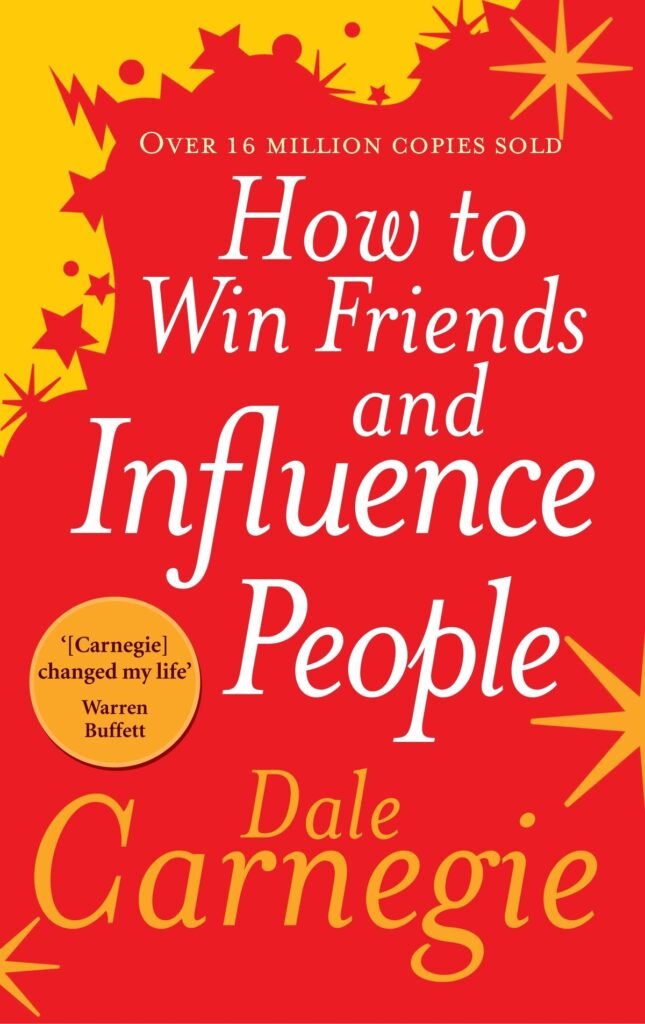
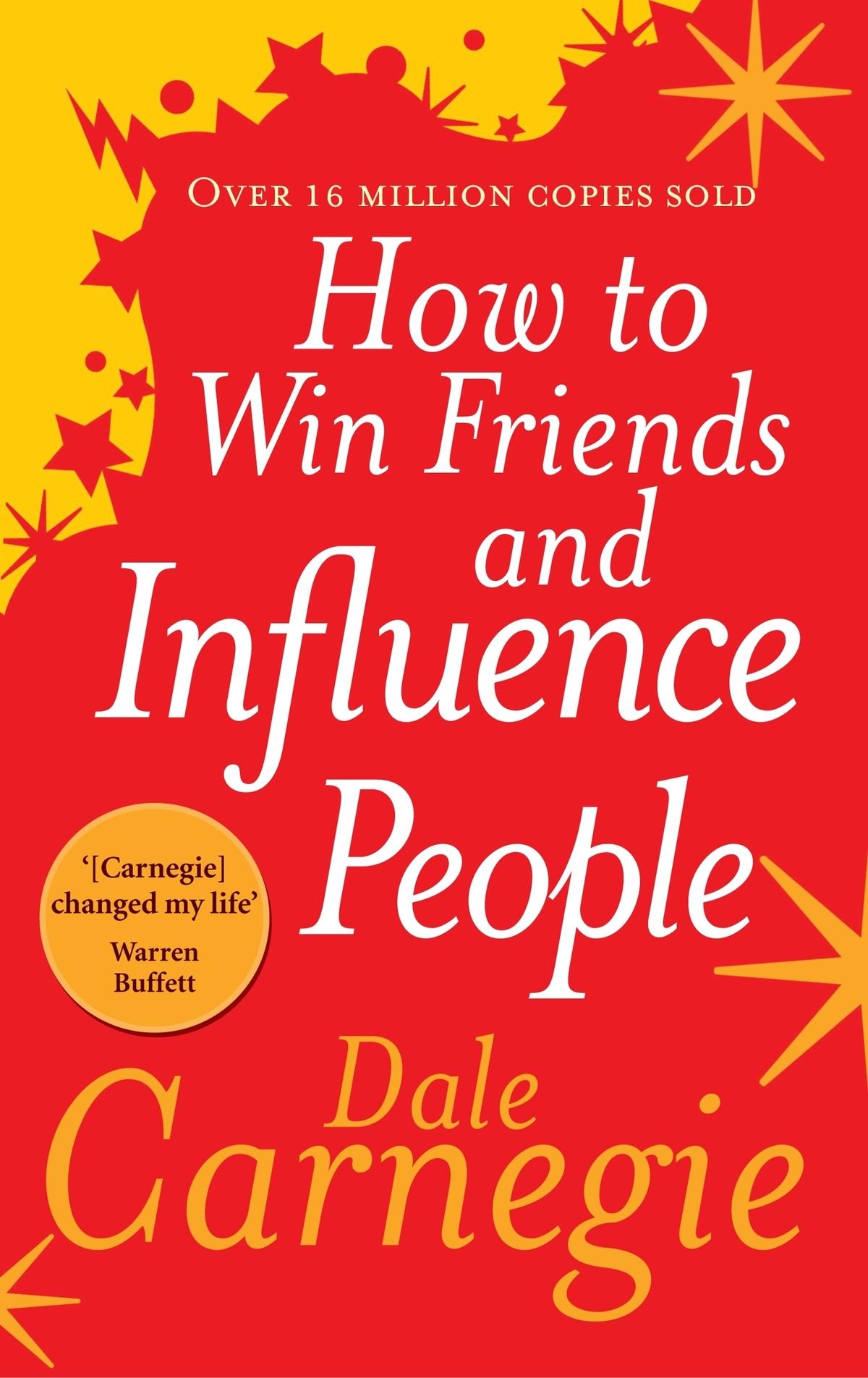
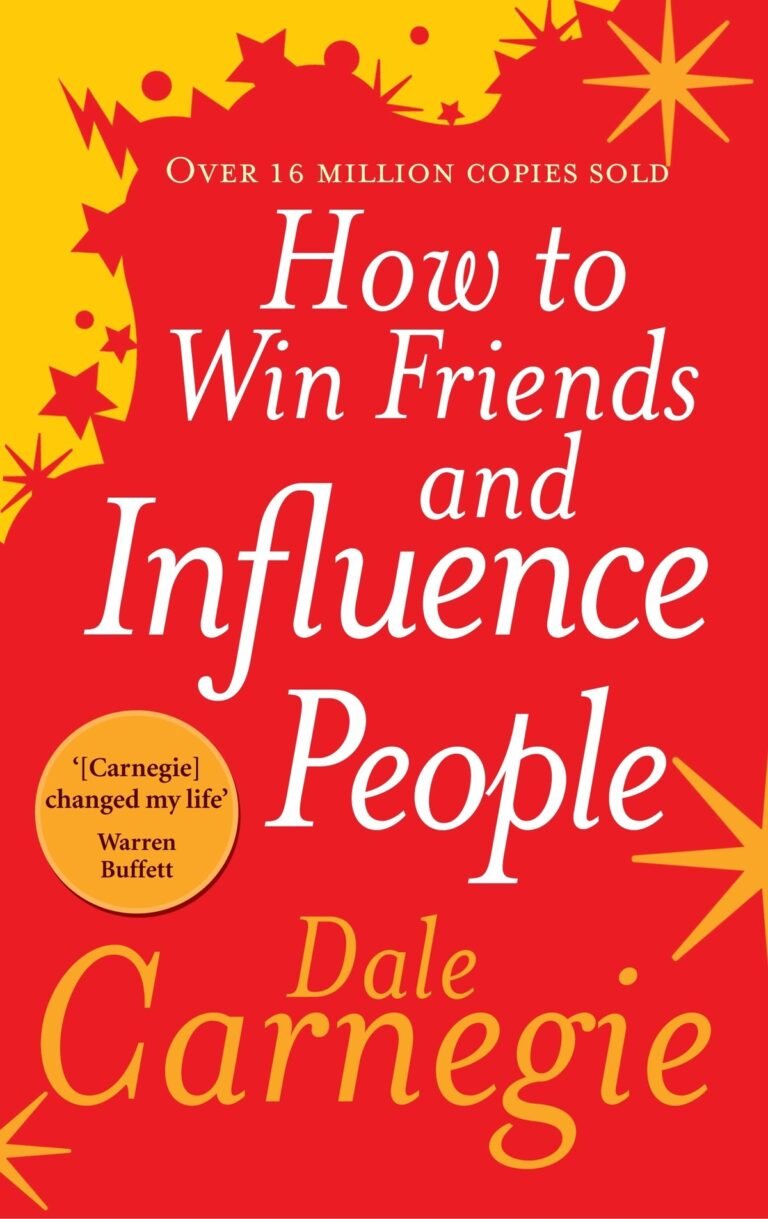
How to Win Friends and Influence People
Watch Prashant Sir break down Carnegie’s founding principles — why criticism never works, the power of genuine interest, and why this 1936 classic remains the most practically useful guide to interpersonal effectiveness ever written.
Why Read How to Win Friends and Influence People?
How to Win Friends and Influence People is the founding document of the modern self-help genre — and the book that most of its descendants have been trying, with mixed success, to either replicate or transcend. Dale Carnegie published it in 1936 and it has not been out of print since. Over 30 million copies have been sold in more than thirty languages. The reason it endures is not nostalgia but accuracy: Carnegie understood something fundamental about how human beings respond to each other — something so consistent across cultures, eras, and professional contexts that nearly ninety years of social change has not invalidated a single core principle.
The book is built on a deceptively simple premise: that success in professional and personal life depends less on technical skill than on the ability to understand, engage, and influence other people — and that this ability can be learned. Carnegie was not a psychologist or an academic; he was a trainer of adults who spent decades observing what actually worked when people tried to change minds, resolve conflicts, build relationships, and lead others. The book is the distillation of that observation — practical, anecdote-driven, and grounded in genuine respect for the complexity of human psychology.
The principles Carnegie articulates — do not criticise, condemn, or complain; give honest and sincere appreciation; arouse in the other person an eager want; become genuinely interested in other people — are not manipulation techniques. Carnegie’s most important insight is that you cannot fake interest, appreciation, or respect over any sustained period — the techniques work because they are expressions of a genuine orientation toward other people, not because they are clever social tactics.
Who Should Read This
This is the most accessible entry point into serious thinking about interpersonal effectiveness — and one of the most immediately applicable books in the database. CAT and MBA candidates preparing for group discussions and personal interviews will find it invaluable: the ability to make people feel heard, to present disagreement without triggering defensiveness, and to influence without coercion are exactly the capabilities that distinguish strong GD/PI performers from technically competent but interpersonally clumsy ones. Beyond preparation, it belongs on the reading list of every person who works with other people — which is to say, everyone.
Key Takeaways from How to Win Friends
The deepest craving of human nature is the desire to feel important — and the person who genuinely satisfies that craving will never lack for friends or influence. People are primarily motivated not by logic or self-interest but by the desire to feel valued, respected, and significant. The leader, salesperson, or friend who understands this and acts on it — genuinely, not manipulatively — has access to a form of influence that no argument or incentive can match.
Criticism never produces the change it seeks — it produces defensiveness, resentment, and the hardening of the position it aimed to soften. Carnegie’s most counter-intuitive principle is that the fastest way to change someone’s behaviour is almost never to tell them what they are doing wrong. People do not respond to criticism by updating their self-image; they respond by defending it.
The most effective conversationalist is not the most articulate speaker — it is the most attentive listener. People who feel genuinely heard are more persuadable, more cooperative, and more positively disposed toward the person who listened to them than toward any person who spoke brilliantly at them. The fastest route to influence runs through the other person’s experience of being understood.
To influence someone, begin from their perspective, not yours. Carnegie’s principle of “arousing an eager want” — framing every request in terms of the other person’s interests and desires rather than your own — is not manipulation but translation. The same request, framed in terms of your needs, creates resistance; framed in terms of the other person’s interests, creates alignment. This is the core skill of every effective leader, salesperson, and negotiator.
Key Ideas in How to Win Friends and Influence People
Carnegie opens with a framing observation that sets the book’s tone for everything that follows: criticism is futile. Not merely unhelpful — futile. He cites documented psychological research showing that people virtually never change their fundamental self-assessment in response to external criticism. The book’s first and most important lesson is that the model of human behaviour implicit in most management, parenting, and relationship advice — that people change when they are told what is wrong with them — is empirically incorrect. Carnegie’s book is, from the first page, a systematic replacement of that model with a more accurate one.
The book’s central framework rests on Carnegie’s observation that human beings have a small number of deep, consistent psychological needs. The most fundamental, which he borrows from John Dewey, is the desire to feel important — to be recognised, valued, and significant in the eyes of others. Every major principle in the book is, in some sense, a specific application of this insight. The person who habitually and genuinely satisfies this need in others will be trusted, liked, and followed — not because they have deployed a technique but because they have given people something they desperately want and rarely receive.
The distinction between sincere and flattering appreciation is Carnegie’s most important nuance. Carnegie is explicit: flattery is hollow and detectable; sincere appreciation requires actually looking for what is genuinely good in the other person and expressing it specifically. The skill is not in the expression — it is in the discipline of attention required to find the real thing. Most people are too absorbed in their own concerns to notice what is genuinely admirable in the people around them. Carnegie argues that the habit of looking — really looking — for what is good in others is both a practical skill and a character-building practice.
The book’s second half — on winning people to your way of thinking and on becoming an effective leader — addresses the specific challenge of changing minds and directing behaviour without triggering resistance. Carnegie’s principles here are psychologically sophisticated: show respect for the other person’s opinion; if you are wrong, admit it quickly and emphatically; begin in a friendly way; get the other person saying “yes” immediately — since a mind that has begun agreeing tends to continue agreeing. These are not tricks. They are accurate descriptions of how human psychology actually works.
Carnegie’s Core Frameworks
Carnegie organises his principles into four practical frameworks — for handling people, building rapport, influencing thinking, and leading without offence — unified by a fifth meta-principle about the nature of genuine versus performed interest that explains why the other four work when authentic and fail when not.
Core Arguments
Carnegie advances four interconnected arguments — against the effectiveness of criticism, for the primacy of relationship over logic in persuasion, for the strategic and ethical power of making others feel important, and for character as the foundation beneath every technique — each grounded in observation rather than theory.
Carnegie’s most foundational argument is not that criticism is unkind — it is that criticism does not work. People do not update their self-concept in response to external condemnation; they defend it. The person who criticises is satisfying their own need for the expression of superiority at the direct cost of the relationship’s trust and the other person’s willingness to change. This is not a moral argument against criticism — it is an empirical one. Criticism produces the opposite of its intended effect, and the evidence for this is so consistent across human contexts that Carnegie treats it as a psychological law rather than a preference. The implication for every manager, parent, teacher, and leader is immediate: the energy and social capital spent criticising is energy that could be directed toward the influence strategies that actually produce change.
Carnegie’s argument about persuasion runs directly counter to the educational emphasis on debate, logical argument, and the presentation of evidence. He argues that people are rarely persuaded by logic alone — that the decision to change a belief or behaviour is primarily emotional, and that emotional decisions are accessible through relationship, respect, and the experience of being heard rather than through the accumulation of evidence against a position the other person is emotionally invested in. This does not mean facts are irrelevant; it means facts must be presented in a relational context that has already established trust and respect, or they will be dismissed regardless of their quality. Carnegie’s most practically significant implication is that the person who wins arguments rarely achieves the change they sought, while the person who creates the conditions for the other party to reach the same conclusion independently achieves durable agreement — because people trust the conclusions they reach themselves more than those presented to them by others.
Carnegie’s most humanistically significant argument is that the capacity to make others feel genuinely important — not through flattery but through real attention, specific appreciation, and sincere interest — is both a practical skill and an ethical practice. It is a practical skill because it produces the trust and goodwill that are the foundation of all lasting influence. It is an ethical practice because it is, in effect, the recognition of other people’s full humanity — the acknowledgment that their desires, experiences, and aspirations matter. Carnegie does not make this ethical argument explicitly, but it runs beneath every practical principle he articulates. The person who genuinely develops the habit of making others feel valued is becoming, in the process, a more humane person — not merely a more effective one.
Carnegie’s most important implicit argument — the one that Covey later made explicit in his Character Ethic analysis — is that the principles in the book are not techniques that can be deployed without substance. A person who applies Carnegie’s principles without genuine interest in others, genuine appreciation for their qualities, and genuine respect for their dignity will be transparent and ultimately counterproductive. The principles work because they are expressions of a particular orientation toward people — one that, when authentic, is perceived as such, and when performed, is equally perceived as such. This is why the book is best understood not as a list of tactics but as a guide to developing a way of being with people that is both more effective and more human than the critical, self-focused alternative most people default to.
Critical Analysis
A balanced assessment examining the book’s empirical foundation, anecdote-based pedagogy, and accessible depth alongside the manipulation ambiguity at its title, its cultural specificity to 1930s American professional life, and its silence on structural power dynamics.
Carnegie’s principles are not derived from psychological theory — they are derived from decades of direct observation of what actually worked when people tried to influence, persuade, and lead others. This empirical grounding makes the book unusually durable: it describes human behaviour accurately enough that nearly ninety years of social and cultural change has not invalidated its core observations. The book’s longevity is itself the most powerful evidence for its accuracy.
Carnegie’s use of specific, named historical anecdotes — Lincoln’s practices, Roosevelt’s memory for names, specific techniques that worked in documented business situations — makes the principles concrete and memorable in ways that abstract psychological principles cannot match. The anecdotes are not decoration; they are the primary medium through which Carnegie makes his arguments.
The book is written at an accessible level that belies its psychological sophistication. The principles are stated simply enough to be immediately applicable and deep enough to reward years of practice. This combination — easy to understand, difficult to master — is the mark of a genuinely important framework rather than a superficial one.
The book’s title and some of its principles have been critiqued as a manual for social manipulation. Carnegie consistently insists on sincerity as the precondition of every principle’s effectiveness, but he does not fully resolve the tension between “become genuinely interested in others” as a character development and “become genuinely interested in others” as a strategy for increasing your influence. The distinction matters morally, and Carnegie does not fully make it.
Carnegie wrote primarily from and for American middle-class professional culture of the 1930s — a context in which the specific social dynamics he describes were those of that particular cultural moment. The principles translate reasonably well across cultures but require significant adaptation in contexts where hierarchy, face-saving, indirectness, and group identity operate differently from Carnegie’s assumed baseline.
Carnegie’s book treats interpersonal effectiveness as a function of individual skill and orientation — it does not engage with structural power dynamics, systemic barriers, or the ways in which social position, race, gender, and class affect what “working with people” actually means. This is a limitation of its era and genre, but it is worth naming: the book’s advice is most directly applicable to people who already have some baseline of social standing.
Literary & Cultural Impact
The Book That Created a Genre: How to Win Friends and Influence People was published in October 1936 — initially in an edition of 5,000 copies — and within a year had sold a million copies. It remained on bestseller lists for years, sold over 5 million copies in its first decade, and has continued selling at a rate that has kept it continuously in print for nearly nine decades. Over 30 million copies have been sold worldwide, in more than thirty languages. The book effectively created the modern self-help genre. Before Carnegie, books about personal success existed, but nothing with his combination of practical specificity, psychological accuracy, and narrative accessibility. Every major self-help book published since 1936 exists in a tradition Carnegie established.
The Intellectual Lineage: Covey’s 7 Habits explicitly engages with and critiques Carnegie’s approach — the Personality Ethic versus the Character Ethic. Cialdini’s Influence is, in significant ways, the academic version of Carnegie’s empirical observations. Sinek’s Start with Why extends Carnegie’s insight about human motivation into organisational design. Newport’s work on deep listening traces back to Carnegie’s attention principle. The entire canon of popular books on persuasion, influence, and interpersonal effectiveness stands on a foundation Carnegie laid.
The Training Legacy: The book’s most significant institutional legacy is the Dale Carnegie Training organisation — now operating in more than 80 countries and having trained over eight million people in interpersonal effectiveness, public speaking, and leadership. Carnegie himself was a trainer before he was a writer, and the book emerged from training content he had been developing since 1912. The organisation he built continues to deliver courses built around the book’s principles, making How to Win Friends not merely a book but the founding document of a global training industry.
Direct Relevance to the Indian GD/PI Context: The GD/PI process that determines MBA admission in India is among the most interpersonally demanding selection processes in the world — requiring candidates to simultaneously demonstrate intellectual competence, interpersonal sensitivity, the ability to build consensus, the capacity to influence without domination, and the skill to disagree without alienating. Carnegie’s principles — particularly on listening, on avoiding argument, and on making others feel heard and valued — map directly onto the specific capabilities that GD/PI evaluators assess. No other book in this database is more directly applicable to that specific challenge.
Love This Book? Master Every Book.
Stop struggling with reading comprehension. Our proven system transforms how you read—whether for CAT, GRE, GMAT, SAT, or personal growth.
Best Quotes from How to Win Friends
You can make more friends in two months by becoming interested in other people than you can in two years by trying to get other people interested in you.
Any fool can criticise, condemn, and complain — and most fools do. But it takes character and self-control to be understanding and forgiving.
Remember that a person’s name is to that person the sweetest and most important sound in any language.
The only way to get the best of an argument is to avoid it.
When dealing with people, remember you are not dealing with creatures of logic, but with creatures of emotion, driven by pride and vanity.

Test Your Understanding
Think you’ve mastered How to Win Friends and Influence People? Challenge yourself with 15 questions on Carnegie’s three fundamentals, the six ways to make people like you, the twelve persuasion principles, and the nine leadership practices. Score 80%+ to prove your mastery.
How to Win Friends FAQ
What is How to Win Friends and Influence People about?
It is a practical framework for interpersonal effectiveness — built on Carnegie’s decades of observation of what actually works when people try to influence, persuade, build relationships, and lead others. The book argues that success in professional and personal life depends less on technical skill than on the ability to understand and genuinely engage other people, and provides specific, psychologically grounded principles for developing that ability.
Is it useful for MBA and CAT preparation?
Directly and specifically so, particularly for GD/PI preparation. The book’s principles — on listening, on making others feel heard, on presenting disagreement without triggering defensiveness, on framing positions in terms of others’ interests — are exactly the interpersonal capabilities that distinguish strong GD/PI performers. The principle of avoiding argument and instead finding common ground is directly applicable to the group discussion context, where candidates who dominate and argue tend to score lower than those who build and synthesise.
What are the most important principles in the book?
The three most important are: don’t criticise (because criticism produces defensiveness rather than change); give sincere and specific appreciation (because the desire to feel valued is the deepest human need); and seek first to understand the other person’s perspective before advancing your own (because influence flows through understanding, not argument). These three together constitute a fundamentally different orientation toward other people — one that, when genuine rather than performed, transforms the quality of every professional and personal relationship.
Is the book still relevant or is it outdated?
The specific examples and some cultural references are dated — Carnegie writes from 1930s American professional culture. But the psychological principles are based on features of human nature that have not changed: the desire to feel important, the defensive response to criticism, the persuasive power of genuine interest and attention. These are not cultural artefacts — they are constants of human psychology, which is why the book is still being sold and cited nearly ninety years after publication.
Is the book manipulative?
Carnegie’s principles are not manipulation in the sense of exploiting people against their interests — they are techniques for genuine engagement that happen to produce influence as a side effect. Carnegie insists throughout that his principles work only when they are authentic expressions of real interest and real respect. A person who deploys them as a performance without the underlying orientation they require will be transparent, counterproductive, and eventually trusted by no one. The book is best understood not as a manual for social tactics but as a guide to developing a way of being with people that is both more effective and more human than the critical, self-focused alternative most people default to.








