

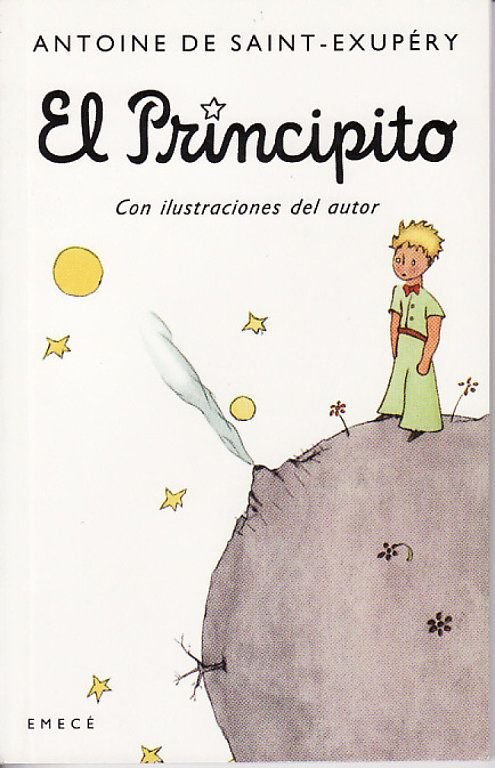
Why Read The Little Prince?
The Little Prince is the most widely translated French-language book in history and the third best-selling book ever published — yet it resists every category that publishing has tried to place it in. It is a children’s book that most children receive without fully understanding, and an adult book that most adults approach with embarrassment before realising it is speaking directly to them. Antoine de Saint-Exupéry wrote it in exile, in grief, and in the shadow of a war he would not survive — and every sentence carries that weight, disguised as lightness.
The story is narrated by a pilot who crashes in the Sahara Desert and meets a small boy — the Little Prince — who has fallen to Earth from his tiny home asteroid, Asteroid B-612. As the pilot works to repair his plane, the Little Prince tells him of his travels across neighbouring asteroids, each inhabited by a single adult consumed by a single absurdity. These encounters are not fantasy decoration — they are precise satirical portraits of the ways adults organise their lives around things that do not matter, at the cost of things that do.
The novel’s emotional core is the Little Prince’s relationship with his rose — a single flower on his asteroid, whom he loves and has tended. On Earth, he discovers a garden of five thousand roses identical in appearance to his own. The fox he befriends teaches him the crucial distinction: his rose is unique not because of what she is, but because of the time he has given her. “You become responsible, forever, for what you have tamed.” This single idea — that love is constituted by investment and attention, not by inherent qualities — is the novel’s philosophical heart.
Who Should Read This
This book works at every stage of life, but it delivers its fullest meaning to adults who have become too efficient, too serious, or too busy to notice what they have stopped seeing. For competitive exam students, the prose — clean, precise, deceptively simple — is ideal for practising close reading and tone analysis. For anyone navigating loss, grief, the demands of work, or the slow erosion of wonder, it is not merely recommended but necessary.
Key Takeaways from The Little Prince
What makes something precious is not its intrinsic quality but the time and care you have invested in it. The Little Prince’s rose is unique because he has watered her, sheltered her, listened to her, and worried about her. Saint-Exupéry’s argument is that love is not a feeling that precedes attention; it is a practice that produces it.
To tame something is to create a bond — and bonds carry permanent responsibility. The fox’s lesson is about the irreversible nature of genuine relationship. To truly know someone — to let them matter to you — is to accept that their welfare will always be your concern. Adults tend to avoid this. The Little Prince accepts it completely.
The most important things are invisible to ordinary sight. “It is only with the heart that one can see rightly; what is essential is invisible to the eye.” This is an epistemological claim: the instruments adults use to measure value — numbers, ownership, efficiency — are precisely the wrong instruments for measuring what actually matters.
Grief and love are inseparable — and that inseparability is the point. The novel ends in loss, deliberately. Saint-Exupéry offers reframing rather than consolation: the Little Prince’s departure is not abandonment but transformation. Loss, handled rightly, does not diminish the world — it populates it.
The Little Prince Plot Summary
The narrator — a pilot and the book’s first-person voice — opens with a childhood memory: at age six, he drew a picture of a boa constrictor digesting an elephant. Every adult he showed it to saw only a hat. He learned to abandon drawing and speak instead of “bridge, golf, politics, and neckties,” and so became a respectable grown-up. This opening is the novel’s thesis statement in miniature: adults are defined not by wisdom but by a trained incapacity to see.
Years later, the pilot crashes in the Sahara Desert with only enough water for eight days. On the first morning, he is woken by a small, serious, golden-haired boy who asks him, without preamble, to draw him a sheep. The boy is the Little Prince, who comes from Asteroid B-612 — a planet barely larger than a house, with three small volcanoes and a single, extraordinary rose. The Little Prince is matter-of-fact, curious, and entirely free of adult evasion. He asks direct questions and expects direct answers.
Over the days that follow, the Little Prince tells the pilot of his travels. He visited six asteroids before reaching Earth, each inhabited by a single adult embodying a specific form of spiritual emptiness. The king who commands the sun to set — but only when it is already about to set — represents those who dress compulsion as authority. The vain man who desires only admiration represents the self-referential loop of ego. The drunkard who drinks to forget his shame about drinking is trapped in a logic that has no exit. The businessman who owns the stars but can do nothing with them represents the reduction of wonder to possession. The lamplighter, who lights and extinguishes his lamp every minute because his orders have not changed as his planet speeded up, is the only one the Little Prince admires — because at least he is faithful to something beyond himself.
On Earth, the Little Prince meets a fox who asks to be tamed and teaches him the lesson about responsibility and the invisible. He discovers the garden of five thousand roses and understands, with the fox’s help, that his rose is unique not because she is beautiful but because she is his. The novel’s ending is handled with delicate restraint: the Little Prince, understanding that his body cannot travel back to his asteroid, allows a snake to bite him. He assures the pilot that his laughter will be in the stars — that what looks like dying is only the shedding of a body too heavy to carry home. The pilot, flying out of the desert, looks at the stars differently ever after. One of them is laughing.
The Little Prince Characters
Saint-Exupéry populates his fable with figures who are simultaneously specific portraits and universal archetypes.
Not a child in the sentimental sense — a figure of uncorrupted perception, asking the questions adults have trained themselves to stop asking. Earnest without naivety, affectionate without sentimentality, and completely without irony. His seriousness about small things is the novel’s central argument.
An adult who once saw clearly and learned to stop. His encounter with the Little Prince does not fully transform him but reminds him of what he had abandoned. He is the reader’s surrogate: the person who needed to be reminded that the drawing was always an elephant, never a hat.
Vain, demanding, melodramatic, and utterly dependent — and the Little Prince loves her precisely because of the care she has required from him. Saint-Exupéry is clear-eyed about her flaws, which makes the Little Prince’s love more honest and more interesting than a love directed at perfection would be.
The fox delivers the novel’s two most famous insights: that one can only see rightly with the heart, and that one becomes forever responsible for what one has tamed. He asks to be tamed himself, then lets the Little Prince go — demonstrating in his own conduct the very wisdom he articulates.
Rules an empty kingdom and issues commands that merely describe what is already happening. He represents the human tendency to dress powerlessness as authority — giving orders the universe was going to follow anyway and calling it governance.
Owns the stars but can do nothing with them — cannot visit them, warm himself by them, or use them in any way except count them and write the total on paper. Saint-Exupéry’s most direct satire of the reduction of value to possession: he owns everything and relates to nothing.
Major Themes
Saint-Exupéry weaves several interlocking philosophical themes through his deceptively simple fable.
The novel’s central argument is that growing up, as socially practised, involves learning to see less rather than more. Adults in this book are not malicious — they are genuinely unable to perceive what the Little Prince sees without effort. Saint-Exupéry traces this corruption to the instruments adults use: numbers, ownership, titles, efficiency. These are accurate for certain purposes and catastrophically wrong for others — specifically, for measuring anything that matters.
The fox’s lesson radically redefines what love is. It is not a spontaneous feeling directed at an inherently special object — it is a practice of attention and investment that creates the specialness of its object. The rose is unique because the Little Prince has made her so through care. This is a demanding definition of love: it makes love something you do rather than something you feel.
“What is essential is invisible to the eye” carries more philosophical precision than it appears to. Saint-Exupéry argues that the categories by which adults assess value — visible, measurable, ownable — systematically exclude the things that give life its meaning: friendship, love, wonder, loyalty, beauty appreciated rather than counted. The novel is a sustained argument for a different way of knowing.
The Little Prince is fundamentally alone — on his asteroid, in his travels, and finally in his departure. The connections he makes — with his rose, with the fox, with the pilot — are real and costly: each involves vulnerability, investment, and eventual loss. Saint-Exupéry does not resolve this tension; he honours it. The novel’s emotional power comes precisely from its refusal to pretend that connection is safe or that loss is not loss.
Critical Analysis
A balanced assessment of the fable’s remarkable philosophical achievement and its honestly acknowledged limitations.
The novel’s achievement is to deliver genuinely complex philosophical ideas — about love, value, epistemology, and loss — through a form so unassuming that the ideas arrive before the reader has raised their defences. The simplicity is a delivery mechanism, not a limitation.
The six asteroid inhabitants are not caricatures — each is a precisely observed portrait of a specific form of human self-deception. The lamplighter, in particular, is handled with surprising compassion: his absurdity is the absurdity of faithfulness to an obsolete order.
Saint-Exupéry walks a line between whimsy and grief with extraordinary control. The book is genuinely funny in places — the king, the vain man, the drunkard — and genuinely devastating in others, without either mode undermining the other. The ending achieves this balance at its most demanding.
Several critics have noted that the rose — the novel’s central object of love — is coded female and defined largely by her demands, vanity, and need for care. The framing of the Little Prince’s love as a duty he bears can be read as encoding a troubling gender dynamic beneath the philosophical surface.
The very simplicity that makes the novel universally accessible also means its philosophical ideas are never developed with the rigour they might warrant. Readers looking for sustained argument rather than lyrical suggestion may find it too elusive to fully examine.
The asteroid portraits are satires of a specific mid-twentieth-century European male professional class. While broadly recognisable, they are less precise as critiques of other cultural formations of adult seriousness, which limits the universality of the novel’s social argument.
Literary & Cultural Impact
Publication and Context: The Little Prince was published in April 1943, the same year Saint-Exupéry disappeared on a reconnaissance mission over the Mediterranean. He was forty-four. The novel was written in New York during his wartime exile from occupied France, in a period of personal grief — his marriage was in crisis, his country was occupied, and he felt profoundly displaced. The book is saturated with that displacement, which is perhaps why it speaks so directly to anyone who has felt that the world has become somehow more administrative, more transactional, less alive to what matters.
Global Reach: The novel has been translated into more than 300 languages and dialects — more than any other French-language book — and has sold an estimated 200 million copies worldwide, making it one of the best-selling books in human history. In 2000, asteroid 46610 was named Bésixdouze (“B-612”) in honour of the Little Prince’s home.
Why It Endures: What makes its endurance remarkable is that it refuses to comfort in the ways that popular books usually comfort. It does not promise that love conquers loss or that wonder is easy to maintain. It offers instead something starker and more sustaining: the knowledge that what is essential was always there, that we once saw it, and that we can choose to see it again. That is a different kind of hope — harder, more honest, and entirely its own.
Love This Book? Master Every Book.
Stop struggling with reading comprehension. Our proven system transforms how you read—whether for CAT, GRE, GMAT, SAT, or personal growth.
Best Quotes from The Little Prince
It is only with the heart that one can see rightly; what is essential is invisible to the eye.
You become responsible, forever, for what you have tamed.
All grown-ups were once children — although few of them remember it.
It is the time you have wasted for your rose that makes your rose so important.
One sees clearly only with the heart. Anything essential is invisible to the eyes.
Test Your Understanding
Think you’ve mastered The Little Prince? Challenge yourself with 15 questions on themes, characters, and key takeaways. Score 80%+ to prove your mastery.
The Little Prince FAQ
Is The Little Prince a children’s book or an adult book?
It is both — and neither fully. Saint-Exupéry subtitled it “a fairy story for children” but dedicated it explicitly to an adult friend, then re-dedicated it to “all children who were once grown-ups.” It is most accurately described as a philosophical fable that operates differently at different ages: children receive its surface; adults receive its argument.
Is it useful for competitive exam preparation like CAT or GRE?
Yes, particularly for tone and inference questions. The prose is clean and deceptively simple — exactly the kind of text that RC passages use to test whether readers can identify authorial intent, distinguish literal from figurative meaning, and recognise when a simple statement carries philosophical weight. The fox’s teachings are especially useful for practising inference-based comprehension.
What are the main themes?
The central themes are the corruption of adult perception, love as constituted by responsibility and investment rather than feeling, the invisibility of what is essential, and the relationship between connection, loneliness, and loss. These themes are delivered through parable rather than argument, which requires attentive reading to fully extract.
What does the fox teach the Little Prince?
The fox teaches two related lessons: first, that genuine relationship — “taming” — creates permanent responsibility (“You become responsible, forever, for what you have tamed”); and second, that what is essential cannot be perceived through ordinary adult instruments of measurement and ownership, only through the heart. Both lessons are directed at the rose: the Little Prince must understand why she matters before he can return to her.
Why does The Little Prince endure across generations and cultures?
Because its central question — what have we agreed to stop seeing, and at what cost? — is one that every generation of adults must answer for itself. The specific forms that adult self-deception takes change; the fact of it does not. Saint-Exupéry diagnosed a condition of modernity that has only deepened since 1943, which is why the book reads, in many respects, as more urgently relevant now than when it was written.








