

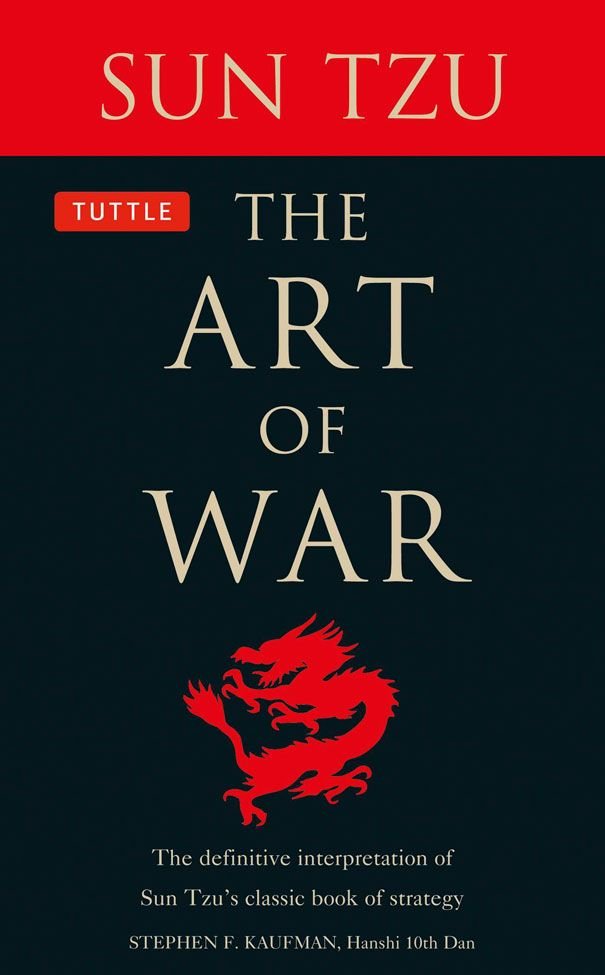
Why Read The Art of War?
Written over 2,500 years ago by a Chinese military strategist, The Art of War is the oldest and most enduring strategy text in human history. In 13 compact chapters, Sun Tzu distills the principles of conflict and competition into maxims so precise and universal that they have been applied — with equal conviction — by generals, CEOs, athletes, diplomats, and competitive exam aspirants across every era and culture.
The book’s genius lies in what it is not: it is not a manual for brute force or aggression. Sun Tzu’s central insight is that the supreme form of victory is winning without fighting — through superior intelligence, positioning, deception, and timing. Every principle in the text subordinates violence to strategy, force to flexibility, and action to preparation. In thirteen chapters covering topics from planning and maneuvering to terrain, spies, and the use of fire, Sun Tzu constructs a complete theory of competitive advantage that has never been superseded.
Its relevance today is not metaphorical or superficial. The same principles that governed ancient Chinese warfare — know your enemy and yourself, choose your battlefield, move when conditions favor you, deceive before you strike — translate directly into business strategy, negotiation, management, and personal decision-making. For competitive exam aspirants, the text is also valuable as a model of aphoristic, densely compressed writing — the kind of precise, high-information-density prose that appears in advanced RC passages.
Who Should Read This
The Art of War rewards anyone engaged in competition, negotiation, or strategic planning — which covers most professional and academic pursuits. Its brevity makes it one of the most efficient reads in the canon of influential books. Particularly useful for CAT/GRE/GMAT aspirants encountering strategy and argument passages, MBA students studying competitive strategy, and professionals in business, law, or policy where understanding competitive dynamics is essential.
Key Takeaways from The Art of War
“Supreme excellence consists in breaking the enemy’s resistance without fighting.” The highest form of strategy is not winning battles but making battles unnecessary — through superior intelligence, positioning, and psychological dominance. Sun Tzu consistently prizes the bloodless victory over the hard-fought one, because it preserves resources, morale, and time.
Know yourself and know your enemy — in a hundred battles, you will never be in peril. Self-knowledge combined with accurate intelligence about your opponent eliminates the fog of uncertainty that causes most strategic failures. This is Sun Tzu’s most cited principle and his most profound.
Flexibility is strength. Sun Tzu uses water as his central metaphor for ideal strategy — water has no fixed form, it flows around obstacles and always finds the lowest path to its destination. Military and competitive strength lies not in rigid plans but in the capacity to respond fluidly to changing conditions while keeping the ultimate objective in view.
Timing and positioning determine outcome more than force. The victorious army wins first and then seeks battle, while the defeated army seeks battle first and then tries to win. Success is about creating conditions for victory — through positioning, deception, and patience — before committing to decisive action.
Key Ideas in The Art of War
The Art of War is organized into 13 chapters, each addressing a distinct dimension of military strategy. The opening chapter, “Laying Plans,” establishes the book’s philosophical foundation: war — and by extension, any serious competition — must be approached as a matter of supreme importance requiring rigorous calculation. Sun Tzu identifies five constant factors that determine victory: the Moral Law (alignment between leader and people), Heaven (timing and environment), Earth (terrain and conditions), the Commander (qualities of leadership), and Method and Discipline (organization and logistics). Before any campaign begins, the side that has calculated these factors most accurately will win.
The text’s most radical argument is the primacy of intelligence and deception over force. Sun Tzu devotes significant attention to the use of spies, the value of accurate information, and the strategic deployment of deception — appearing weak when strong, inactive when active, far when near. The implication is that the outcome of any competition is largely determined before it begins, in the quality of information each side possesses and the effectiveness with which each conceals its own intentions.
Adaptability is the book’s recurring virtue. Sun Tzu returns again and again to the idea that fixed plans are dangerous, that the skilled commander responds to conditions rather than imposing a predetermined strategy on them, and that the capacity to change tactics while maintaining strategic clarity is the mark of true mastery. The famous water metaphor — “just as water retains no constant shape, so in warfare there are no constant conditions” — captures this in a phrase that has never been improved upon in 2,500 years.
The final chapters address logistics, terrain, and intelligence — reminding readers that strategy divorced from practical reality is fantasy. Sun Tzu is attentive to supply lines, morale, the psychological states of armies, and the importance of choosing ground that favors your strengths. The book closes with a chapter on the use of spies, arguing that accurate intelligence is the most cost-effective investment a commander can make — more valuable than any weapon.
Core Frameworks
Sun Tzu’s 13 chapters contain several interlocking frameworks that together constitute a complete theory of competitive advantage.
Sun Tzu identifies five factors that determine any conflict’s outcome: the Moral Law (unity of purpose), Heaven (timing and environment), Earth (terrain and conditions), the Commander (wisdom, courage, discipline), and Method and Discipline (organizational structure). The side that calculates these factors more rigorously before committing to action holds the decisive advantage.
Winning in battle is not the highest achievement — making battle unnecessary is. This is accomplished through superior intelligence, psychological dominance, and strategic positioning that leaves the opponent with no viable path to victory. In business: the best competitive move renders competitors irrelevant rather than defeating them head-on.
“Shi” refers to the potential energy stored in a situation — the accumulated momentum that, when released at the right moment, produces overwhelming force. A skilled commander builds shi through positioning, preparation, and patience, then releases it decisively when conditions are optimal. In business, shi might be market timing, network effects, or brand momentum.
Sun Tzu identifies nine types of terrain — from dispersive ground (fighting near home, where morale is low) to desperate ground (where you must fight or die) — each requiring a different tactical response. Every competitive situation has structural features that constrain the optimal response, and the strategist who correctly identifies the “ground” they’re on will respond appropriately while others respond habitually.
Victory goes to the commander who knows when to fight and when not to; who understands how to handle both superior and inferior forces; whose army shares the same spirit top to bottom; who is prepared and waits for an unprepared enemy; and whose general has ability and is not interfered with by the sovereign. These five conditions remain as applicable to organizational leadership today as to ancient warfare.
“All warfare is based on deception” is not an endorsement of dishonesty but a recognition that concealing your intentions and capabilities is a fundamental competitive advantage. Appearing strong when weak, weak when strong, active when inactive: the side that better controls the information its opponent receives controls the framing of the entire competition.
Core Arguments
Sun Tzu builds a systematic case for a counterintuitive view of competitive success — one in which preparation, intelligence, and positioning matter far more than force.
Sun Tzu’s most important strategic argument is that outcomes are not decided in the moment of conflict but in the preparation preceding it. The general who has calculated the five constant factors more rigorously, gathered better intelligence, chosen more favorable terrain, and built superior logistics will win — the battle itself merely confirms what preparation has already determined. This reframes strategy from reactive problem-solving to proactive condition-creating.
Sun Tzu argues explicitly that no nation has ever benefited from a prolonged war, and that even a clumsy but swift victory is superior to a skillful but lengthy campaign. Extended conflicts drain resources, demoralize troops, and create opportunities for opportunistic third parties. The strategic implication — move decisively when conditions are right, do not linger — applies directly to business: market windows close, momentum dissipates, and extended competitive battles benefit no one except observers.
Sun Tzu devotes considerable attention to the qualities of the ideal commander — wisdom, sincerity, benevolence, courage, and strictness — and to the five dangerous faults that make commanders vulnerable: recklessness, cowardice, quick temper, delicate honor, and over-concern for troops. The argument is that strategy executed by a flawed leader will fail regardless of its quality, making leadership character the most important strategic variable.
The book’s final chapter argues that a commander who refuses to invest in intelligence — in knowing the enemy’s dispositions, plans, and morale — is guilty of supreme negligence. No resource expenditure delivers better returns than accurate information. Sun Tzu distinguishes five types of spies and explains how to deploy each, making this one of the earliest systematic treatments of intelligence operations in any tradition.
Critical Analysis
A balanced assessment examining both the enduring strengths and the genuine limitations of this 2,500-year-old text.
Sun Tzu’s principles are stated at a level of abstraction that makes them genuinely applicable across domains — military, business, legal, personal — without the forced analogizing that makes most strategy books feel stretched.
The book achieves an extraordinary density of insight in 68 pages — each sentence carries significant weight, making it one of the most efficient strategy texts ever written and a model of concise, high-information prose.
Long before modern psychology, Sun Tzu understood that morale, perception, and the emotional states of opponents are as important as physical force — an insight that has aged far better than most ancient military doctrine.
The text was written for Bronze Age Chinese warfare, and some passages require significant interpretive effort to translate meaningfully into modern situations without distorting Sun Tzu’s original intent.
The book treats strategy in a moral vacuum — it addresses how to win, not whether winning by any particular means is right. Modern readers must supply their own ethical framework, which the text does not provide.
The aphoristic style means that almost any strategy can be post-hoc justified by selecting the right Sun Tzu quote — making it possible to use the book to rationalize decisions rather than genuinely inform them.
Legacy & Cultural Impact
2,500 Years of Continuous Influence: The Art of War has had a longer continuous influence on human affairs than virtually any other book ever written. In its home tradition, it shaped Chinese military doctrine for two millennia and influenced every major Chinese strategic thinker from the Warring States period through Mao Zedong, who studied it extensively. Japanese samurai adopted it as a foundational text; it is said to have guided Tokugawa Ieyasu, one of Japan’s most successful military unifiers. Napoleon reportedly studied a French translation. Ho Chi Minh distributed copies to his commanders during the Vietnam War.
The Business Strategy Revolution: Its modern business application began in earnest in Japan in the 1970s, where its principles were adapted by managers developing the competitive strategies that would reshape global manufacturing. In the West, the 1980s saw an explosion of business editions, and the book became a fixture of MBA programs, corporate strategy retreats, and management consulting. Whether this constitutes genuine application or motivated borrowing of ancient authority is a fair question — but the book’s influence on how business strategy is discussed and taught is undeniable.
Relevance for Exam Aspirants: For competitive exam aspirants, The Art of War serves multiple purposes. Its dense, compressed prose — every sentence is argumentative and every argument is supported — is excellent practice for high-difficulty analytical reading passages. Its content is directly relevant to group discussion topics on leadership, competition, and strategy. And its core principles — know yourself, choose your ground, move when ready — are directly applicable to the strategic approach to exam preparation itself.
Love This Book? Master Every Book.
Stop struggling with reading comprehension. Our proven system transforms how you read—whether for CAT, GRE, GMAT, SAT, or personal growth.
Best Quotes from The Art of War
Supreme excellence consists in breaking the enemy’s resistance without fighting.
If you know the enemy and know yourself, you need not fear the result of a hundred battles.
All warfare is based on deception.
In the midst of chaos, there is also opportunity.
The supreme art of war is to subdue the enemy without fighting.
Test Your Understanding
Think you’ve mastered The Art of War? Challenge yourself with 15 questions on Sun Tzu’s strategies, frameworks, and core arguments. Score 80%+ to prove your mastery.
The Art of War FAQ
What is The Art of War about?
The Art of War is a 13-chapter military strategy text from ancient China covering all dimensions of competitive conflict — from planning and intelligence gathering to tactical maneuvering, terrain, and leadership. Its central argument is that victory comes not from brute force but from superior preparation, intelligence, positioning, and adaptability. Though written for warfare, its principles apply directly to business, negotiation, and personal strategy.
Is The Art of War difficult to read?
It is rated Elementary — the text is short (68 pages) and most modern translations include commentary that makes the meaning accessible. However, because it is so compressed — each sentence carries multiple layers of meaning — it rewards slow, reflective reading rather than speed. The challenge is not comprehension but application.
What are the key themes in The Art of War?
The book’s central themes are the primacy of intelligence and information, the value of winning without fighting, adaptability over rigid planning, the relationship between speed and decisive action, the importance of self-knowledge and knowledge of the opponent, and the decisive role of leadership character in determining outcomes.
How does The Art of War apply to business?
Sun Tzu’s principles translate directly into competitive business strategy: know your market and competitors thoroughly before committing resources; choose competitive battlegrounds that favor your strengths; move decisively when conditions are right rather than prolonging uncertain engagements; use information asymmetry to your advantage; and aim to make competitors irrelevant rather than merely defeating them. These principles underpin much of modern strategic management theory.
Why is a 2,500-year-old military text still widely read today?
Because Sun Tzu abstracted his principles to a level that transcends their original context. He was not writing about swords and chariots — he was writing about the nature of competition, the value of information, and the psychology of conflict. These are constants of human experience that have not changed. Every era finds in the text a mirror of its own competitive realities, which is why it has never gone out of print and never lost its audience.








