

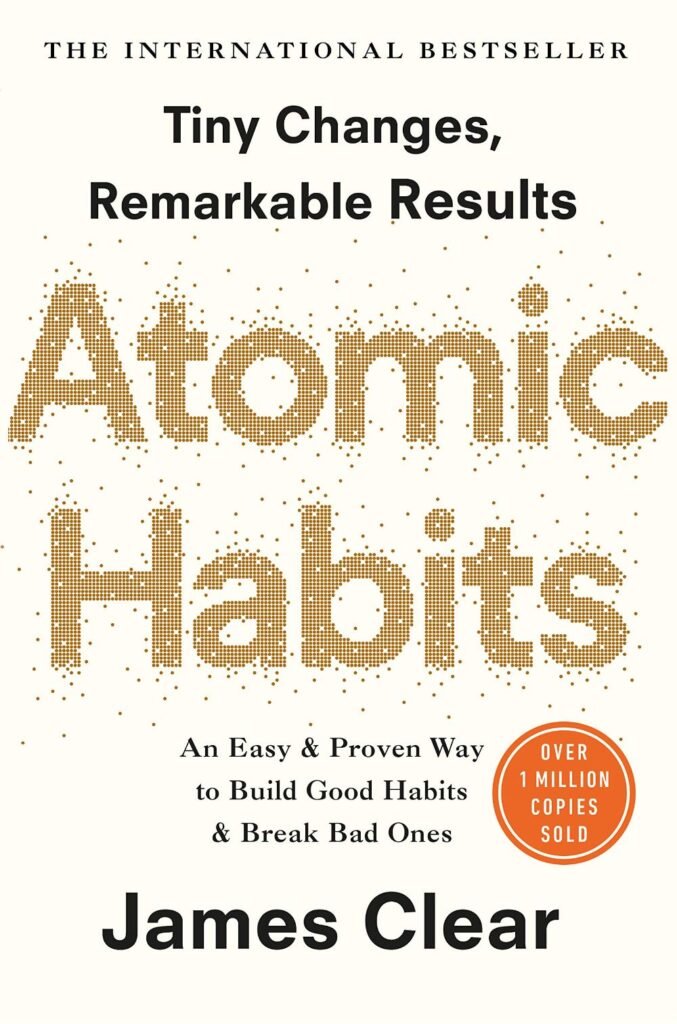
Why Read Atomic Habits?
James Clear’s “Atomic Habits” is the definitive guide to understanding how habits work and how to change them. Drawing from biology, psychology, and neuroscience, Clear presents a proven framework that has helped millions transform their lives through small, incremental improvements.
The core premise is deceptively simple: small habits compound over time to produce remarkable results. Clear argues that we don’t rise to the level of our goals — we fall to the level of our systems. This shift in perspective from outcomes to processes is what makes the book transformative.
What sets Atomic Habits apart from other self-help books is its practicality. Clear doesn’t just explain why habits matter; he provides a step-by-step system (the Four Laws of Behavior Change) that anyone can implement immediately. The book is filled with actionable strategies, real-world examples, and scientific research that make habit change feel achievable rather than overwhelming.
Who Should Read This
Atomic Habits is essential reading for anyone who wants to improve their daily routines, break bad habits, or achieve long-term goals. Whether you’re a student trying to build better study habits, a professional aiming for peak performance, or simply someone who wants to live a healthier life, this book provides the toolkit you need. Its principles apply universally across domains.
Key Takeaways from Atomic Habits
Small habits compound over time — 1% better every day leads to being 37 times better in a year. Focus on systems, not goals.
Identity-based habits are more powerful than outcome-based ones. Focus on who you want to become, not what you want to achieve.
The Four Laws of Behavior Change (make it obvious, attractive, easy, and satisfying) provide a framework for building any habit.
Environment design is more powerful than willpower. Make good habits obvious and bad habits invisible in your surroundings.
Key Ideas in Atomic Habits
The central thesis of Atomic Habits is that massive success doesn’t require massive action — it requires consistent, small improvements. Clear introduces the concept of “atomic habits”: tiny changes that, like atoms, are the building blocks of remarkable results.
Clear argues that most people focus too much on goals and not enough on systems. Goals are about the results you want to achieve; systems are about the processes that lead to those results. Winners and losers often have the same goals — what differs is their systems.
The book is structured around the habit loop (cue, craving, response, reward) and presents the Four Laws of Behavior Change as a practical framework. Each law corresponds to one stage of the habit loop and provides specific strategies for building good habits or breaking bad ones.
Perhaps the most powerful concept is identity-based habits. Clear suggests that the most effective way to change behavior is to focus on who you wish to become. Every action you take is a vote for the type of person you want to be. True behavior change is identity change.
Core Frameworks
Clear provides actionable frameworks that can be applied immediately to build or break any habit.
Make it Obvious (cue), Make it Attractive (craving), Make it Easy (response), Make it Satisfying (reward). Invert these laws to break bad habits.
Use the formula “After [CURRENT HABIT], I will [NEW HABIT]” to create clear implementation intentions.
Scale any habit down to a two-minute version. “Read before bed” becomes “Read one page.” Starting is what matters.
Redesign your environment so cues for good habits are visible and cues for bad habits are hidden or removed.
Use a habit tracker to create visual proof of your progress. Never miss twice — get back on track immediately.
Work on tasks of just-manageable difficulty — challenging enough to be engaging but not so hard they’re demotivating.
Core Arguments
Clear makes several compelling arguments that challenge conventional thinking about habits and goals.
Clear argues that goals are useful for setting direction, but systems are what drive progress. Focusing solely on goals leads to a “yo-yo” effect; focusing on systems creates lasting change. The score takes care of itself when you focus on the process.
The most effective way to change habits is to change your identity. Instead of “I want to quit smoking,” think “I am not a smoker.” When behavior and identity align, change becomes natural rather than forced.
The aggregation of marginal gains means that tiny improvements accumulate into significant results. A 1% improvement daily leads to being 37 times better over a year. Conversely, 1% worse daily leads to decline to nearly zero.
Willpower is overrated; environment design is underrated. People with high self-control structure their lives to minimize temptation. Making good choices easier through environment design is more sustainable than relying on motivation.
Critical Analysis
A balanced assessment examining both the book’s strengths and limitations.
Every concept comes with specific, actionable strategies that readers can implement immediately.
Grounded in research from psychology, neuroscience, and behavioral economics without being academic.
The Four Laws provide a simple, easy-to-remember structure for analyzing any habit.
Some critics argue that complex behavioral issues require more than habit tweaks — deeper psychological work may be needed.
Less attention to systemic or social factors that influence behavior beyond personal control.
Many examples feature successful people, potentially underrepresenting those who followed similar systems without success.
Real-World Impact
Real-World Applications: Atomic Habits has been adopted by Fortune 500 companies, professional sports teams, and educational institutions worldwide. The frameworks have been applied to everything from fitness and productivity to addiction recovery and organizational change.
Influence on the Field: The book has become the standard reference for habit science, popularizing concepts like habit stacking, implementation intentions, and environment design. It synthesizes decades of behavioral research into an accessible framework that has influenced how we think about personal development.
Why It Remains Relevant: In an age of distraction and instant gratification, the emphasis on systems over goals, and process over outcomes, provides a counter-narrative to quick-fix solutions. The principles are timeless because they’re based on how human behavior actually works.
Love This Book? Master Every Book.
Stop struggling with reading comprehension. Our proven system transforms how you read—whether for CAT, GRE, GMAT, SAT, or personal growth.
Best Quotes from Atomic Habits
You do not rise to the level of your goals. You fall to the level of your systems.
Every action you take is a vote for the type of person you wish to become.
Habits are the compound interest of self-improvement.
You don’t have to be the victim of your environment. You can also be the architect of it.
The most effective way to change your habits is to focus not on what you want to achieve, but on who you wish to become.
Test Your Understanding
Think you’ve mastered Atomic Habits? Challenge yourself with 15 questions on frameworks, concepts, and key takeaways. Score 80%+ to prove your mastery.
Atomic Habits FAQ
What is Atomic Habits about?
Atomic Habits is a comprehensive guide to building good habits and breaking bad ones. It presents the Four Laws of Behavior Change as a framework for habit formation and emphasizes how small, incremental improvements compound into remarkable results over time.
What reading level is Atomic Habits?
Atomic Habits is an Intermediate reading level. The writing is clear and accessible, with concepts explained through relatable examples. No prior knowledge of psychology or behavioral science is required.
What are the Four Laws of Behavior Change?
The Four Laws are: 1) Make it Obvious (cue), 2) Make it Attractive (craving), 3) Make it Easy (response), and 4) Make it Satisfying (reward). To break bad habits, invert these laws.
What is the Two-Minute Rule?
The Two-Minute Rule states that when starting a new habit, it should take less than two minutes to do. This makes habits easy to start, and once you begin, momentum often carries you further.
Why is Atomic Habits so popular?
Atomic Habits combines scientific rigor with practical applicability. Unlike many self-help books, it provides specific, actionable strategies rather than vague motivation. The frameworks are memorable and universally applicable across any domain of life.








